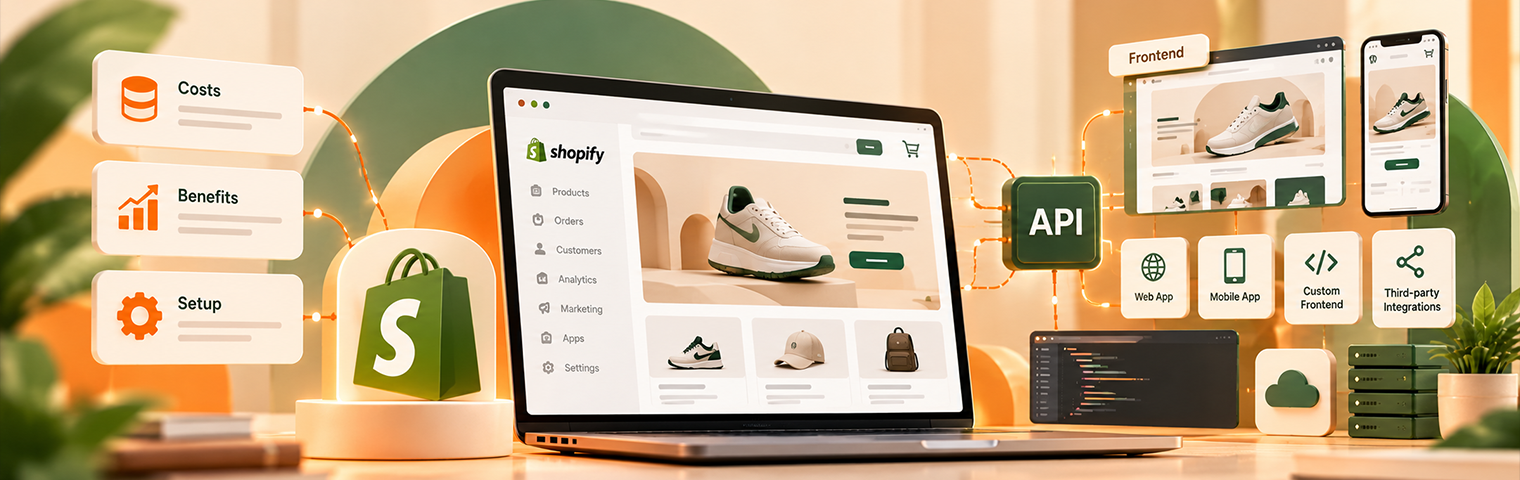
In today’s ecommerce world every brand wants a fast smooth and personalized shopping experience.
Traditional Shopify works well and is reliable but as your store grows its default setup can start to feel limiting.
This is where Headless Shopify comes in. It gives you complete freedom to design your store improve speed and elevate the customer experience.
In this article, we’ll cover:
- What Headless Shopify is
- Key benefits and advantages
- Costs and investments
- Setup process and maintenance tips
What Is Headless Shopify?
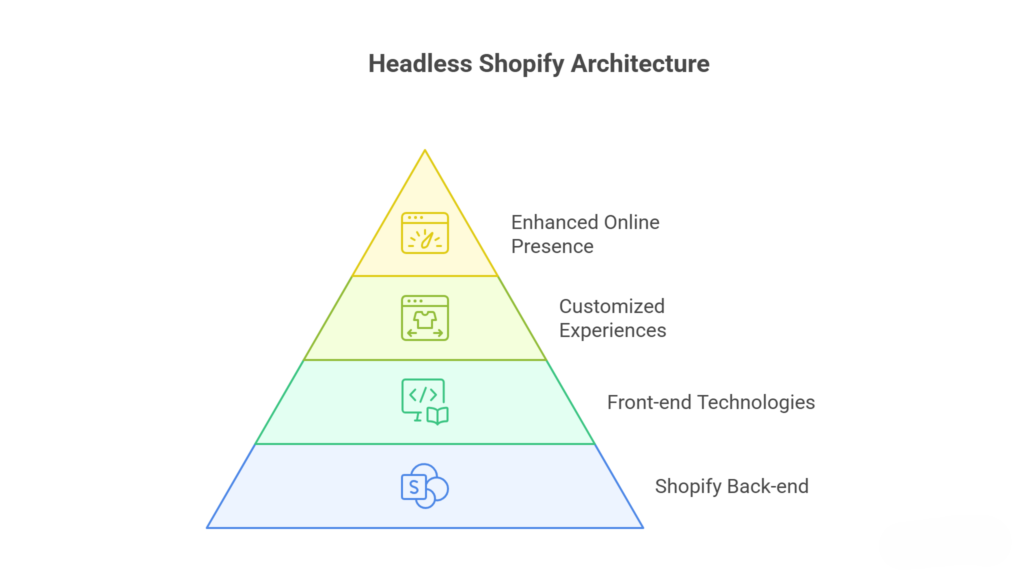
Headless Shopify is essentially separating the frontend from the backend.
- The backend is handled by Shopify products inventory orders and checkout.
- The frontend is built separately using technologies like React Next.js or Vue.js.
The biggest advantage? You can customize the design and functionality of your store without limitations.
Think of it this way Shopify’s backend is the engine and the frontend is the body and design of a luxury car you aren’t restricted to the factory default look.
Benefits of Headless Shopify
1. Lightning-Fast Performance
Speed matters. Slow-loading pages mean customers leave.
With Headless Shopify you can:
- Build lightweight fast-loading pages
- Handle large product catalogs smoothly
- Provide a seamless experience on both mobile and desktop
- Improve Core Web Vitals boosting SEO rankings
2. Personalized Customer Experience
Personalization is key to keeping customers engaged. Headless Shopify allows you to:
- Recommend products based on user behavior
- Show dynamic content blocks and custom landing pages
- Customize the checkout experience
- Create interactive product pages
Most of this is difficult to achieve with traditional Shopify themes without heavy coding.
3. Multi-Channel Selling Made Easy
Today, customers shop everywhere apps marketplaces social media.
Headless Shopify allows you to:
- Integrate seamlessly with mobile apps
- Expand to marketplaces and social media platforms
- Maintain consistent branding across all channels
This ensures your customers have a smooth shopping experience no matter where they interact with your brand.
4. Full Design Freedom
Traditional Shopify themes have design limitations. With Headless Shopify you can:
- Build fully custom product pages and layouts
- Add animations and interactive elements
- Design campaign-specific landing pages
- Merge content and commerce seamlessly
This level of flexibility helps your brand stand out with a unique online presence.
5. Marketing and SEO Advantages
Headless Shopify gives marketers more control:
- Optimize pages for search engines
- Launch campaign-specific landing pages quickly
- Track analytics accurately
- Test different content and layout variations
A faster flexible store not only improves user experience but also boosts search visibility and conversion rates.
Costs of Headless Shopify
While Headless Shopify is powerful it comes at a higher cost than traditional Shopify.
You may need to invest in:
- Custom frontend development
- Ongoing developer or agency support
- Hosting separate from Shopify
- API integrations and maintenance
The initial investment is higher but for larger stores the improved speed flexibility and scalability often justify the cost.
For smaller startups traditional Shopify is simpler and more cost-effective until growth demands headless architecture.
How to Set Up Headless Shopify
Step 1: Plan Your Store Architecture
Decide your frontend design layout and how content products and checkout will interact via Shopify APIs.
Step 2: Build a Custom Frontend
Use frameworks like React Next.js or Vue.js to create the storefront. Focus on speed mobile optimization and smooth UX.
Step 3: Integrate with Shopify Backend
Connect the frontend to Shopify via APIs. Make sure products inventory orders and checkout work seamlessly.
Step 4: Test Before Launch
Check your store for:
- Page speed and performance
- Mobile responsiveness
- Checkout functionality
- Analytics tracking
Step 5: Ongoing Maintenance
Headless Shopify requires regular upkeep:
- Update frameworks and frontend code
- Monitor API connections
- Optimize performance periodically
- Ensure security standards are maintained
Is Headless Shopify Right for You?
It’s ideal if you:
- Have a growing ecommerce brand
- Want full control over design and UX
- Plan multi-channel selling
- Need faster performance and SEO optimization
- Can invest in development and maintenance
For small stores traditional Shopify remains simpler cheaper and easier to manage.
Final Thoughts
Headless Shopify isn’t just a technical upgrade it’s a strategic business move.
It lets you:
- Build fast flexible stores
- Deliver unique and personalized shopping experiences
- Optimize for marketing SEO and conversions
- Scale across multiple channels easily
The key is to evaluate your business needs. Start with traditional Shopify if you’re small and consider headless when growth demands more customization speed and advanced user experience.
A well-implemented headless store is more than a website it’s a next-level shopping experience your customers will love.
Frequently Asked Questions (Headless Shopify Explained: Costs Benefits and Setup)
What benefits does Shopify have?
Shopify offers easy setup secure hosting customizable themes, app integrations mobile responsiveness SEO tools reliable payments scalability and strong support for building and growing online businesses efficiently.
What is Shopify headless?
Shopify headless means separating frontend from backend using APIs to build custom user interfaces while Shopify manages products payments and store operations independently.
What is the cost of Shopify features?
Shopify features cost varies by plan starting around $5–$29/month scaling to $79 $299 or $2,300+ monthly plus transaction app and payment fees.
How does Shopify work and does it cost money to use it?
Shopify lets you build manage and sell products online yes it costs monthly subscription fees plus transaction app and payment charges depending on plan and usage.
Leave a Reply