Category: Studioblogs

  • What WordPress Website Mistakes Will Hurt Rankings In 2026

    What WordPress Website Mistakes Will Hurt Rankings In 2026

    What WordPress Website Mistakes Will Hurt Rankings In 2026

    Why do some businesses invest in a wordpress build yet still see declining ranking as competition tightens toward 2026? The gap is rarely about effort. It is usually caused by unseen technical and strategic choices that weaken seo, slow loading, and reduce trust signals across a wordpress website.

    WordPress website rankings in 2026 suffer due to slow loading, poor SEO structure, excessive plugins, weak cache setup, bad internal linking, outdated themes, and ignored updates. These common WordPress mistakes hurt user experience, reduce search engine visibility, and prevent proper optimization for long-term ranking growth.

    Website performance is influenced by multiple factors working together code quality, user experience, infrastructure, content structure, and long-term maintenance. When wordpress development is handled without professional oversight, even small missteps can turn into a costly wordpress mistake that impacts visibility and ranking. Poor cache handling, rushed updates, or design decisions that ignore user experience often send negative signals to search platforms, directly affecting seo performance.

    Professional development goes beyond visuals. Thoughtful design, reliable support, and consistent maintenance protect your investment. For example a properly planned wordpress project may range from $2,500 to $6,000, while ongoing care can cost far less than fixing lost traffic later. That difference often determines whether your site grows or stalls in 2026.

    This blog breaks down the most critical mistakes to avoid explains how they impact seo and shows how smarter development decisions help your site meet modern standards and stay competitive.

    Critical WordPress SEO Mistakes That Hurt Rankings In 2026
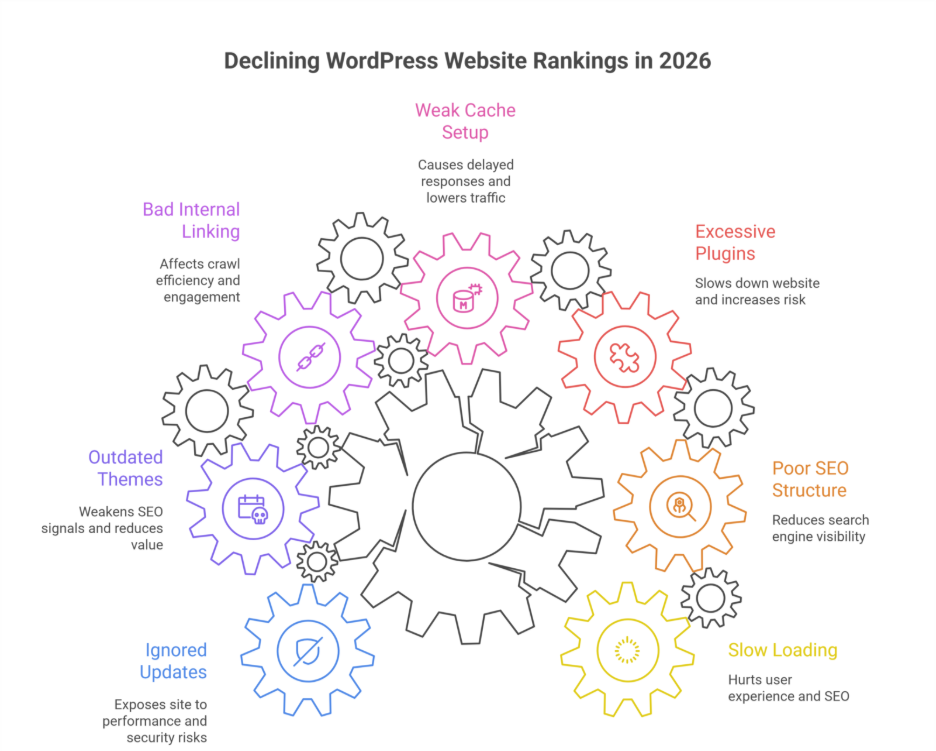
    Critical WordPress SEO Mistakes That Hurt Rankings In 2026

    As competition intensifies, many brands unknowingly repeat mistakes in 2026 that directly limit growth. These issues are rarely obvious at first glance, yet they compound over time and damage search engine rankings. Below are the most critical areas where a seo mistake can quietly undo your efforts.

    Ignoring Core Updates and Technical Foundations

    One common wordpress mistake is delaying maintenance. Failing at updating your wordpress core or managing wordpress core files correctly exposes your wordpress site to performance and security risks. Outdated systems weaken wordpress seo signals and reduce long-term seo value, especially for a new website competing in crowded markets.

    Overlooking Structure Design and Content Logic

    Poor website design choices remain among the top web design mistakes to avoid. Weak navigation, cluttered layouts, and misuse of wordpress categories create seo errors that affect crawl efficiency. These are classic wordpress seo mistakes that hurt relevance and engagement.

    Mismanaging Plugins Hosting and Data

    Heavy or unvetted wordpress plugins, weak wordpress hosting, and an unoptimized wordpress database slow performance. These are mistakes that hurt both trust and usability. Combined with gaps in wordpress security and website security, they increase risk and frustrate website visitors.

    Strategic Oversights That Limit Growth

    From ignoring local seo to poor execution in custom wordpress builds, agencies consistently find wordpress mistakes we see across industries. Many are mistakes you can make inside the wordpress dashboard without realizing the impact.

    How to Move Forward

    To fix these mistakes, brands must reassess their version of your website, review common seo, and align wordpress development with modern standards. These are the real mistakes to avoid in 2026 if you want to help optimize your website, optimize your website for search, and truly avoid these mistakes moving forward.

    Common WordPress Plugin And Cache Mistakes To Avoid SEO

    Search performance issues often originate from plugin misuse and poor cache configuration.

    Step 1: Installing Too Many Or Poor-Quality Plugins

    One common wordpress mistake is relying on excessive or free or cheap wordpress tools without reviewing impact. Bloated wordpress plugins create a clear seo mistake by adding scripts that slows down your website and increases risk of website crashes. These are classic wordpress seo mistakes that reduce trust and engagement.

    Step 2: Cache Misconfiguration And Hosting Gaps

    Improper cache rules, combined with weak wordpress hosting or an unreliable wordpress hosting provider, cause delayed responses. This directly affects user experience and search rankings and lowers website traffic. Many wordpress mistakes we see originate from a mismatch between cache layers and the website hosting provider setup.

    Step 3: Ignoring Core Compatibility And Updates

    Failing at updating your wordpress core or maintaining wordpress core files can break cache logic and plugins. This creates seo errors, exposes wordpress security gaps, and impacts website security all mistakes that hurt long-term growth on any wordpress site, including a new website or custom wordpress build.

    Step 4: No Testing Or Ongoing Review

    Many mistakes you can make happen inside the wordpress admin dashboard or wordpress dashboard when changes go untested. Agencies recommend to test your website, review the version of your website, and audit the wordpress database regularly to protect search engine rankings and seo value.

    Step 5: Fixing The Right Way

    To fix these mistakes, align wordpress development with smart website development, clean website design, proper cache rules, and structured wordpress categories. These are seo mistakes to avoid if you want to optimize your website, optimize your website for search, help optimize your website, and ultimately avoid these mistakes that can hurt your site and limit website visitors.

    Conclusion

    WordPress performance in 2026 is no longer about isolated fixes—it is about consistency structure, and accountability. As outlined above, slow loading unmanaged plugins, poor cache handling delayed updates, and weak development decisions are not minor oversights they are strategic gaps that directly impact SEO trust and long-term rankings. These mistakes often accumulate quietly until traffic drops visibility declines and recovery becomes expensive.

    A well-maintained WordPress website requires proactive audits, disciplined plugin usage secure hosting, and development choices aligned with modern search standards. Businesses that treat SEO, performance, and maintenance as ongoing priorities—not one-time tasks are the ones that stay competitive as algorithms and user expectations evolve.

    If your site is already live, the real question is simple but important:
    Are these issues already affecting your rankings and is it time to speak with Integriti Studio before they cost you more?

    Frequently Asked Questions (What WordPress Website Mistakes Will Hurt Rankings In 2026)

    Is WordPress still in demand in 2025?

    Yes, WordPress remains in demand in 2025 due to its flexibility, large plugin ecosystem, and ease of use for both businesses and developers. It continues to power blogs, ecommerce sites, and enterprise platforms, especially when combined with modern themes, SEO optimization, and security enhancements.

    Is WordPress being phased out?

    No, WordPress is not being phased out. While new platforms like Webflow and headless CMS options are growing, WordPress remains widely used due to its flexibility, extensive plugin ecosystem, and strong community support. Businesses continue relying on it for blogs, ecommerce, and enterprise websites in 2025.

    What are common WordPress issues?

    Common WordPress issues include slow site speed, outdated plugins or themes, security vulnerabilities, broken links, and poor mobile optimization. Duplicate content, inefficient SEO practices, and plugin conflicts can also affect performance. Regular updates, proper maintenance, and optimization are essential to keep a WordPress site secure and high-performing.

    What are the disadvantages of WordPress?

    The main disadvantages of WordPress include security risks from outdated plugins or themes, slower performance on complex sites, frequent maintenance requirements, and potential plugin conflicts. Customization beyond standard themes often requires coding skills, and poorly optimized sites can suffer from SEO and usability issues.

  • Shopify Trends To Start Adapting Before 2026 Begins 

    Shopify Trends To Start Adapting Before 2026 Begins 

    Shopify Trends To Start Adapting Before 2026 Begins 

    Why do some brands grow faster on Shopify while others struggle to scale profitably? The difference rarely lies in the platform itself. It comes down to how performance, structure and long-term decisions are handled as competition increases toward 2026. From page speed and optimization to data flow and scalability multiple factors directly influence results across modern ecommerce environments. 

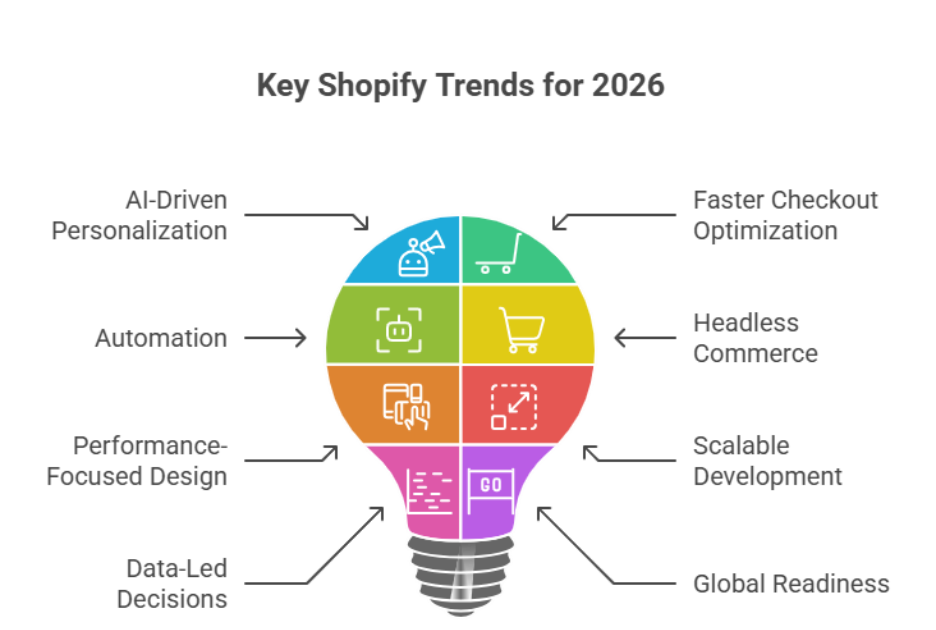
    Shopify trends to start adapting before 2026 include AI-driven personalization, faster checkout optimization automation headless commerce and performance-focused design. Brands investing in scalable Shopify development smarter shopper experiences and data-led ecommerce decisions will stay competitive and future-ready as 2026 approaches. 

    A professionally built Shopify store is no longer just a digital catalog. Strategic development thoughtful design systems, and consistent maintenance create real business value especially as shopper expectations rise in 2026. Smart personalization supported by ai helps brands adapt faster while poor execution increases costs over time. In practice, businesses often invest between $2,000–$5,000 for professional builds to avoid expensive fixes later. Shopify solutions planned correctly protect margins and reduce technical debt as 2026 approaches. 

    This blog breaks down key Shopify trends shaping 2026 explains what matters beyond features and shows how informed decisions help Shopify brands stay competitive resilient and ready for what’s next in 2026. 

    Shopify 2026 FAQ trends to watch shaping ecommerce future 

    Shopify 2026 FAQ trends to watch shaping ecommerce future 

    As 2026 approaches, many Shopify brands ask similar questions about scalability performance, and long-term growth. This faq section highlights the most important trends to watch not as predictions, but as trends shaping how modern ecommerce operates and competes globally. 

    Understanding What’s Driving Shopify in 2026 

    The ecommerce industry is evolving due to changing consumer behavior, rising competition and platform maturity. Insights from google trends show increasing demand for faster experiences, flexible architecture and global selling. These trends for 2026 reflect a clear shift toward smarter systems that support growth efficiency and adaptability. 

    Headless Commerce Becomes Strategic 

    One of the most impactful shifts is headless commerce, allowing brands to separate frontend experiences from backend systems. This approach helps Shopify brands deliver faster interfaces integrate a mobile app and align with unified commerce strategies. For larger operations, solutions like shopify plus make this transition more manageable. 

    Payments, Markets, and Global Readiness 

    Modern shoppers expect diverse payment methods, localized pricing, and seamless international access. Tools such as shopify payments and shopify markets support expansion while reducing operational friction. This enables business owners to respond to market demand and sell in 2026 with confidence. 

    What This Means for Store Owners 

    For every store owner planning a serious business plan, these top shopify development trends are no longer optional. Whether launching a new business, refining a product idea, or scaling an ecommerce store understanding the future of Shopify helps brands stay competitive improve customer experience and drive sustainable sales growth in 2026 Shopify ecosystems. 

    Personalization AI optimization for Shopify store shoppers in 2026 

    Personalization is no longer an advanced feature it is a core expectation. As shopper behavior evolves, AI-led personalization is shaping 2026 by redefining how brands build relevance loyalty and measurable growth across every ecommerce touchpoint. 

    Step 1: Understand Why Personalization Matters 

    In a competitive landscape a generic experience limits performance. AI-driven personalization allows an ecommerce store to respond to browsing behavior purchase history and intent in real time. This creates meaningful interactions that increase engagement and long-term value especially for a new business entering the market. 

    Step 2: Use Data to Guide Smarter Decisions 

    AI analyzes patterns faster than manual review ever could. Using insights from customer actions brands can recommend relevant products, optimize content placement and improve conversion paths. This step is essential to align personalization with real demand rather than assumptions. 

    Step 3: Apply AI Where It Impacts the Shopper Most 

    Focus personalization efforts on product discovery, homepage content and on-site messaging. These areas influence decision-making early and directly support stronger performance without overcomplicating the user journey. 

    Step 4: Operationalize Through Shopify Systems 

    Centralized data and workflows within the shopify admin help manage personalization efficiently at scale. When aligned with collaboration tools such as shopify collective, brands can extend personalization across partners while maintaining consistency. 

    Step 5: Build for Long-Term Growth 

    AI personalization is not a one-time setup it evolves as your business journey grows. When implemented strategically it helps brands adapt to ecommerce trends, respond to global ecommerce sales patterns, and deliver experiences that keep shoppers returning well beyond 2026. 

    Conclusion 

    Adapting to Shopify trends before 2026 is no longer optional it’s essential for brands aiming to stay competitive, scalable and profitable. From AI-driven personalization and headless commerce to optimized checkout experiences and smart use of shopify payments, every decision impacts shopper engagement sales growth and long-term sustainability. Investing in professional development thoughtful design, and robust maintenance ensures your ecommerce store performs at its peak while reducing costly fixes later. By leveraging data, automation, and modern shopify admin tools, brands can respond to evolving customer needs, global market demand, and emerging ecommerce trends, positioning themselves as leaders in 2026 Shopify ecosystems. 

    Now the tricky part are you ready to stay ahead of competitors and grow your Shopify store faster with expert guidance? Maybe it’s time to contact Integriti Studio and see how we can help your business adapt smarter before 2026. 

    Frequently Asked Questions (Shopify Trends To Start Adapting Before 2026 Begins)

    Is Shopify still worth it in 2026?

    Yes Shopify is still worth it in 2026 for many online sellers because it’s easy to set up, scales from small shops to big brands, and offers strong e-commerce tools, AI features, and multi-channel selling support. It has widespread use but costs and limitations should be considered.

    Is Shopify profitable in 2026?

    Yes Shopify is profitable in 2026 with strong revenue and free-cash-flow margins, continuing double-digit profitability even as it grows and invests in AI and expansion.

    What is the future for Shopify?

    The future of Shopify looks strong and evolving: it will keep expanding AI tools for automation, personalization, and store setup, improve omnichannel commerce, support headless and immersive shopping experiences, and grow internationally. It will remain a major e-commerce platform adapting to trends through 2026 and beyond.

    What are the small business trends in 2026?

    Small business trends in 2026 include AI-integration, e-commerce and omnichannel growth, remote/hybrid work, stronger cybersecurity, hyper-personalized customer experiences, and sustainability practices driving growth.

  • What needs To Change In Your wordpress Website Before 2026 

    What needs To Change In Your wordpress Website Before 2026 

    What needs To Change In Your wordpress Website Before 2026

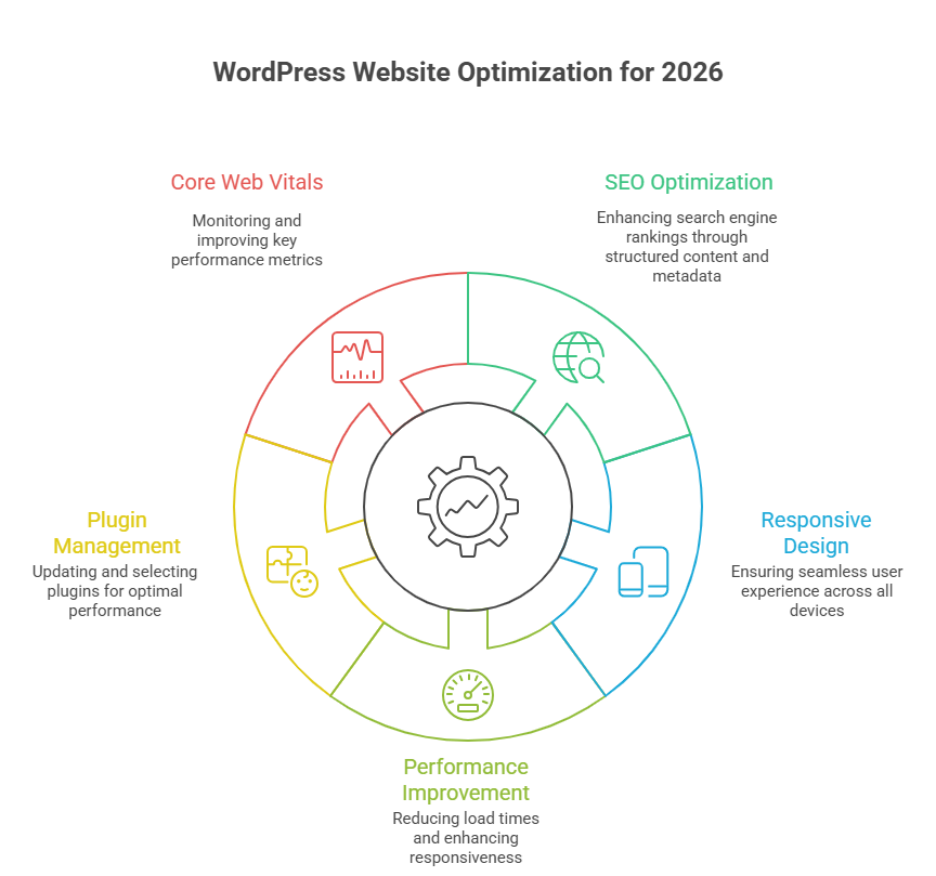
    Why do some WordPress websites struggle with performance while others drive traffic and conversions effortlessly? The answer often lies in a combination of technical structure, design choices, and ongoing maintenance practices. As 2026 approaches, factors influencing website performance such as page speed, responsive design, plugin management, and SEO optimization are more critical than ever for your brand’s digital presence. 

    Before 2026, your WordPress website must prioritize SEO optimization, responsive design, fast WordPress performance, and updated plugins. Focus on user experience, maintain core web vitals, manage cache effectively, and follow best practices in WordPress development to ensure your site stays competitive, secure, and future-ready. 

    Investing in professional WordPress development ensures your site is not only visually appealing but also functionally robust. A well-maintained WordPress site improves user experience strengthens SEO and supports scalable growth. Regular updates thoughtful plugin selection and performance-focused cache strategies protect your investment while reducing long-term technical debt. In practice businesses often allocate $1,500–$4,000 for professional development and ongoing maintenance to avoid costly fixes later. 

    This blog will explore key areas that require change in your WordPress website before 2026 including optimization for SEO improving user experience ensuring responsive design, managing plugins effectively and maintaining core web vitals. By addressing these areas you can future-proof your WordPress website maximize performance and stay ahead of evolving web standards. 

    Optimize WordPress website performance and SEO before 2026 

    Optimize WordPress website performance and SEO before 2026 

    Ensuring your WordPress website is fast, secure, and SEO-friendly is essential for businesses in 2026. Performance directly impacts user experience search engine rankings, and conversion rates. Proper optimization combines technical improvements, design considerations, and ongoing website maintenance. 

    Speed and Performance Optimization 

    Improve Load Times and Responsiveness 

    Load times and responsiveness are critical for both desktop and mobile devices. Adopting mobile-first design optimizing images, leveraging Cloudflare and enabling browser caching can dramatically improve website performance. Choosing managed WordPress hosting or reliable WordPress hosting ensures server-side speed and uptime. 

    Optimize PHP, Themes, and Plugins 

    Using lightweight WordPress themes and limiting unnecessary WordPress plugins reduces server load. Regularly updating PHP the latest WordPress, and plugin versions prevents security risks while improving site performance. Implementing performance optimization best practices enhances both search engine optimization and user satisfaction. 

    SEO and Search Engine Optimization 

    Structure Content and Metadata 

    Organizing your site with clear categories and tags, proper headings and structured metadata improves search engine rankings. Optimized content and a well-maintained block editor workflow ensure that every WordPress site can compete for organic traffic in 2026. 

    Monitor Core Web Vitals 

    Metrics like Largest Contentful Paint (LCP) interactivity, and stability affect both SEO and user experience. Regularly auditing your WordPress development and following best practices ensures your site meets Google’s performance standards and ranks higher. 

    Ongoing Maintenance and Security 

    Consistent website maintenance updates to plugins for WordPress and implementing free SSL certificates protect your site from hackers and maintain optimal performance. Partnering with a professional development agency or experienced WordPress development team ensures your custom WordPress site remains competitive and secure. 

    Improve user experience with responsive WordPress development 

    responsive WordPress development approach ensures your site adapts seamlessly to all devices, improves engagement and strengthens SEO. A site that performs well for users and search engines builds trust increases conversions, and supports long-term growth. Below is a structured value-driven guide to improving user experience on your WordPress site. 

    Core Strategies for Responsive Design 

    • Mobile-first approach: Design layouts starting with mobile devices to ensure accessibility and readability on smaller screens. 
    • Flexible grids and media: Use flexible grids fluid images, and scalable typography for consistency across devices. 
    • CSS and JavaScript optimization: Minify and defer scripts to reduce page load times and improve performance. 
    • Use lightweight themes: Choosing a well-coded WordPress theme reduces server load and improves overall responsiveness. 

    Performance and Optimization Tools 

    • Caching solutions: Tools like WP Rocket enhance speed and reduce server strain. 
    • Staging site testing: Test changes on a staging site before going live to avoid user experience disruptions. 
    • Free SSL certificates: Ensure secure browsing with free SSL improving trust and search rankings. 
    • Regular audits: Continuously identify and fix broken links slow-loading pages or plugin conflicts. 

    Best Practices for Users and SEO 

    • Accessible navigation: Ensure menus and buttons are easily tappable on mobile devices. 
    • Readable content structure: Use headings bullet points and whitespace to make content digestible. 
    • Frequently updated content: Answer frequently asked questions and provide useful resources. 
    • Monitor performance metrics: Track Core Web Vitals and page speed to maintain optimal user experience. 

    Conclusion 

    Preparing your WordPress website for 2026 is about more than aesthetics it’s about performance, SEO and a seamless user experience across all devices. By optimizing load times, maintaining core web vitals, updating plugins, and following best practices in WordPress development, you ensure your site remains competitive, secure, and future-ready. Implementing responsive design, leveraging WP Rocket or other caching solutions, and conducting regular audits on a staging site strengthens both search engine rankings and customer trust. A well-maintained site with free SSL and optimized CSS and JavaScript reduces server load while enhancing engagement and conversion rates. 

    Adapting these strategies transforms your WordPress site into a scalable, efficient, and user-friendly platform, ready to meet the demands of businesses in 2026. 

    So here’s a tricky question for you are you ready to stay ahead of competitors and boost your WordPress performance? Maybe it’s time to contact Integriti Studio and see how expert guidance can future-proof your website. 

    Frequently Asked Questions (What needs To Change In Your wordpress Website Before 2026)

    How do you make changes to your WordPress website?

    You make changes to a WordPress website by logging into the admin dashboard, editing pages or posts with the block editor, updating themes or plugins, and adjusting settings. For design or functionality updates, you can use themes, plugins, or custom code safely via a staging environment.

    How to build a WordPress website in 2026?

    In 2026, build a WordPress website by choosing fast managed hosting, installing WordPress, using a lightweight block-based theme, and creating pages with the Gutenberg editor. Focus on performance, SEO, accessibility, and security by using essential plugins, clean design, and regular updates.

    Do people still use WordPress in 2026?

    Yes people still use WordPress in 2026. It powers around 43% of all websites worldwide and dominates the CMS market with over 60% share, so it remains very popular for blogs, business sites, and e-commerce.

    What to do before updating WordPress?

    Before updating WordPress, back up your website files and database, check plugin and theme compatibility, and review the update details. Test updates on a staging site if possible, disable caching temporarily, and ensure you can roll back easily in case of errors or conflicts.

  • How Webflow Websites Will Be Built Differently In 2026

    How Webflow Websites Will Be Built Differently In 2026

    How Webflow Websites Will Be Built Differently In 2026

    Why do some Webflow websites outperform others, even with similar content? The answer lies in a combination of factors influencing website performance from seamless UX design and AI-driven functionality to SEO optimization and strategic layout choices. By 2026 businesses that rely solely on templates or basic configurations risk falling behind competitors who leverage professional development ongoing support and intelligent integrations.

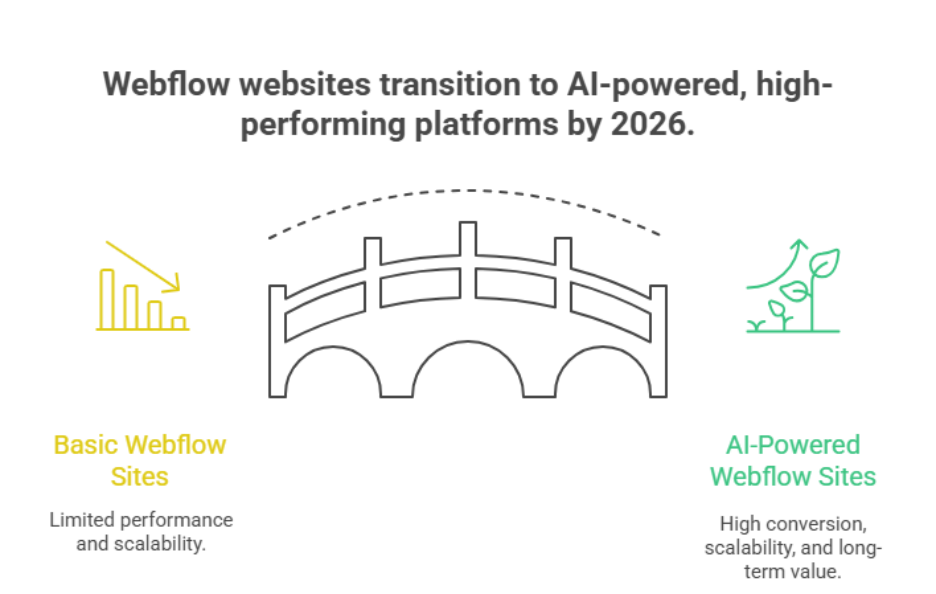
    By 2026, Webflow websites will be built using AI-driven tools seamless Figma integrations, and advanced Webflow CMS workflows. Professional development smart SEO and optimized layouts will drive higher conversion while plugins and automation enhance functionality. Businesses will prioritize performance support and design to future-proof and transform their websites effectively.

    You need more than just a functional website the real value comes from a well-designed Webflow site that converts scales and aligns with your marketing goals. Investing in professional development ensures your Webflow CMS plugins and AI tools work together efficiently while expert maintenance keeps your site secure and optimized. For context professional agencies typically structure pricing to cover design development and ongoing optimization reflecting the long-term value of a high-performing conversion-focused website.

    This blog will explore how Webflow websites will be built differently in 2026, highlighting AI-driven enhancements, Figma integrations, SEO strategies, and powerful Webflow workflows. You’ll discover practical approaches to transform your website, optimize conversion, and future-proof your online presence while understanding the essential role of expert guidance.

    How AI Will Transform Your Webflow Website 2026

    How AI Will Transform Your Webflow Website 2026

    The landscape of website building is evolving rapidly, and Webflow has integrated artificial intelligence to redefine how modern websites are designed, managed and optimized. Heading into 2026 businesses can leverage AI-powered tools to enhance user experience, boost Webflow SEO and streamline Webflow development for both content-driven and e-commerce projects.

    AI-Driven Design and User Experience

    Webflow uses AI to automate design tasks suggest layout improvements and create visually consistent elements across a Webflow project. By analyzing user behavior and engagement, AI can optimize UX ensuring that visitors navigate your Webflow site effortlessly. AI features also help identify design inefficiencies early reducing technical debt and supporting long-term scalability.

    Automation, CMS, and Content Optimization

    With AI integration, Webflow CMS collections can be managed more efficiently. AI-driven content suggestions and analytics ensure your content aligns with search engines improving visibility without manual intervention. Automation of repetitive tasks from tagging to layout adjustments allows marketing teams to focus on strategy rather than manual upkeep. Plugins further extend AI capabilities enabling customization and advanced optimization.

    AI for Performance and SEO

    Webflow hosting combined with powerful Webflow AI tools ensures faster load times and better Core Web Vitals directly impacting conversion. AI-powered insights allow your Webflow site to continuously adapt optimizing images, scripts and content for both website performance and online presence. Compared to platforms like Wix or WordPress using Webflow with AI provides a more streamlined high-performance website builder experience.

    Future-Ready Websites

    As Webflow has become increasingly AI-driven businesses can focus on strategic growth rather than maintenance. From automated optimization to smarter analytics and e-commerce solutions AI ensures modern websites stay competitive visually engaging and fully functional in 2026.

    Integrating SEO Plugins And AI Tools Into Webflow

    Effectively integrating SEO plugins and AI tools into your Webflow site can streamline workflows boost search visibility, and enhance user engagement. Here’s how agencies approach it in a professional, value-driven way:

    Streamlining SEO With Plugins

    • Technical SEO Made Simple: Webflow allows plugins that handle meta tags, structured data and sitemap updates automatically.
    • Alt Text Automation: AI-assisted tools can generate descriptive alt text for images improving accessibility and answer engine optimization.
    • Content Optimization: Plugins identify keywords readability and current website content gaps to boost search engine ranking.
    • Google Analytics Integration: AI tools help track visitor behavior and conversion metrics seamlessly without complex coding.

    Using AI Tools to Automate Repetitive Tasks

    • Using AI for CMS Management: AI-assisted workflows reduce manual updates repetitive tasks and content scheduling.
    • Content Recommendations: AI makes suggestions to enhance engagement and align content with user intent.
    • Localization: Automated translation and localization features allow global reach for live sites.
    • SEO Prioritization: AI-driven search identifies which pages need optimization first, letting marketing teams prioritize optimization efficiently.

    Benefits for Webflow Design and Development

    • Streamlined Workflow: Combining Figma design handoff with AI-powered SEO integration reduces manual effort.
    • No-Code Flexibility: AI tools enable enhancements without relying on custom development.
    • Transform Your Website: Integrating SEO and AI ensures your site remains competitive and future-proof in 2026.
    • Performance and Delivery: Plugins and AI optimize content delivery and maintain fast load times on managed hosting.

    Conclusion

    By 2026, building a successful Webflow website is no longer just about choosing a template or publishing content. The future lies in AI-driven enhancements, seamless Figma integrations, and Webflow CMS workflows that optimize performance, UX, and SEO. Integrating plugins and AI tools allows you to automate repetitive tasks, prioritize optimization, and maintain a high-performing online presence with minimal technical debt. Businesses that invest in professional development, expert support, and smart design and development practices will enjoy higher conversion, scalability, and long-term value.

    The combination of AI, SEO, and intelligent workflows ensures your Webflow site not only meets current standards but is prepared for the evolving digital landscape. Whether it’s automation, content recommendations, or analytics-driven improvements, a powerful Webflow site is central to a competitive digital strategy.

    Ready to transform your website and future-proof your online presence? Here’s a tricky question for you: if you could optimize your Webflow site for maximum conversion and performance tomorrow, would you contact Integriti Studio today?

    Frequently Asked Questions (How Webflow Websites Will Be Built Differently In 2026)

    Is Webflow still relevant in 2025?

    Yes Webflow is still relevant in 2025. It continues growing in adoption, powers millions of websites with strong no‑code visual design tools, expanding CMS and e‑commerce features, AI enhancements, and professional use in design and business sites, despite a competitive landscape.

    What is the future of Webflow?

    Webflow’s future beyond 2025 looks strong: it’s evolving into an AI‑native, enterprise‑ready no‑code platform with faster design workflows, smarter automation, built‑in analytics, and expanding global infrastructure. Growth in market share, AI tools, and scalable features suggests broader adoption and deeper business integration.

    What is the future of web development in the next 5 years?

    In the next five years, web development will increasingly focus on AI-driven automation, no-code/low-code platforms, and personalized user experiences. Progressive web apps, voice interfaces, AR/VR integration, and enhanced security will dominate, while faster performance, accessibility, and seamless cross-device functionality become standard expectations.

    Will Webflow replace web developers?

    No, Webflow will not fully replace web developers. It empowers designers and small businesses to build websites without coding, but complex projects, custom integrations, performance optimization, and enterprise-level solutions still require skilled developers. Webflow complements, rather than replaces, traditional web development roles.

  • What Will Make A Shopify Store Stand Out In 2026

    What Will Make A Shopify Store Stand Out In 2026

    What Will Make A Shopify Store Stand Out In 2026

    Why do some shopify store owners scale rapidly while others struggle to gain traction, even with similar products? The answer is rarely about the tool itself. It comes down to how strategically your shopify store is planned, designed, and managed as competition intensifies in 2026. In a crowded ecommerce space, success depends on far more than simply launching a store.

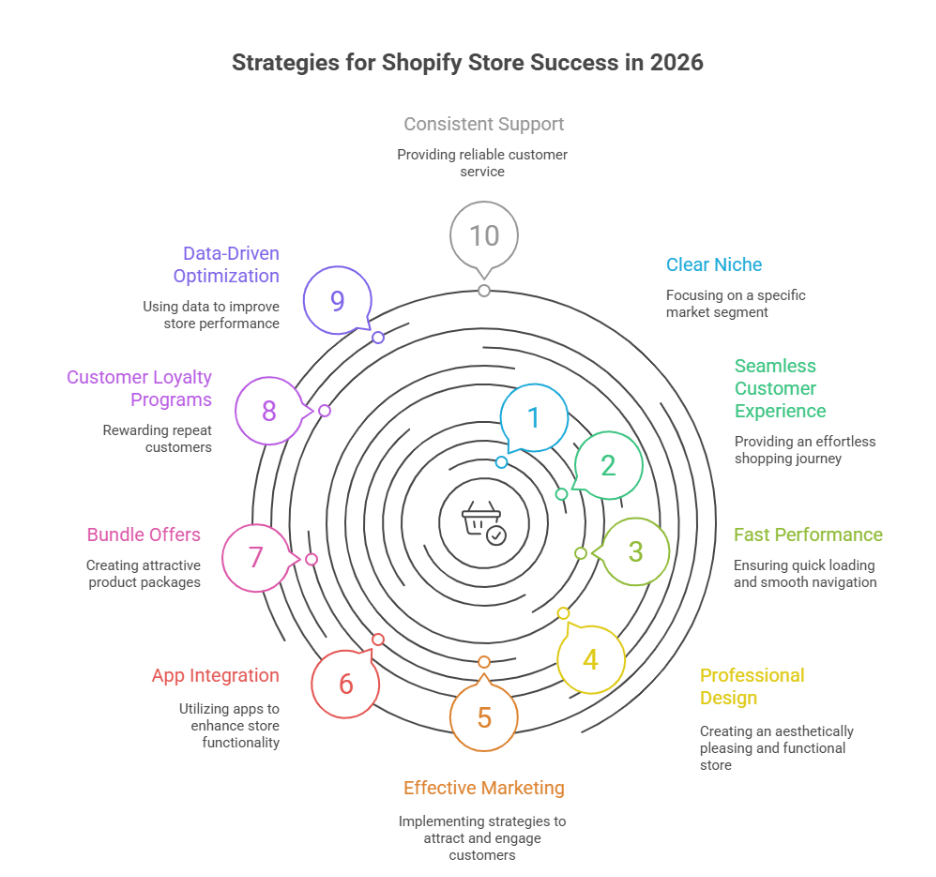
    A Shopify store stands out in 2026 by combining a clear niche, seamless customer experience, fast performance, and professional design. Effective marketing strategies, app integration, bundle offers, and strong customer loyalty programs boost conversions, while data-driven optimization and consistent support ensure long-term shopify business success.

    Performance is shaped by multiple factors, including site speed, design quality, customization, app usage, and ongoing technical support. A successful shopify setup aligns design with a clear niche, seamless functionality, and consistent maintenance. For any shopify business, professional development ensures stability, scalability, and the flexibility needed to adapt to changing buyer expectations in 2026.

    Many businesses underestimate the long-term value of expert design, proactive support, and optimization. While entry-level setups may cost a few hundred dollars, building a competitive foundation requires thoughtful investment to support growth and profitability.

    Shopify Store Strategies That Win Ecommerce Success In 2026

    Shopify Store Strategies That Win Ecommerce Success In 2026

    Launching a shopify store in 2026 requires more than simply listing products. It demands strategic planning, customer-focused design, and consistent optimization. A successful shopify store combines operational efficiency with marketing insight, ensuring your brand competes effectively with top Shopify stores.

    Choose the Right Business Idea and Niche

    The foundation of a thriving Shopify store begins with selecting the right business idea. You need to focus on a niche that meets a specific demand or solves a real problem. By researching competitors and analyzing shopify brands, you can identify market gaps and differentiate your store, which attracts targeted customers and improves the likelihood of higher conversions.

    Build a Shopify Store With Scalability

    When you build a Shopify store, scalability should be a priority. Your store must feature flexible themes, intuitive navigation, and a clean layout that enhances the online business experience. Integrating tools from the Shopify App Store automates workflows, manages inventory, and improves shopify sales. Additionally, mobile optimization and fast loading speeds are critical to maintain a seamless shopping experience for customers.

    Implement Effective Marketing and Offers

    Effective Shopify marketing drives traffic and engages new customers. Strategic campaigns, email marketing, and social media promotions help build visibility, while attractive shopify offers such as bundles or limited-time discounts increase purchase intent. Observing the strategies used by top Shopify stores provides insight into best practices for customer engagement, content, and retention.

    Monitor, Optimize, and Scale

    Continuous monitoring is essential for sustained growth. By analyzing customer behavior, shopify app store insights, and shopify sales trends, you can optimize product pages, checkout flows, and marketing campaigns. Scaling successful strategies while maintaining a consistent and high-quality online business experience ensures long-term loyalty and growth.

    Successful Shopify Business Ideas Choosing Right Niche Products

    Creating a shopify store in 2026 that stands out begins with selecting the right business idea and identifying products that truly resonate with your target audience. For aspiring merchants, a strong niche not only attracts new customers but also differentiates your store from competitors, helping you compete with top Shopify stores and best Shopify stores across the platform.

    Step 1: Identify a Profitable Niche

    The first step in building a successful ecommerce store is pinpointing a niche that meets real customer demand. Start by analyzing shopify brands and stores selling similar products to understand trends, gaps, and opportunities. A well-chosen niche allows you to attract customers, boost engagement, and improve long-term shopify sales.

    Step 2: Choose the Right Products to Sell Online

    Once your niche is defined, focus on selecting products to sell online. Prioritize items that are in demand, have healthy profit margins, and can be supported with attractive shopify offers such as free shipping or bundles. For dropshipping business models, evaluate supplier reliability, shipping times, and product quality to maintain a positive online shopping experience.

    Step 3: Build a Shopify Store Optimized for Growth

    Next, build a Shopify store with a design that reflects your brand identity. Use best Shopify themes for professional store design, integrate essential apps from the Shopify App Store, and optimize your checkout flow to increase shopify sales. Features like automated inventory tracking, loyalty programs, and early access promotions help grow your business and keep new and existing customers engaged.

    Step 4: Market Your Store and Products

    Effective shopify marketing strategies are key to reaching the right audience. Utilize multiple marketing channels such as social media, email campaigns, and content marketing through a shopify blog to reach new audiences. Highlight your unique selling points, shopify offers, and promotional campaigns to encourage repeat purchases and strengthen customer loyalty.

    Step 5: Monitor Performance and Scale Strategically

    Finally, track performance metrics and adjust your strategy as needed. Monitor shopify store’s traffic, conversions, and inventory trends to ensure your store remains competitive. By learning from many shopify merchants and leading Shopify practices, you can continuously refine your offerings, expand your reach, and maintain a memorable store that stands out in 2026.

    Conclusion

    Standing out with a shopify store in 2026 requires more than just listing products it demands strategic planning, a clear niche, seamless customer experience, scalable design, and effective marketing. From selecting the right business idea and products to optimizing your store for growth, every decision impacts shopify sales, customer loyalty, and long-term shopify business success.

    Professional development, consistent monitoring, and data-driven optimization are essential for maintaining a competitive edge. By integrating tools from the Shopify App Store, offering bundles or promotions, and analyzing strategies used by top Shopify stores, you can attract new customers, retain loyal shoppers, and ensure your online business grows sustainably.

    For ambitious merchants, the question is not whether to start, but how to make your store truly stand out. Are you ready to see how Integriti Studio can help your shopify store in 2026 achieve maximum growth and visibility?

    Frequently Asked Questions (What Will Make A Shopify Store Stand Out In 2026)

    What is Shopify prediction for 2026?

    Shopify is expected to grow in 2026 with strong e‑commerce adoption, AI‑driven tools, and expanding international markets. Analysts see continued revenue and merchant base growth, improving margins, and potential stock upside, though valuation risks and competition remain key factors.

    How do I make my Shopify store stand out?

    To make your Shopify store stand out, focus on niche targeting, unique branding, and high-quality visuals. Optimize user experience, implement AI-powered personalization, ensure fast loading and mobile responsiveness, and use social proof and content marketing. Consistency and innovation drive long-term customer trust and loyalty.

    What is the future of Shopify?

    Shopify’s future in 2026 points to deeper AI‑driven commerce, real‑time personalization, global expansion tools, and seamless omnichannel experiences. The platform aims to become an intelligent commerce hub that automates operations, enhances customer journeys, and strengthens merchant growth worldwide.

    Is Shopify still relevant in 2025?

    Yes Shopify is still very relevant in 2025. It powers millions of stores worldwide, holds a large share of the e‑commerce market, continually updates with AI tools and integrations, and remains a top choice for online selling and business growth this year.

  • Is Your WordPress Site Ready For 2026? A Simple Readiness Checklist

    Is Your WordPress Site Ready For 2026? A Simple Readiness Checklist

    Is Your WordPress Site Ready For 2026? A Simple Readiness Checklist

    Why do some WordPress websites perform flawlessly while others struggle with speed, security, and conversions? The difference is rarely the platform itself. It lies in how well your WordPress site is built, managed, and maintained as expectations rise in 2026. For business growth, relying on an outdated setup is no longer sustainable in 2026.

    A WordPress site ready for 2026 follows a clear checklist covering performance, SEO, security, hosting, mobile experience, backups, and AI-driven optimization. Regular updates, reliable support, and professional maintenance ensure faster loading, better rankings, higher conversions, and long-term stability for growing businesses.

    Website performance is influenced by multiple factors, including hosting quality, code standards, design decisions, and ongoing support. A professionally developed WordPress site integrates SEO, reliable host infrastructure, regular backup systems, and smart use of AI to maintain efficiency and scalability in 2026. Without a clear checklist, even strong brands risk slow performance, weak trust, and missed opportunities.

    Many business owners underestimate the real value of professional design, proactive maintenance, and technical support. While basic development may cost a few hundred dollars, long-term stability, security, and performance require a strategic investment backed by expertise and planning.

    This blog presents a practical checklist to assess whether your WordPress website is truly ready for 2026, outlining key areas to review, risks to address, and improvements that support sustainable business success.

    2026 WordPress SEO Checklist For Business Owners Platform

    2026 WordPress SEO Checklist For Business Owners Platform

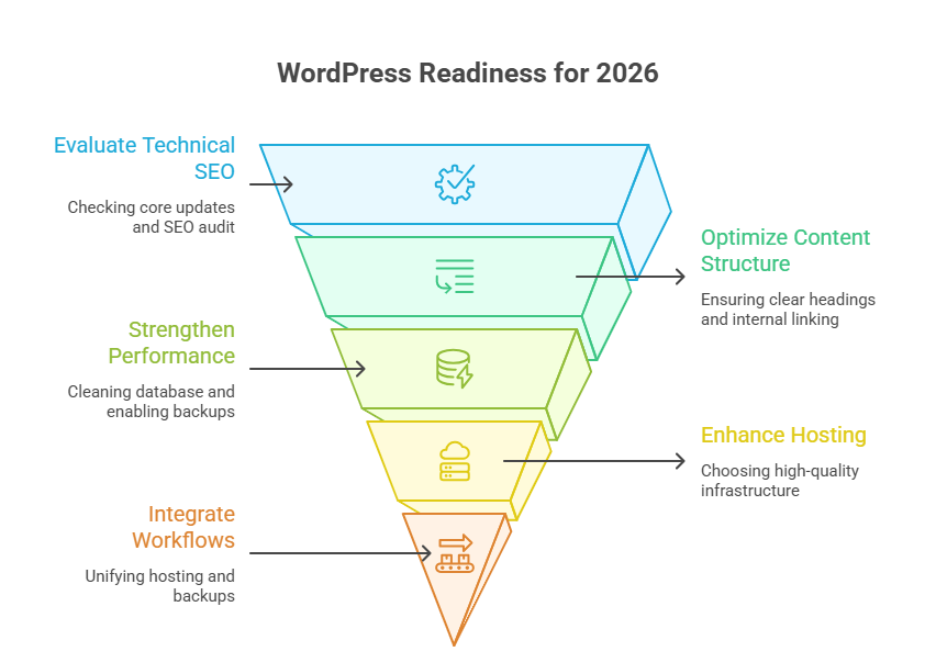
    Step 1: Evaluate Technical SEO Foundations

    website ready for search growth in 2026 and beyond starts with strong technical foundations. Begin by reviewing wordpress core updates to ensure no outdated software is exposing security vulnerabilities. Perform a full SEO audit covering ssl configuration, core web vitals, and proper cdn integration to reduce downtime. This step protects your site from hacker risks while improving visibility and crawl efficiency for search engines.

    Why it matters

    For business owners, technical gaps directly affect trust, rankings, and long-term stability. Ignoring these basics often leads to performance drops and hidden risks.

    Step 2: Optimize Content Structure And User Flow

    Search engines reward clarity and relevance. Review your service pages, blog posts, and faqs to ensure consistent format, clear headings, and strong internal linking. Strategic calls to action should guide users toward booking or inquiries without disrupting the user experience. Clean css, readable font, and logical page hierarchy strengthen accessibility and engagement.

    Step 3: Strengthen Performance, Data, And Reliability

    Effective performance optimization includes database cleanup, malware scanning, and enabling daily backups. Properly configure your hosting plan to support peak traffic and smooth mobile experience. A reliable workflow for updates and monitoring ensures stable functionality and protects revenue during traffic surges.

    2026 WordPress Host Backup Advantage Reducing Downtime Workflow

    A strong hosting setup is the first advantage in reducing website downtime and protecting business continuity. In 2026, hosting is no longer just about server space; it is about performance, security, and seamless integration across your WordPress workflow.

    Key hosting advantages

    • Use a latest stable server environment to prevent unexpected crashes
    • Choose high-quality infrastructure that supports traffic spikes during any marketing campaign
    • Enable automated monitoring to protect real user experience
    • Maintain secure admin accounts to limit unauthorized access
    • Build user trust through consistent uptime and fast response times

    Backup Systems That Minimize Risk And Recovery Time

    Backups are your safety net when technical failures occur. A structured backup strategy ensures fast recovery without data loss or reputational damage.

    Backup workflow best practices

    • Store backups in secure cloud storage for off-server protection
    • Schedule backups using automation to eliminate manual errors
    • Ensure compatibility with third-party tools and services
    • Regularly test restore points to avoid failed recovery scenarios

    Integrated Workflow For Downtime Reduction

    Hosting and backups should not operate in isolation. When you integrate them into a single workflow, recovery becomes faster and more predictable.

    Why integration matters

    • Simplifies technical operations through unified control
    • Reduces dependency on manual fixes during failures
    • Supports search visibility across platforms like Bing
    • Improves long-term reliability through seamless system alignment

    Conclusion

    Preparing yourWordPress website for 2026 is no longer a technical luxury it is a business necessity. From SEO foundations and content structure to hosting stability and backup workflows, every element discussed above directly impacts performance, security, user trust, and long-term growth. A clear readiness checklist helps you identify gaps before they turn into downtime, ranking loss, or missed conversions.

    For business owners, the real advantage lies in proactive decisions: keeping systems updated, integrating hosting and backups into a reliable workflow, and investing in professional oversight rather than reactive fixes. When these elements work together, your WordPress platform becomes scalable, resilient, and aligned with future expectations instead of struggling to catch up.

    Isn’t it time to see how Integriti Studio can strengthen your WordPress site for 2026?

    Frequently Asked Questions (Is Your WordPress Site Ready For 2026? A Simple Readiness Checklist)

    How to build a website checklist?

    To build a website, start with a clear purpose and target audience. Choose a domain and reliable hosting, plan your site structure, and design a responsive layout. Add quality content, optimize for SEO, ensure fast loading, implement security, and test across devices before launch.

    What are the 7 steps to building a good website?

    The 7 steps to building a good website are: 1) Define purpose and audience, 2) Choose domain and hosting, 3) Plan site structure, 4) Design responsive layout, 5) Create quality content, 6) Optimize for SEO and speed, 7) Test, secure, and launch.

    What is the basic information of WordPress?

    WordPress is a popular open-source content management system (CMS) used to create websites and blogs. It offers customizable themes, plugins for added functionality, and a user-friendly interface. WordPress supports SEO, responsive design, and content management, making it suitable for beginners and professionals alike.

    What are the requirements for a website?

    The requirements for a website include a clear purpose, target audience, and domain name. You need reliable web hosting, a responsive design, quality content, and user-friendly navigation. Additionally, SEO optimization, fast loading speed, security measures, and regular updates are essential for a successful website.

  • What Makes a Website Future-Ready In 2026

    What Makes a Website Future-Ready In 2026

    Why do some websites struggle to engage visitors despite sleek layouts and flashy visuals? The difference often lies in a combination of factors influencing website performance from page speed and accessibility to AI-driven personalization and SEO integration. A future-ready website in 2026 isn’t just about how it looks; it’s about how it functions, converts, and adapts to evolving user expectations.

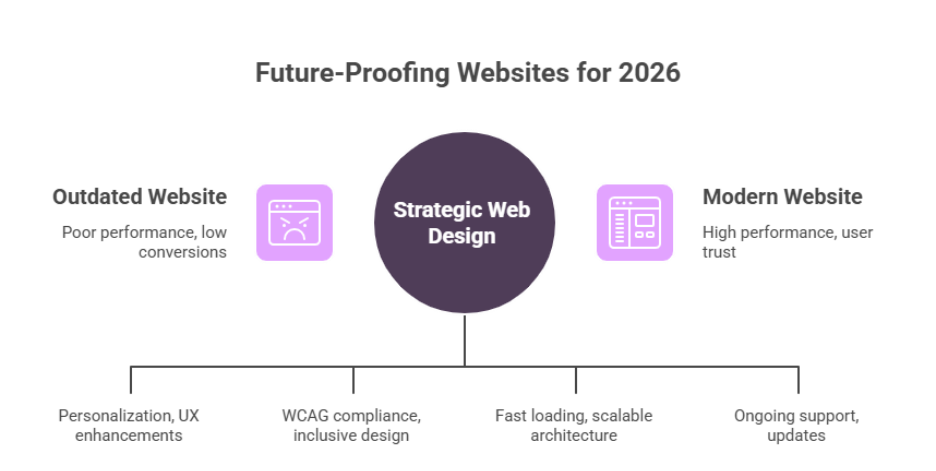
    A website becomes future-ready in 2026 by combining AI-driven personalization, fast and accessible layouts, SEO integration, and seamless user experience. Prioritizing professional development, regular maintenance, and modern design trends ensures your site transforms web experiences, builds trust signals, and stays adaptable to evolving technologies and user expectations.

    Professional development plays a crucial role in this transformation. Investing in expert web design, maintenance, and support ensures your site remains secure, fast, and compatible with modern tools. Good design goes beyond aesthetics it builds trust signals, guides users efficiently, and enhances the overall user experience. For businesses, this often means allocating budgets that reflect quality development, with typical professional website projects ranging from moderate to higher-end pricing depending on complexity and features.

    This blog will explore what makes a website truly future-ready in 2026. You’ll discover emerging design trends, AI-powered tools, accessibility standards, layout strategies, and techniques to transform web experiences. We’ll also highlight practical ways to ensure your new website attracts search engines, engages users, and stays ahead of the trends of 2026.

    How To Make Your Website Future-Ready In 2026

    How To Make Your Website Future-Ready In 2026

    Preparing a website for 2026 means creating modern websites that are adaptive, engaging, and built for long-term performance. Follow these steps to make your site truly future-ready:

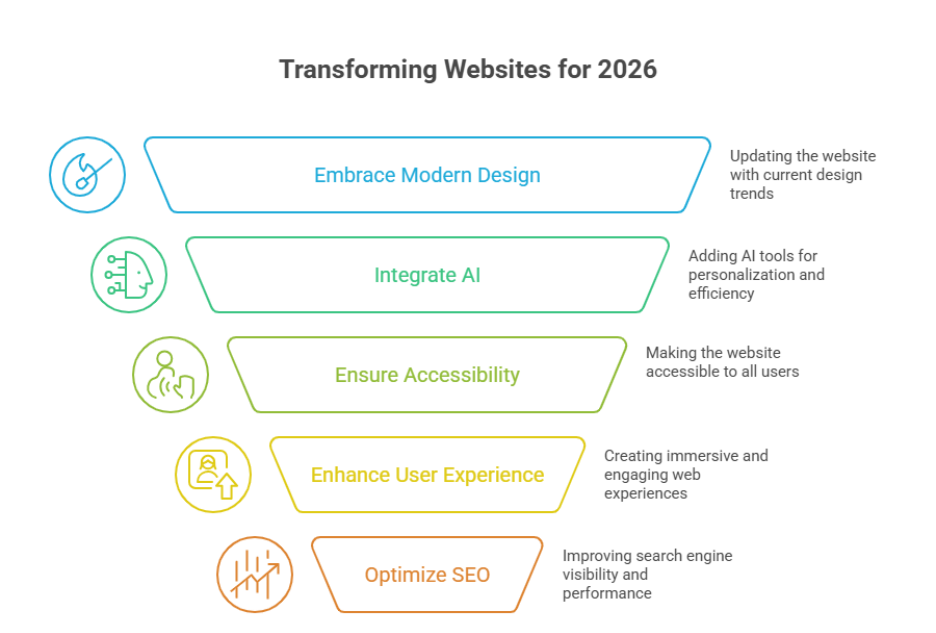
    Step 1: Embrace Modern Web Design and Layouts

    Start by updating your web design to match current design trends 2026. Focus on clear, immersive layouts, responsive typography, and micro-interactions. A well-structured 2026 website guides users intuitively, improving usability and overall digital experience.

    Step 2: Prioritize Personalization and AI Integration

    Implement personalization features and AI tools to tailor content to each visitor. Adding AI assistants or ai search functionality enhances navigation and boosts engagement, making your web experiences smarter and more user-focused.

    Step 3: Focus on Inclusive Design and Accessibility

    Incorporate inclusive design principles to make your website accessible to all users. This ensures compliance with accessibility standards, improves UX, and aligns with trends of 2026 where ethical, user-centered design is a priority.

    Step 4: Enhance Web Experiences With Immersive Features

    Add interactive visuals, animations, and immersive elements that captivate visitors. Thoughtful web experiences create a memorable site, keeping users engaged and encouraging return visits.

    Step 5: Stay Ahead With SEO and Development Trends

    Optimize for search engines and keep up with web development and trends for 2026. Fast-loading pages, structured data, and AI-driven analytics ensure your future of web design strategy maintains high performance and visibility.

    Key Design Trends 2026 Shaping Modern Websites Today

    Modern websites are evolving fast, and trends of 2026 are shaping the future of website design. To create modern websites that deliver exceptional digital experiences and remain future-ready, consider these key design trends:

    Immersive Experiences and Micro-Interactions

    • Web experiences are moving toward immersive, interactive designs that actively engage users.
    • Micro-interactions, such as hover effects, animated buttons, and real-time feedback, guide users and enhance overall usability.
    • These features make modern websites dynamic and memorable, improving user retention and encouraging exploration.

    AI-Driven Personalization

    • Personalization with ai tools allows websites to adapt content, recommendations, and offers to individual user behavior.
    • Integrating ai assistants or ai search simplifies navigation, helping users find relevant content quickly.
    • Personalized experiences not only improve engagement but also strengthen the user’s connection with your brand, enhancing the overall digital experience.

    Inclusive Design and Accessibility

    • Inclusive design ensures your website is accessible to users with different abilities, meeting accessibility standards.
    • Enhancing UX for all visitors aligns with trends for 2026, where ethical and user-centered design is a priority.
    • Accessibility improvements increase audience reach, build trust, and contribute to a future-ready website.

    Typography and Visual Hierarchy

    • Thoughtful typography improves readability and establishes a clear visual hierarchy for your content.
    • Strong hierarchy and expressive fonts guide users intuitively, making navigation easier and boosting usability.
    • Bold typefaces, dynamic font sizes, and clear spacing are integral design trends 2026 that enhance digital experiences.

    Future-Ready Layouts

    • Websites are shifting away from rigid grids toward flexible, immersive layouts that adapt to various devices.
    • These layouts improve responsiveness, creating consistent web experiences across desktops, tablets, and mobile devices.
    • Adopting such designs ensures websites in 2026 are visually appealing, functional, and adaptable to evolving user needs.

    Optimized Performance and AI Integration

    • Using ai tools can automate content delivery, enhance personalization, and optimize workflows for efficiency.
    • Maintaining fast-loading pages and monitoring performance metrics ensures smoother digital experiences.
    • AI-powered insights and automation help your future of website strategy remain competitive and future-ready.

    Core Design Principles

    • Every design choice should have a purpose, balancing aesthetics with functionality.
    • Focus on good design and user-first principles to create intuitive, engaging modern websites.
    • Following these principles ensures your site is immersive, usable, and positioned as a future-ready website for 2026.

    Conclusion

    Creating a future-ready website in 2026 goes beyond attractive visuals. It requires combining AI-driven personalization, immersive layouts, inclusive design, and SEO integration to deliver seamless digital experiences. By following modern web design trends, prioritizing usability, and investing in professional website development, your site can adapt to evolving user expectations while building trust and engagement. Thoughtful design choices, interactive micro-elements, and AI-powered tools ensure your website not only performs well today but remains relevant in the fast-changing digital landscape of 2026.

    Ultimately, the key to a truly future-ready website is balancing aesthetics, functionality, and accessibility while keeping users at the center of every decision. Regular updates, maintenance, and integration of new technologies will keep your modern website competitive and impactful.

    Are you ready to transform your website into a future-ready digital experience, or should you contact Integriti Studio to make it happen?

    Frequently Asked Questions (What Makes a Website Future-Ready In 2026)

    What is the trend in website 2026?

    In 2026, website trends focus on AI-powered personalization, minimalist yet purposeful design, 3D/immersive visuals, voice-enabled navigation, and accessibility. Sites are faster, adaptive to users, mobile-first, and use bold typography and subtle interactions to boost engagement and clarity.

    What is the scope of web development in 2026?

    In 2026, web development has a vast scope with rising demand for AI-integrated websites, progressive web apps, voice and AR/VR interfaces, and advanced cybersecurity. Developers skilled in full-stack, cloud solutions, and accessibility-focused design will lead, as businesses prioritize seamless, personalized, and future-ready digital experiences.

    What is the future of websites?

    The future of websites is AI-driven, highly personalized, and immersive, combining voice, AR/VR, and interactive 3D elements. Websites will focus on speed, accessibility, and seamless mobile experiences, acting as smart platforms that adapt to user behavior, deliver real-time content, and enhance engagement and conversions.

    What will technology look like in 2026?

    In 2026, technology will be AI‑driven, highly interconnected, and immersive, with smart devices, augmented and virtual reality, advanced robotics, and quantum computing becoming mainstream. Emphasis will be on automation, personalized experiences, sustainability, and seamless integration across work, entertainment, and daily life, reshaping how people live and interact.

  • What Will No Longer Work On Websites In 2026

    What Will No Longer Work On Websites In 2026

    What Will No Longer Work On Websites In 2026

    Why do some websites stop performing even though they looked “modern” just a year ago? The answer often lies in outdated assumptions carried over from 2025. As 2026 approaches, what once worked on the web is quickly becoming a liability. Your website performance is now shaped by speed, clarity, accessibility, privacy expectations, and how intelligently ai is integrated into real user journeys.

    In 2026, websites will no longer succeed with slow load times, cluttered layouts, confusing navigation, or copied design trends. Overused AI features, poor accessibility, outdated updates from 2025, and unsupported web builds will reduce trust, harm user experience, and limit long-term business growth.

    Many businesses still rely on heavy layouts, confusing navigation, slow load behavior, and borrowed trends that no longer match mobile-first usage. Simply embedding a youtube video, copying an app-style interface, or forcing endless scroll does not guarantee engagement. In 2026, ai must support decision-making, personalization, and efficiency not distract users or compromise trust. Without proper support and ongoing updates, even expensive builds lose value fast.

    Professional development protects your investment. A typical website project may range between $1,500 and $6,000, but without maintenance, optimization, and strategic upgrades, performance declines quickly. Good design is not visual polish alone it is structure, compliance, and long-term reliability.

    This blog breaks down what will no longer work on websites in 2026, from outdated web trends and poor navigation to misuse of ai, helping you identify risks, rethink priorities, and make smarter choices for sustainable growth.

    Web Design Trends Failing Websites In 2026 After 2025

    Step 1: Relying on Outdate Design Decisions

    Many businesses enter 2026 still using outdate layouts, outdate components, and outdate thinking carried over from earlier years. While these choices once aligned with popular web trends, they now create a clear risk to performance. Search behavior, user expectations, and search engines have evolved, and web design that fails to adapt quickly loses relevance.

    Step 2: Broken Layouts and Poor Scrolling Logic

    A rigid or overloaded layout is one of the fastest ways to lose a visitor. Endless scroll without visual hierarchy, poorly placed visual cues, or unbalanced spacing harms readability and engagement. These issues directly conflict with modern web design trends and make it harder for sites to perform well across devices.

    Step 3: Overusing Trends Without Purpose

    Blindly copying a popular design trend is no longer effective. Trends that ignore context, usability, or personalization feel disconnected and reduce trust. In 2026, trends must support clarity and outcomes, not experimentation alone. What worked in 2025 often needs a strategic update, not repetition.

    Step 4: Ignoring Performance and Embedded Bloat

    Heavy media choices such as unnecessary embed elements slow sites and impact SEO expectations shaped by Google’s Core Web Vitals. Without regular update cycles and a clear upgrade plan, even well-built sites struggle to keep pace with design trend shifts.

    Step 5: Failing to Plan for Continuous Improvement

    Successful websites are reviewed, refined, and measured. Teams that overlook structured improvement miss opportunities to align with emerging expectations and trends for 2026. The goal is not to chase every change, but to apply web design choices that scale, support growth, and remain future-ready.

    Conclusion

    Websites that fail to evolve with user expectations and technological shifts quickly lose relevance in 2026. Outdated layouts, confusing navigation, overused AI, and heavy media not only frustrate users but also harm engagement, trust, and search visibility. Simply copying design trends from 2025 or neglecting performance upgrades is no longer sufficient.

    To stay competitive, you must invest in professional development, continuous updates, and strategic web design decisions that prioritize usability, personalization, and future-ready layout structures. Modern websites succeed when every element from scrolling logic and visual hierarchy to embedded media and AI features is thoughtfully optimized for speed, clarity, and user experience.

    The key takeaway is that good design extends beyond aesthetics: it is structured, compliant, and focused on measurable results. If you want your business website to thrive and avoid the common pitfalls of outdated trends, continuous improvement is essential. So ask yourself can your website truly perform at its best or is it time to explore a smarter upgrade with Integrity Studio?

    Frequently Asked Questions (What Will No Longer Work On Websites In 2026)

    What will happen to technology in 2026?

    In 2026, technology will become more intelligent and human-centric. AI will power everyday tools, automation will increase efficiency, and digital experiences will be highly personalized. Strong focus on cybersecurity, accessibility, and sustainable technology will shape long-term business growth and user trust.

    What is replacing websites?

    Websites are not disappearing, but they are being complemented by AI-driven platforms. In 2026, super apps, AI chatbots, voice assistants, social commerce, and no-code tools are handling quick interactions, while websites remain the central hub for trust, conversions, content, and long-term digital presence.

    What is the trend in website 2026?

    The website trend in 2026 focuses on AI-powered personalization, fast-loading performance, and clean, modular layouts. Accessibility-first design, voice and chatbot integration, and privacy-focused experiences are becoming standard. Websites are built to guide users quickly, build trust, and support long-term business scalability.

    Do you still need a website in 2025?

    Yes, a website is still essential in 2025. Social platforms and apps support visibility, but a website builds credibility, ownership, and trust. It acts as a central hub for branding, SEO, conversions, and data control, helping businesses grow independently and sustainably.

  • Website Trends Businesses Need To Prepare For In 2026

    Website Trends Businesses Need To Prepare For In 2026

    Website Trends Businesses Need To Prepare For In 2026

    Why do some business websites generate consistent leads while others struggle to justify their cost? The difference is rarely the platform alone. Performance is shaped by strategic web design decisions, the right design trend adoption, and how professionally a site is built, supported, and maintained over time. As 2026 approaches, expectations around speed, trust, and usability are rising fast.

    Businesses preparing for 2026 must focus on AI-powered web design, accessibility, personalization, and performance-driven layouts. Modern websites will prioritize UX, fast loading, micro-interactions, and scalable architecture. Strategic design trends, ongoing maintenance, and professional development choices will directly impact trust, conversions, and long-term digital growth.

    Businesses that relied on shortcuts in 2025 are now facing limitations in scalability, accessibility, and personalization. Elements like layout structure, typography, color palette, and even how a logo is layered or displayed can directly affect credibility and conversion. Modern websites demand creative thinking, oversized visuals, refined overlays, micro-level polish, and increasingly ai-powered enhancements that improve user experience without overwhelming it.

    Professional development also protects your investment. A new website may cost anywhere between $1,500 to $6,000 depending on scope, but without ongoing support and updates, even strong designs lose value quickly. Smart planning ensures your site evolves with user behavior, not against it.

    This blog explores the most impactful web design trend shifts, design trends for 2026, accessibility standards, personalization strategies, and how ai fits into the future of digital growth—helping you prepare with clarity, confidence, and long-term results.

    Web Design Trends 2026 Shaping Modern Business Websites Success

    Web Design Trends 2026 Shaping Modern Business Websites Success

    The Strategic Shift Behind Website Performance

    In 2026 web expectations are no longer driven by aesthetics alone. Website trends now focus on measurable performance, long-term scalability, and user trust. For small businesses, competing in a crowded digital landscape means aligning design with core web vitals, accessibility standards like WCAG, and clear business outcomes. This shift defines the most impactful design trends 2026 has introduced.

    UX, Usability, and Structured Layouts

    Designing for How Users Actually Behave

    Modern success begins with ux and usability. Clean structured layouts, a consistent grid, and logical navigation reduce friction across all web pages. Visitors expect fast page load speeds, intuitive clickable elements, and focused calls-to-action especially on landing pages. Ignoring these fundamentals often results in slow load times, lost trust, and missed conversions.

    Visual Direction: From Minimalism to Maximalist Confidence

    Making a Strong Visual Identity

    The web design trends for 2026 reflect confidence and clarity. Some brands lean into minimalism, while others adopt maximalist expressions inspired by ’90s nostalgia and futurism. Oversized images, bold shape usage, and expressive design elements are paired with soft gradients, subtle gradient overlays, and even experimental accents like neon pinks, pastel color, or controlled glitter effects. The key is consistency with your visual identity, not decoration for its own sake.

    Typography, Fonts, and Content Hierarchy

    Content-Led Digital Design

    Strong font choices and readable typography guide attention and support content based storytelling. In modern websites, typography is no longer secondary it defines hierarchy, tone, and clarity in a noisy digital world. When paired with neutral color foundations or textured surfaces, it creates balance without overwhelming the user.

    AI-Driven Personalization and Commerce

    Smarter Experiences, Not Louder Ones

    AI-driven interfaces are reshaping digital experiences, particularly for e-commerce. Thoughtful ai-driven logic enables dynamic product recommendations, adaptive layouts, and smarter personalization without sacrificing speed. These capabilities are now part of the top web design trends, especially for business websites seeking scalable growth.

    Tools, Platforms, and Practical Execution

    Beyond Templates

    Relying solely on a rigid template limits flexibility. Modern design tools, platforms like Wix Studio, and experienced collaboration with a professional web designer allow brands to move faster while maintaining quality. Whether launching a new website or refining existing business websites, execution matters more than trends alone.

    Preparing for What Comes Next

    The future of web design is not about chasing every trend. It is about understanding how the year’s trends connect performance, accessibility, and creativity. Brands that shape 2026 and learn from evolving expectations will build modern websites that perform reliable far removed from the limitations of dial-up thinking while staying relevant to audiences like Gen Z and beyond.

    Conclusion

    Preparing for website success in 2026 is no longer about following trends blindly it is about making informed, strategic decisions that balance performance, usability, accessibility, and long-term growth. As expectations evolve, businesses that invest in professional web design, structured layouts, thoughtful UX, and scalable, AI-driven personalization will consistently outperform those relying on shortcuts or outdated approaches. From visual identity and typography to page speed, maintenance, and platform choice, every detail contributes to trust, conversions, and measurable business outcomes. The brands that act early will not only adapt to change but shape it, building digital experiences that remain relevant, reliable, and competitive well beyond 2026.

    If your website needs to be future-ready, isn’t it time to ask why not discuss your next move with Integrity Studio?

    Frequently Asked Questions (Website Trends Businesses Need To Prepare For In 2026)

    What are the web trends in 2026?

    In 2026 web trends, AI-powered personalization, Progressive Web Apps (PWAs), immersive AR/3D experiences, Web3/blockchain, voice and conversational interfaces, strong cybersecurity, low-code/no-code tools, and sustainable, performance-first web design will dominate online experiences.

    What are the 7 C’s of website design?

    The 7 C’s of website design are Context, Content, Community, Customization, Communication, Connection, and Commerce. Together, they ensure a website looks appealing, delivers valuable information, engages users, supports interaction, integrates external links, and effectively drives business goals and conversions.

    What is the future of digital marketing in 2026?

    The future of digital marketing in 2026 focuses on AI-driven personalization, immersive AR/VR experiences, voice and conversational commerce, data privacy-centric targeting, short-form video dominance, influencer credibility, and sustainable, value-based content strategies to deepen engagement and boost conversions across platforms.

    Is website design still a good business in 2025?

    Yes website design is still a good business in 2025 because companies always need professional, user-friendly, SEO-optimized, and mobile-responsive websites to compete online. Demand for custom design, UX expertise, and scalable sites remains strong despite AI tools and builders.

  • The Website Features Users Will Expect By 2026 

    The Website Features Users Will Expect By 2026 

    The Website Features Users Will Expect By 2026

    Why do some websites feel effortless to use while others frustrate visitors at every click? The difference lies in how carefully you plan for 2026 web design from layout and navigation to accessibility and AI-driven personalization. Websites that excel are not just visually appealing; they deliver seamless user experience, optimized performance, and real value through thoughtful digital experiences. 

    By 2026, users will expect websites with minimalist layouts, AI-powered personalization, accessible and inclusive design, fast load times, and seamless navigation. Engaging interfaces, immersive digital experiences, and responsive, SEO-friendly web design trends will be essential for building trust, enhancing user experience, and driving conversions. 

    Several factors influence website performance, including clean layout, intuitive navigation, accessibility standards, minimalism, and integration of AI tools for personalization and optimization. Professional development ensures your site scales effectively, stays SEO-friendly, and maintains fast load times. Good design, ongoing support, and regular maintenance are investments that pay off in higher conversion, stronger brand credibility, and better search engine performance. Even modest budgets for a new website can deliver measurable returns when structured with long-term strategy in mind. 

    This blog will explore the website features users will expect by 2026, including emerging design trends, immersive interfaces, AI-powered personalization, minimalist layouts, accessibility-first approaches, and how smart development decisions enhance digital marketing efforts and guide users toward meaningful engagement. 

    Future of web design and website features 2026 

    As you step into 2026, the future of web design will continue to evolve, shaped by user expectations, emerging 2026 web design trends, and advancements in technology. Businesses must adopt modern, inclusive design practices and AI-powered tools to create new website experiences that are fast, intuitive, and visually appealing. Below are actionable steps to align your site with the top web design trends and features users will expect in 2026. 

    Step 1: Embrace Minimalist and Clean Layouts 

    Minimalist design will dominate 2026 web design trends, focusing on simplicity, white space, and clean typography. Reducing clutter enhances load times and ensures your content and design elements guide users naturally, improving user experience while maintaining a professional appearance. 

    Step 2: Implement AI-Powered Personalization 

    Incorporate AI tools to provide product recommendations, personalized content, and interactive elements. AI-driven automation allows your company’s website to adapt in real-time to user behavior, creating highly relevant experiences that build trust and increase conversions. 

    Step 3: Prioritize Inclusive and Accessible Design 

    Inclusive design ensures your website is usable for all visitors, including people with disabilities. Accessibility considerations, mobile responsiveness, and optimized website speed are crucial for reaching broader audiences while maintaining compliance and good design standards. 

    Step 4: Enhance Interactivity and Visual Engagement 

    Interactive features like motion effects, hover animations, and data visualization improve engagement and guide users toward key actions. A thoughtfully designed website hero section paired with interactive elements reinforces brand identity and encourages users to explore further. 

    Step 5: Optimize Performance and Scalability 

    Fast load times, responsive layouts, and scalable infrastructure ensure your website in 2026 supports both mobile users and desktop visitors. Using modern design tools and website builder platforms allows continuous optimization, ensuring your site remains competitive in the evolving digital world. 

    Step 6: Monitor Trends and Adapt Continuously 

    Keep an eye on design trends to watch and trends to expect in 2026. Regularly updating your design strategy with emerging web design trends for 2026 ensures your online presence remains relevant, efficient, and capable of delivering interactive, AI-powered digital experiences. 

    2026 web design trends reveal minimalist AI-powered inclusive layouts 

    The evolving digital landscape means web design continues to evolve rapidly, and businesses must adapt to meet rising user expectations. Trends reveal that minimalist, AI-powered, and inclusive layouts are shaping the future of web design in 2026. Below are key insights explained in bullet points: 

    • Minimalist Layouts for Clarity and Focus: 
      A trend toward simplicity helps reduce clutter, improves internet users’ experience, and allows content and key messages to stand out. Minimalist design also helps users feel comfortable navigating your site, enhancing engagement. 
    • AI-Powered Personalization: 
      Integrating AI allows your website to adapt in real-time, offering personalized content, product recommendations, and dynamic interfaces. AI helps create an emotional connection with users by delivering experiences tailored to their preferences. 
    • Inclusive Design for Accessibility: 
      Websites must be inclusive, ensuring all users, including those with disabilities, can navigate and interact with your content. This approach signals professionalism and builds trust while expanding audience reach. 
    • Interactive and Engaging Interfaces: 
      Motion effects, micro-animations, and interactive features help users feel more engaged and guide them through key actions effectively. These elements support digital marketers in enhancing conversions and retention. 
    • Alignment with Evolving Marketing Trends: 
      Understanding the 2025 state of marketing helps anticipate what users expect in 2026. Websites that combine minimalist layouts, AI-driven personalization, and inclusivity position businesses ahead in the evolving digital space. 
    • Future-Ready Strategy: 
      Applying these trends can help your website stay relevant, improve user experience, and maintain a competitive edge as web design goes through continuous innovation. 

    Conclusion 

    As we approach 2026, the expectations for websites are higher than ever. Users demand minimalist layouts, AI-powered personalization, inclusive and accessible design, and fast, responsive navigation. Businesses that embrace these web design trends for 2026 create future-ready websites that build trust, improve user experience, and drive meaningful conversion and engagement. 

    A well-designed website is no longer just a digital presence—it’s a strategic asset. Integrating interactive features, optimizing load times, and leveraging AI for personalization ensures your site stays relevant in the evolving digital landscape. Regularly monitoring trends, adapting your website design, and prioritizing accessibility are essential steps for maintaining competitiveness and supporting long-term growth. 

    If your company’s website isn’t fully optimized for 2026, wouldn’t it make sense to see how Integriti Studio can help you stay ahead and create a future-ready website? Could your website really wait while your competitors embrace these trends? 

    Frequently Asked Questions (The Website Features Users Will Expect By 2026)

    What are the web development trends for 2026?

    Web development in 2026 will focus on AI‑driven tools, Progressive Web Apps (PWAs), no‑code/low‑code platforms, Web3 & blockchain, serverless/edge computing, WebAssembly for speed, headless CMS, and stronger cybersecurity & privacy‑first design.

    What is the scope of web development in 2026?

    The scope of web development in 2026 is vast, driven by AI integration, immersive web experiences, and faster, secure platforms. Developers skilled in PWAs, headless CMS, Web3, and no‑code/low‑code tools will be in high demand as businesses prioritize scalability, accessibility, and personalized user experiences.

    What are good features of a website?

    Good website features include fast loading speed, mobile responsiveness, clear navigation, strong security, and accessibility. Other key elements are engaging content, intuitive layout, SEO optimization, contact options, AI-powered personalization, and trust signals that build credibility and encourage users to interact and convert.

    What is the future of websites?

    The future of websites focuses on AI-driven personalization, immersive experiences, and faster, more secure platforms. Websites will prioritize accessibility, seamless mobile performance, voice and visual search, and integration with Web3 technologies, enabling businesses to offer interactive, user-centric, and data-informed online experiences.