Category: Studioblogs

  • Webflow in 2026: Which 2025 Trends Will Shape Client Expectations

    Webflow in 2026: Which 2025 Trends Will Shape Client Expectations

    Webflow in 2026: Which 2025 Trends Will Shape Client Expectations

    Why do some Webflow websites outperform others, even when built on the same platform? The answer lies in multiple factors influencing website performance clean code, intuitive interface, optimized UX, AI-driven personalization, and seamless workflow integration. Businesses that overlook professional development, ongoing support, or design maintenance often face slower load times, lower conversions, and missed opportunities for SEO optimization.

    Webflow in 2026 will be shaped by 2025 trends like AI-driven personalization, minimalism-focused layouts, improved UX/UI, and accessibility. Clients will expect faster performance, seamless interfaces, real-time analytics, and professional design support. Prioritizing SEO, animation, and data-driven workflows will be essential to meet these evolving expectations.

    Investing in professional design and development can transform how users interact with your website. A well-crafted layout, minimalism-focused UI, and subtle animation improve user experience, while AI tools and analytics help you optimize content in real-time. Even small investments often starting from a few hundred dollars per month for maintenance, updates, and support can deliver measurable ROI and scalable results.

    This blog explores how Webflow in 2026 will evolve, highlighting which 2025 trends continue to shape client expectations. You’ll learn how AI-driven tools, modern design trends, accessibility, and minimalism transform web design, how interface and UX choices influence engagement, and why prioritizing professional support is crucial for long-term success. By the end, you’ll have actionable insights to plan, optimize, and scale your Webflow projects with confidence.

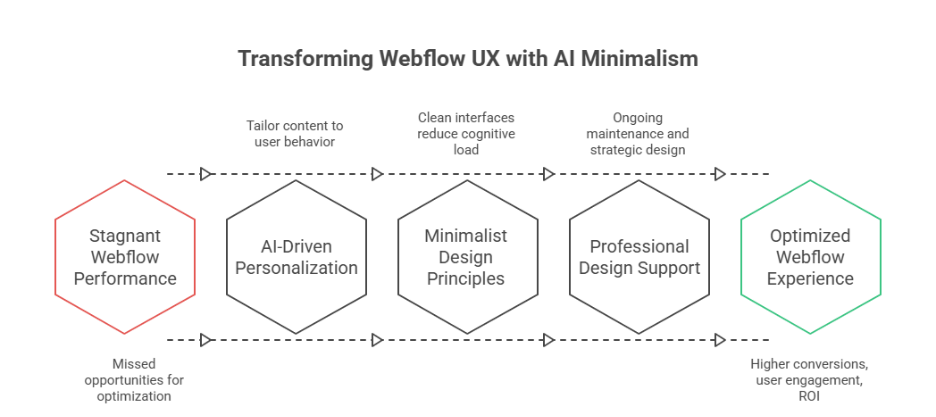
    How AI-Driven Minimalism Transforms Webflow UX in 2026
    How AI-Driven Minimalism Transforms Webflow UX in 2026

    As Webflow continues to evolve, 2026 marks a pivotal shift where AI-driven layouts and minimalism converge to redefine user experience. Businesses heading into 2026 must understand how these innovations impact website design, usability, and customer expectations while streamlining workflows through no-code solutions.

    The Role of AI in Modern Web Design

    AI is changing how designers approach modern web interfaces. From homepage structures to adaptive content, ai-powered tools enable personalization that caters to individual users, helping users navigate sites seamlessly. By analyzing behavior and interaction patterns, AI can optimize visualization and interactive elements, creating intuitive digital experiences that align with brand identity.

    Personalized Layouts for Better Usability

    AI-driven layouts allow adaptive content placement, guiding users to key sections and improving usability. Elements like dynamic menus, voice and chat interfaces, and context-aware calls-to-action ensure the site loads faster and responds to user intent. This approach also guides users toward meaningful actions, enhancing engagement.

    Minimalism Meets AI for Seamless Experiences

    Minimalism paired with AI ensures that design is not only aesthetic but functional. Clean interfaces reduce cognitive load while ai-powered personalization delivers content seamlessly. This trend addresses customer expectations for speed, clarity, and efficiency, making website design more intuitive.

    Integrating Interactive Elements Without Clutter

    Using subtle interactive elements like hover effects, micro-animations, or adaptive content sections enhances engagement without overwhelming users. AI assists in predicting which elements improve conversion, aligning web design trends with trends for 2026.

    Real-Time Personalization and Analytics

    AI tools provide insights through API integrations and dashboards, offering real-time visualization of user behavior. By continuously adapting layouts, 2026 highlight is the ability to deliver personalization that evolves with user interactions, ensuring digital experiences remain relevant and efficient.

    Preparing for What’s Next

    As designers explore trends of 2026, AI-driven minimalism will dominate modern web projects. Focusing on usability, brand identity, and seamless experiences ensures your website design aligns with customer expectations, while ai-powered layouts and no-code tools make scaling and adaptation more efficient.

    AI-Driven Personalization Shapes Minimalism in Web Design 

    AI-driven personalization is revolutionizing modern web design, particularly in platforms like Webflow. By combining minimalism with intelligent automation, businesses can deliver higher conversion rates, streamlined interfaces, and digital experiences that resonate with users. Below is a detailed breakdown of how this approach works:

    Personalization Based on User Behavior

    • Based on behavior: AI monitors user interactions and adapts content dynamically, instead of static layouts, ensuring every visit feels tailored.
    • Scroll-based engagement: Features like scrollytelling guide users through content naturally, improving retention and usability.
    • AI-assisted recommendations: Personalized suggestions for products, articles, or services enhance engagement while respecting user intent.

    Minimalism Meets Strategic Design

    • Fewer resources: Minimalist layouts reduce clutter and optimize performance, allowing pages to load faster without sacrificing impact.
    • Bold type and bold colors: Selective use of bold type or bold colors emphasizes key messages while maintaining a clean interface.
    • Maximalist elements only when needed: Interactive or decorative elements are used sparingly, preserving focus and efficiency.

    Leveraging AI-Powered Tools for Optimization

    • AI-powered tools analyze user behavior and provide actionable insights for UX, interface, and content optimization.
    • Real-time adjustments improve higher conversion rates by presenting content tailored to individual preferences.
    • Integrations support ownership and privacy concerns, ensuring compliance with data privacy standards.

    Benefits for Businesses and Users

    • Personalized, minimalist design creates a seamless experience that reduces cognitive load.
    • Businesses achieve higher conversion rates and measurable ROI with optimized, AI-assisted layouts.
    • Users enjoy interactive, scroll-based experiences that feel intuitive, engaging, and relevant.

    Conclusion

    Webflow in 2026 is set to redefine client expectations by blending AI-driven personalization with minimalist design principles. Businesses that prioritize usability, clean interfaces, and seamless workflows will see measurable improvements in conversion rates, user engagement, and long-term ROI. By leveraging AI-powered tools, scroll-based interactions, and adaptive layouts, you can create digital experiences that feel intuitive, responsive, and tailored to each visitor.

    Investing in professional development, ongoing maintenance, and strategic design ensures your Webflow projects not only meet customer expectations but also stay ahead of web design trends heading into 2026. Minimalism combined with intelligent personalization simplifies navigation, guides users naturally, and delivers content based on behavior, while respecting data privacy and ownership concerns. The result is a modern, scalable, and efficient website design that resonates with users and supports your brand identity.

    As you plan your next Webflow project, consider how AI-driven minimalism and personalization can transform your homepage, layout, and overall UX.

    Do you know if your current Webflow setup is fully optimized for AI-driven personalization or should you contact Integriti Studio to find out?

    Frequently Asked Questions (Webflow in 2026: Which 2025 Trends Will Shape Client Expectations)

    What are the web development trends for 2026?

    AI‑driven development and personalization will dominate, while Progressive Web Apps (PWAs), Web3/blockchain, low‑code/no‑code platforms, serverless and edge computing, WebAssembly high‑performance apps, and strong cybersecurity/zero‑trust design will shape fast, scalable, and secure web experiences.

    Should I learn Webflow in 2025?

    Yes, learning Webflow in 2025 is a smart move. Its visual development approach, combined with AI-powered design tools, allows faster, responsive, and professional website creation without heavy coding. Webflow skills are in high demand for modern web design, startups, and freelance opportunities.

    What is the future of Webflow?

    The future of Webflow looks strong and evolving: it will grow with AI‑powered design and automation, expand enterprise and no‑code adoption, boost market share, and offer powerful visual tools for both creators and businesses—bridging design ease with professional web capabilities.

    What are the latest trends in web design?

    AI‑powered personalization, 3D and immersive visuals, motion micro‑interactions, minimalist clarity with bold typography, adaptive dark/light themes, voice UI integration, and spatial layering depth are shaping modern sites for 2026. These trends focus on engagement, accessibility, and clear, dynamic user experiences.

  • What Shopify Merchants Stopped Doing In 2025 and Why it Worked

    What Shopify Merchants Stopped Doing In 2025 and Why it Worked

    What Shopify Merchants Stopped Doing In 2025 and Why it Worked

    Why do some Shopify stores convert effortlessly while others struggle despite using the same platform? The answer often lies in factors influencing website performance, from clean code and optimized APIs to seamless integrations and thoughtful design. For you as a merchant, understanding these elements is crucial—not just for immediate sales, but for long-term ecommerce growth.

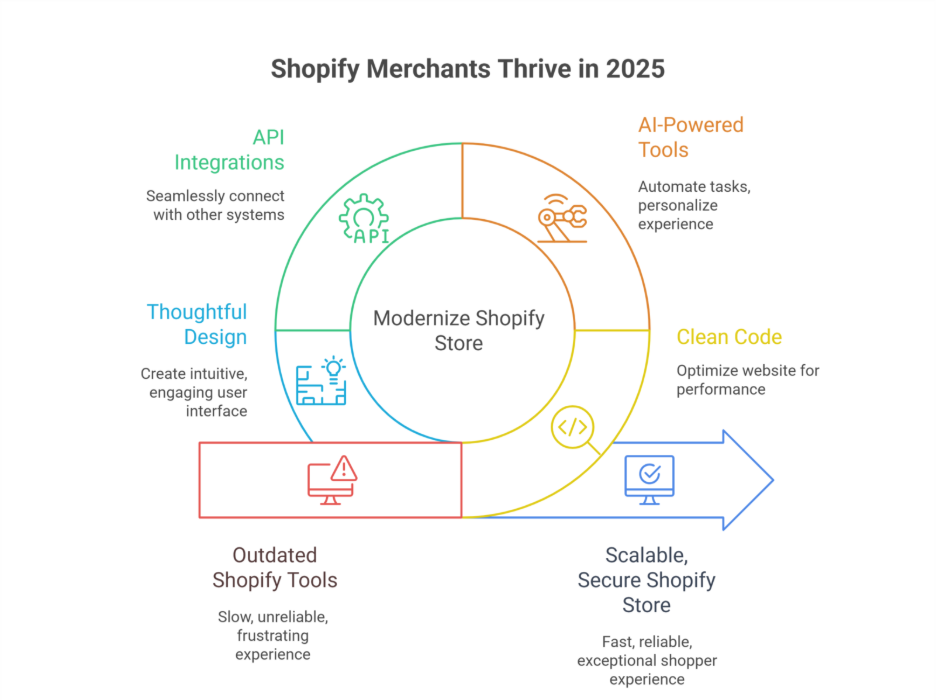
    In 2025, Shopify merchants stopped relying on outdated plugins, ignoring professional development, and skipping regular maintenance. By focusing on clean code, AI-powered tools, API and GraphQL integrations, and thoughtful design, merchants improved website performance, boosted conversions, and ensured their Shopify stores remained scalable, secure, and future-ready.

    In 2025, many Shopify merchants realized that relying on outdated tools or skipping professional development was costing them more than it saved. Investing in expert support, regular maintenance, and smart design choices often requires a modest budget typically ranging from a few hundred to a few thousand dollars but the returns in speed, conversion, and reliability are significant. Incorporating AI, modern API connections, and robust authentication processes has also become a game-changer for Shopify stores aiming to scale efficiently.

    This blog will explore what Shopify merchants stopped doing in 2025 and why it worked. You’ll learn how small but strategic changes covering design, integrations, maintenance, and development can transform your store’s performance. By the end, you’ll understand actionable insights that can help your Shopify store thrive into 2026 and beyond.

    Why Shopify merchants stopped using outdated tools in 2025

    Why Shopify merchants stopped using outdated tools in 2025

    In 2025, many Shopify merchants realized that continuing to rely on outdated tools and legacy systems was holding back growth, slowing conversion, and negatively impacting the shopper experience. For ecommerce brands aiming to scale efficiently, embracing modern integrations, APIs, and updated platform capabilities became essential.

    The Limitations of Outdated Tools

    Outdated Shopify apps and plugins often stop working properly with the new Shopify updates. Merchants using rest API connections or older GraphQL implementations found that their integrations caused slow checkouts, reporting errors in the admin dashboard, and unreliable automation processes. This not only reduced conversion but also created frustration for the shopper and the internal team managing the store.

    Impact on Shopify Brands and Store Performance

    Shopify merchants generated lower engagement when relying on tools that lacked proper support or weren’t optimized for 2025 ecommerce trends. Slow integrations, broken public apps, and outdated analytics meant brands couldn’t personalize the customer experience effectively or track critical metrics during peak sales events like Black Friday and Cyber Monday (BFCM sales).

    Moving Towards Modern Integrations

    Merchants began to migrate to solutions that leveraged updated APIs, GraphQL, and Shopify’s latest features. Using new Shopify apps from the Shopify App Store enabled better automation, improved checkout flows, and smoother admin management. Salesforce and email marketing integrations, combined with TikTok and LinkedIn tools, helped merchants stay ahead of the trend and boost conversion.

    Benefits of Updated APIs and GraphQL

    Modern APIs allow seamless integration between a Shopify store and external systems, whether for CRM, analytics, or marketing automation. Using Shopify rest and GraphQL APIs ensures that the store’s data syncs in real time, improving personalization, automation, and ultimately customer satisfaction. Shopify developers now recommend building with these technologies to future-proof stores for 2026.

    Why 2025 Was a Turning Point

    By stopping the use of legacy tools, Shopify merchants generated measurable improvements in ecommerce efficiency, conversion rates, and operational stability. The combination of updated APIs, integration of automation tools, and support from Shopify developers allowed stores to remain agile, handle BFCM sales efficiently, and offer a superior shopper experience.

    2025 trends merchants followed to succeed on LinkedIn

    In 2025, Shopify merchants leveraged LinkedIn strategically to grow their brand presence, connect with e-commerce professionals, and increase conversion. Key trends emerged that helped merchants optimize their workflow, customer data, and overall selling strategy.

    Prioritizing Professional Networking and Brand Selling

    • Focused on LinkedIn as a platform for B2B connections and thought leadership.
    • Shared success stories of brand selling and selling online to establish credibility.
    • Engaged with industry-wide discussions to stay ahead of market disruption.

    Leveraging Customer Data and Authentication

    • Used customer data insights to personalize messaging and target the right audience.
    • Implemented proper authentication and security measures to maintain trust.
    • Ensured that integrations with rest endpoints and APIs still work seamlessly.

    Optimizing Workflow and Store Performance

    • Streamlined internal workflow to respond faster to leads generated via LinkedIn.
    • Identified which tools to stop using to remove inefficiencies.
    • Focused on boosting average order value by highlighting relevant products to connections.

    Compliance and Strategic Insights

    • Monitored tax compliance and legal requirements for cross-border selling.
    • Analyzed LinkedIn analytics to understand what content resonated with e-commerce brands.
    • Shared insights to inspire many stores to adapt similar strategies.

    Conclusion

    In 2025, Shopify merchants achieved significant growth by reevaluating their tools, strategies, and workflows. By stopping the use of outdated plugins, embracing modern APIs and GraphQL integrations, and investing in professional development and thoughtful design, merchants improved website performance, boosted conversions, and future-proofed their stores for 2026.

    Leveraging LinkedIn strategically also proved essential—merchants optimized their workflow, used customer data effectively, ensured proper authentication, and shared insights that positioned their brands ahead of industry-wide trends. From streamlining admin processes to enhancing checkout experiences and increasing average order value, these deliberate changes highlighted the real value of proactive ecommerce management.

    Ultimately, success in 2025 wasn’t about adding more tools—it was about using the right tools wisely, stopping what no longer worked, and aligning technology, design, and strategy to deliver an exceptional shopper experience. By adopting these insights, you can ensure your Shopify store remains agile, scalable, and ready to thrive in 2026 and beyond. Ready to stop using outdated tools and see how your Shopify store can truly thrive why not ask Integriti Studio how?

    Frequently Asked Questions (What Shopify Merchants Stopped Doing In 2025 and Why it Worked)

    Is Shopify still relevant in 2025?

    Yes Shopify is still highly relevant in 2025: it powers millions of stores globally, continues innovating with AI, mobile‑first commerce, and robust security, and integrates deeply with social and omnichannel selling tools. Its ecosystem and scalability keep it central to modern e‑commerce

    Why do most Shopify stores fail?

    Most Shopify stores fail due to poor product-market fit, weak marketing, and lack of differentiation. Common issues include inadequate traffic, low conversion rates, poor user experience, and underestimating operational costs. Even with Shopify’s tools, success requires strategy, consistent promotion, and strong customer engagement.

    Why has Shopify dropped so much?

    Shopify dropped mainly due to slowing e-commerce growth after the pandemic boom, high earlier valuations, and investor concerns about profitability. Rising competition, higher operating costs, and cautious market sentiment toward tech stocks also contributed to volatility, even though Shopify’s long-term fundamentals remain strong.

    What is Shopify and how does it work in 2025?

    Shopify is a cloud-based e-commerce platform that lets businesses create, manage, and scale online stores. In 2025, it works with built-in AI tools, secure hosting, payment processing, and app integrations, enabling merchants to sell across websites, social media, and global marketplaces from one dashboard.

  • Why Simpler Shopify Stores Outperformed Complex Ones in 2025

    Why Simpler Shopify Stores Outperformed Complex Ones in 2025

    Why Simpler Shopify Stores Outperformed Complex Ones in 2025

    Why do some Shopify stores consistently outperform others in 2025, even when selling similar products? The answer lies not in the platform itself but in the combination of factors influencing website performance. From clean coding and seamless integrations to intuitive navigation, checkout optimization, and AI-powered analytics, every decision impacts your store’s conversion and overall brand perception. Professional development plays a pivotal role without expert guidance, even a visually appealing Shopify store can struggle to deliver better conversion rates or a smooth customer experience.

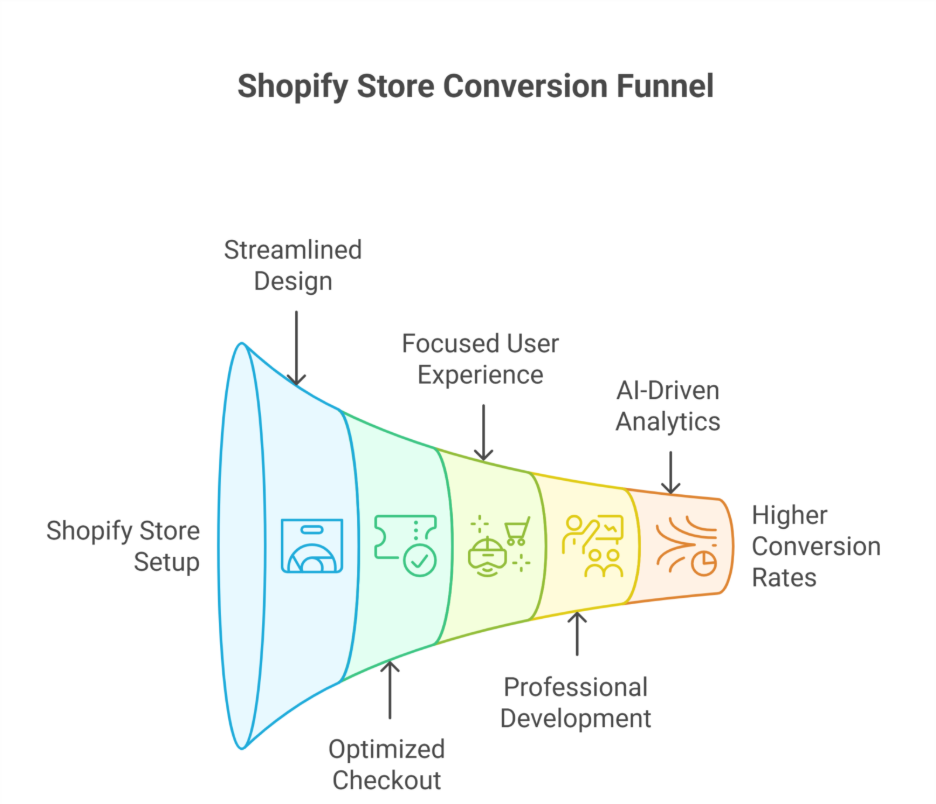
    Simpler Shopify stores outperformed complex ones in 2025 because streamlined design, optimized checkout, and focused user experience boosted conversion rates. Professional development, AI-driven analytics, and effective marketing strategies allowed merchants to scale efficiently, enhance customer experience, and strengthen their brand, proving that simplicity drives better performance in ecommerce.

    Investing in high-quality design, ongoing support, and timely maintenance is no longer optional. For instance, engaging professional development teams can cost a fraction of your expected revenue but yield measurable improvements in sales and shopper satisfaction. Smart choices in website optimization and marketing strategies can make the difference between a stagnant online store and a thriving ecommerce presence.

    This blog will explore why simpler Shopify stores outperformed complex ones in 2025, highlighting the key factors driving conversion, the role of professional development, the impact of design and support, and actionable insights you can apply to your own Shopify store for sustainable growth and enhanced customer experience.

    Why Shopify Stores Achieved Better Conversion Rates 2025

    Why Shopify Stores Achieved Better Conversion Rates 2025

    In 2025, many Shopify stores saw measurable improvements in conversion, outperforming complex or poorly optimized competitors. By focusing on user experience, strategic Shopify marketing, and leveraging the platform’s robust features, store owners were able to achieve higher conversion rates, directly impacting their revenue and brand growth.

    Streamlined Shopify Platform and Checkout Experience

    One key reason for high conversion is the Shopify platform itself. Shopify in 2025 offered enhancements to Shopify payments, checkout flows, and overall store performance that simplified the shopping experience. By reducing friction in the checkout process, Shopify store owners increased customer trust, leading to high conversion and repeat purchases. Statistics for 2025 show that stores worldwide implementing these optimizations consistently surpassed the average Shopify conversion rate.

    Importance of Conversion Rate Optimization

    Conversion rate optimization (CRO) became a critical focus for ecommerce brands looking to maximize ROI. Active stores using data-driven analytics, A/B testing, and AI-powered recommendations saw their overall conversion rate improve significantly. Compared to the average conversion rate for Shopify, these optimized stores reported higher conversion rates, proving the direct impact of CRO strategies on revenue.

    Leveraging Shopify’s App Ecosystem

    The Shopify app store provides tools for marketing automation, upsells, email campaigns, and analytics. By integrating apps strategically, store owners enhanced the shopping experience, personalized offers, and encouraged repeat engagement. This contributed to high conversion across millions of active stores, showing that thoughtful app integration directly correlates with a higher conversion rate for Shopify stores.

    Global Ecommerce Trends and Brand Strategy

    Global ecommerce statistics highlight that the global ecommerce market continues to expand, with growth rate projections indicating billions in online sales. Shopify store owners who aligned their strategies with global brands and optimized for cross-border commerce captured a larger share of the ecommerce platform market. Leveraging insights from global ecommerce data, merchants improved engagement, retention, and ultimately, high conversion metrics.

    Data-Driven Shopify Marketing

    Effective Shopify marketing in 2025 combined analytics, targeted campaigns, and optimized content to attract qualified traffic. Many Shopify stores reported that conversion improved when marketing decisions were informed by metrics such as traffic sources, product page performance, and shopper behavior. By aligning marketing with store optimization, ecommerce brands maintained a sustainable advantage in overall conversion rate and long-term growth.

    Smart Marketing Strategies Enhanced Brand and Customer Experience

     Leveraging Modern Commerce Platforms

    • Using Shopify and tools like Shopify, merchants streamlined store creation and management.
    • Shopify Plus has evolved, offering advanced features for enterprise-level stores globally.
    • Commerce platforms like Adobe Commerce and headless commerce enable flexible, personalized shopping experiences.
    • Insights into customer behavior help brands tailor marketing campaigns and product recommendations.

    Optimizing Store Design and Checkout

    • Simplified store builder and store creation tools improved navigation for store visitors.
    • Reducing complex checkout flows led to better conversion rates and higher customer satisfaction.
    • Many stores focused on mobile-first design, enhancing the overall shopping experience.

    Data-Driven Marketing and Analytics

    • Latest Shopify statistics provide key statistics for merchants to track growth and engagement.
    • Using analytics, merchants understand store visitors’ behavior and optimize campaigns for better conversion rates.
    • Shopify growth trends indicate millions of active stores worldwide leveraging insights to improve marketing strategies.

    Expanding Reach and Brand Visibility

    • Borderless ecommerce strategies allowed stores globally to reach international audiences.
    • Number of Shopify stores continues to rise, creating a competitive environment that rewards strategic marketing.
    • Store owners using Shopify site optimization and targeted campaigns strengthened brand loyalty and enhanced customer experience.

    Conclusion

    In 2025, the success of Shopify stores clearly demonstrated that simplicity, strategy, and smart execution drive better results than complexity alone. Stores that focused on streamlined design, optimized checkout, and a seamless user experience consistently achieved higher conversion rates and stronger brand performance. Professional development, AI-powered analytics, and strategic marketing empowered merchants to make data-driven decisions, scale efficiently, and enhance customer satisfaction.

    By leveraging Shopify’s robust platform features, app ecosystem, and insights into global ecommerce trends, store owners were able to align their marketing strategies with shopper behavior and optimize every touchpoint. The rise of borderless ecommerce and millions of active stores worldwide emphasized the importance of staying agile, prioritizing user experience, and adopting proven optimization techniques.

    Ultimately, simpler Shopify stores proved that thoughtful design, ongoing support, and targeted strategies are essential for sustainable growth, better conversion rates, and long-term success in the competitive ecommerce market. Ready to boost your Shopify store? Contact Integriti Studio today.

    Frequently Asked Questions (Why Simpler Shopify Stores Outperformed Complex Ones in 2025)

    Is Shopify worth doing in 2025?

    Yes Shopify is worth doing in 2025 if you want a scalable, easy‑to‑use ecommerce platform with strong AI tools, global reach, and many apps to grow sales. It has costs and customization limits, but for most online sellers it still offers excellent value.

    What is the outlook for Shopify in 2025?

    The outlook for Shopify in 2025 is generally positive: the company is forecast to deliver mid‑to‑high‑20% revenue growth, strong free‑cash‑flow margins, and continued merchant expansion, supported by AI tools and global adoption. Some risks remain from competition and macro factors, but overall growth momentum persists.

    Why are businesses moving from Drupal to Shopify in 2025?

    Businesses are moving from Drupal to Shopify in 2025 mainly because Shopify offers managed hosting, simpler maintenance, and lower technical overhead, freeing teams from infrastructure tasks. It also delivers faster setup, built‑in security, better scalability, and extensive app integrations, making e‑commerce easier and more cost‑predictable.

    Who is Shopify’s biggest competitor?

    Shopify’s biggest competitor is WooCommerce, the WordPress-based e-commerce platform, due to its flexibility, large user base, and open-source ecosystem. Other significant competitors include BigCommerce, Wix, Squarespace, and Magento, but WooCommerce remains the top rival for merchants seeking customizable and cost-effective online store solutions.

  • Shopify in 2026 which 2025 Trends Will Scale and Which Won’t

    Shopify in 2026 which 2025 Trends Will Scale and Which Won’t

    Shopify in 2026 which 2025 Trends Will Scale and Which Won’t

    Why do some Shopify stores perform flawlessly while others struggle, even when using the same platform? Website performance is influenced by multiple factors from clean, optimized code and seamless integrations to thoughtful design and ongoing maintenance. Without professional development and strategic support, even a beautifully designed storefront can fail to convert visitors or scale effectively.

    In 2026, Shopify will continue scaling trends like ecommerce personalization, Shopify Plus integrations, and mobile-first commerce, which enhance customer experience and conversion rates. However, some 2025 fads, such as short-lived social commerce experiments or niche AI tools without broad adoption, may lose relevance for long-term retailer growth.

    For retailers, investing in expert Shopify setup and maintenance isn’t optional—it’s essential. Professional development ensures your Shopify store is not only functional but optimized for ecommerce trends, conversion rate, and long-term growth. Good design, proper integration, and reliable support can turn basic Shopify Plus features into real competitive advantages. Typical agency services range from $3,000–$10,000 for comprehensive setup, including customization, checkout optimization, and maintenance plans, reflecting the true value of quality.

    This blog will explore which 2025 trends are likely to scale in 2026 and which may fade, helping you make smarter decisions for your Shopify store. We’ll examine factors shaping ecommerce, strategies for scaling commerce effectively, and how adopting the right Shopify tools can maximize customer experience, loyalty, and profitability in the year ahead.

    2026 Shopify Trends Shaping The Future Of Ecommerce

    2026 Shopify Trends Shaping The Future Of Ecommerce

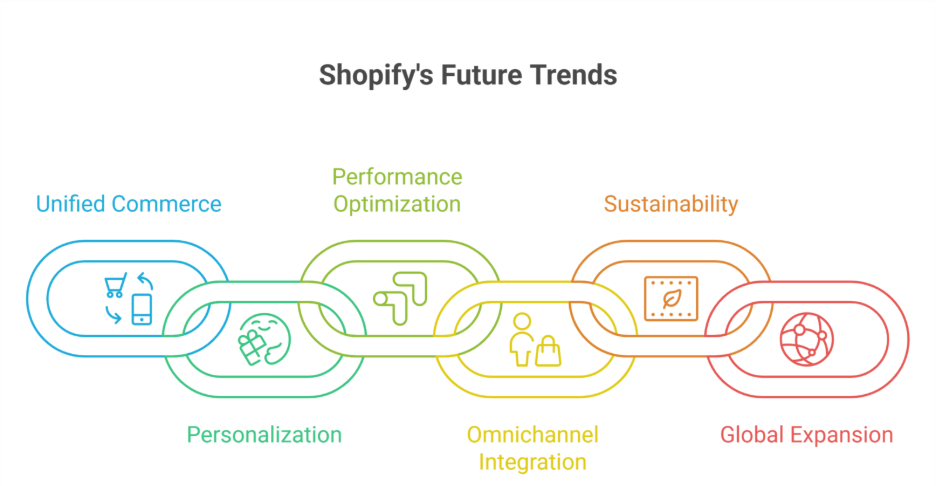
    The future of Shopify is being shaped by key trends that determine how online stores and online businesses grow in 2026. Shopify merchants who focus on ecommerce growth, operational efficiency, and seamless omnichannel experiences can gain a competitive edge and achieve sustainable scaling.

    Unified and Composable Commerce Solutions

    Unified commerce centralizes inventory, payments, and customer data across multiple touchpoints, while composable commerce allows flexible integration of specialized tools. Together, they reduce total cost of ownership and help build future-proof Shopify stores capable of scaling with evolving market demands.

    Personalized Direct-to-Consumer Experiences

    By leveraging purchase history and tailored shopping experiences, Shopify merchants can drive higher conversion rates and higher average order values. Thoughtful personalization along the customer journey strengthens loyalty and builds customer trust, while limited-edition products can create urgency and engagement.

    Optimized Performance and Core Web Vitals

    Maintaining fast, reliable sites is crucial. Optimizing core web vitals improves usability and conversion, while Shopify’s app ecosystem supports compliance, analytics, and checkout improvements. Investing in performance ensures your Shopify store is future-proof and capable of sustaining long-term growth.

    Seamless Omnichannel and Customer Engagement

    A seamless omnichannel approach integrates online and offline experiences, connecting every touchpoint from mobile apps to social commerce. This unified strategy enhances engagement, strengthens brand presence, and drives measurable ecommerce growth.

    In 2026, these trends will define the future of Shopify, enabling merchants to deliver efficient, personalized, and scalable commerce experiences while staying ahead in a competitive market.

    Ecommerce Trends For 2026 Impact Shopify Plus Commerce

    In 2026, Shopify Plus commerce will be shaped by trends that improve scalability, customer engagement, and sustainability. Here are the key trends and actionable steps for merchants:

    1. Leverage Composable Commerce for Flexibility

    • Integrate best-in-class solutions for inventory management, order management, and product catalog optimization.
    • Use flexible front-ends to improve site speed and user experience.
    • Reduce operational complexity while scaling across regions.

    2. Drive Omnichannel Growth and Unified Customer Experiences

    • Unify customer data to provide personalized experiences.
    • Ensure seamless interactions across all channels (online, in-store, mobile).
    • Optimize delivery options and improve product discovery to enhance engagement.

    3. Prioritize Sustainability

    • Offer sustainable products and embrace sustainable practices.
    • Offset carbon emissions in shipping or operations.
    • Maintain premium prices while appealing to conscious shoppers like Gen Z.

    4. Support International Expansion and Security

    • Manage inventory and order processing effectively for new markets.
    • Implement advanced fraud detection tools to protect revenue.
    • Scale globally without compromising trust or operational efficiency.

    Conclusion

    As Shopify evolves into 2026, understanding which 2025 trends will scale and which may fade is critical for retailers aiming to stay competitive. Trends like ecommerce personalization, Shopify Plus integrations, and mobile-first commerce will continue to drive higher conversion rates and operational efficiency, while short-lived experiments or niche tools without broad adoption may no longer deliver value.

    Investing in professional development, thoughtful design, and strategic support ensures your Shopify store is future-proof, capable of delivering personalized experiences, seamless omnichannel interactions, and sustainable growth. By leveraging composable commerce, optimizing core web vitals, and integrating unified customer data, merchants can reduce complexity, enhance product discovery, and strengthen customer trust.

    For Shopify Plus retailers, prioritizing sustainability, global expansion, and secure operations positions your business to capture long-term opportunities while maintaining efficiency and loyalty. In 2026, success will favor merchants who adopt proven trends strategically, balance innovation with practicality, and invest in tools and practices that scale their Shopify commerce effectively. Want to scale your Shopify store effectively in 2026? Contact Integriti Studio today.

    Frequently Asked Questions (Shopify in 2026 which 2025 Trends Will Scale and Which Won’t)

    What will be the biggest trend in 2025?

    The biggest trend in 2025 will be AI-driven personalization across industries. From marketing and e-commerce to healthcare and finance, businesses will leverage advanced AI tools and data analytics to offer hyper-personalized experiences, automate decision-making, and optimize efficiency, reshaping how consumers interact with products and services.

    Is Shopify still profitable in 2025?

    Yes Shopify is still profitable in 2025, consistently growing revenue and delivering double‑digit free cash flow margins across multiple quarters, showing solid financial performance and operational profitability.

    Where will Shopify be in 5 years?

    In five years, Shopify is likely to become a leading global commerce platform, expanding its AI-powered tools, international reach, and integrations with social commerce and metaverse marketplaces. It will focus on helping merchants scale efficiently while maintaining seamless, personalized shopping experiences worldwide.

    What is the outlook for Shopify in 2025?

    The outlook for Shopify in 2025 is generally positive: analysts expect continued strong revenue and merchant growth, driven by AI tools, international expansion, and payment services, with revenue rising in the mid‑to‑high twenties percentage range and solid free‑cash‑flow margins. Some caution remains around valuation and competition.

  • The New WordPress Skill Set Developers Needed By the End of 2025

    The New WordPress Skill Set Developers Needed By the End of 2025

    The New WordPress Skill Set Developers Needed By the End of 2025

    Why do some WordPress websites perform flawlessly while others face constant issues despite using the same platform? The difference often comes down to the skill set of the WordPress developer and their ability to implement effective WordPress development practices. Performance, scalability, and maintainability are shaped by coding quality, proper use of plugins, theme customization, and adherence to best practices.

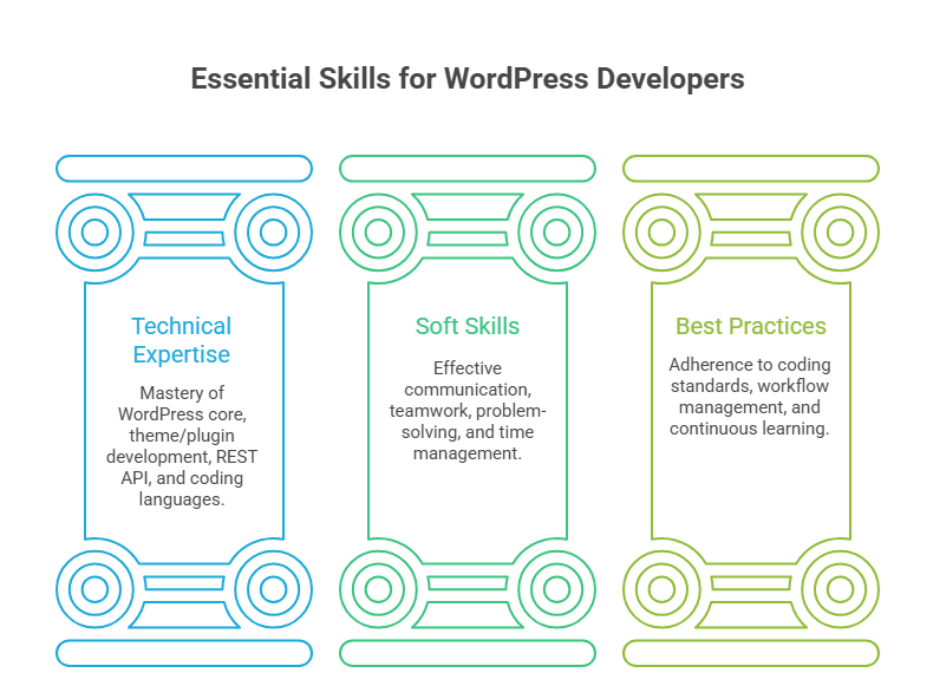
    By the end of 2025, successful WordPress developers need a combination of technical and soft skills, including expertise in WordPress development, plugin and theme customization, REST API integration, SEO best practices, and headless WordPress. Mastery of these areas ensures scalable, high-performing, and maintainable WordPress websites.

    As a WordPress developer, professional development is critical. Understanding how to optimize a WordPress site for speed, security, and SEO ensures long-term reliability. Good design, structured workflows, and ongoing WordPress maintenance not only improve user experience but also protect your investment. For example, while a basic setup may cost a few hundred dollars, hiring a skilled developer to create a robust, scalable site ensures sustainable performance and future-proofing.

    This blog explores the new WordPress skill set developers need by the end of 2025, highlighting technical competencies, soft skills, and emerging trends like headless WordPress and API integrations. You’ll learn which abilities set top developers apart, how to demonstrate your skills, and why mastering these areas is essential for a successful career as a WordPress developer.

    Essential WordPress development skills every developer needs 2025

    Essential WordPress development skills every developer needs 2025

    Step 1: Master WordPress Core

    Understand how the WordPress core works, including its architecture and database structure. This knowledge is essential for building custom WordPress solutions and maintaining WordPress websites efficiently.

    Step 2: Learn Theme and Plugin Development

    Develop skills to create and customize themes and plugins. This allows you to add unique functionalities and design elements, making your projects more versatile and client-ready.

    Step 3: Understand WordPress REST API

    Learn to integrate external applications and services using the WordPress REST API. This is crucial for building advanced features, headless WordPress setups, and modern workflows.

    Step 4: Strengthen Coding Skills

    Master PHP, HTML, CSS, and JavaScript. Writing clean, efficient code ensures scalability, performance, and easier debugging across WordPress development projects.

    Step 5: Follow Modern Development Practices

    Implement proper development workflow, use version control, and follow best practices. This improves collaboration, reduces errors, and maintains site security and performance.

    Step 6: Develop Soft Skills

    Enhance soft skills such as communication, teamwork, problem-solving, and time management. These skills are vital for working with clients, collaborating with other developers, and delivering projects successfully.

    Soft skills and best practices for WordPress developers

    Essential Soft Skills for WordPress Developers

    Soft skills are just as important as technical expertise. Effective communication, collaboration, problem-solving, and time management allow developers to work efficiently with clients, designers, and other team members. These skills help ensure that projects stay on track and meet expectations in a fast-paced modern WordPress development environment.

    Coding Standards and WordPress Architecture

    A deep understanding of WordPress architecture and adherence to coding standards is essential. Developers should write clean, modular, and maintainable code for theme and plugin development. Following best practices ensures that WordPress websites are secure, scalable, and easy to maintain over time.

    Workflow Management and Project Best Practices

    Maintaining a structured development workflow improves efficiency and reduces errors. Using version control, staging environments, and thorough testing allows developers to deliver reliable projects while keeping WordPress installations optimized and up to date.

    Continuous Learning and Adaptability

    The WordPress ecosystem evolves constantly, so developers must stay updated with new tools, technologies, and WordPress software updates. Continuous learning ensures they can implement modern solutions and remain competitive in the world of web development.

    Importance of Soft Skills and Best Practices in Career Growth

    Combining technical expertise with soft skills positions developers for a successful career as a WordPress developer. Skilled developers can deliver high-quality WordPress solutions, meet client expectations, and adapt to industry changes, making them valuable assets in any WordPress project.

    Conclusion

    By the end of 2025, WordPress developers need both technical expertise like theme and plugin development, REST API integration, and headless WordPress and soft skills such as communication and problem-solving. Mastering these ensures scalable, high-performing, and maintainable websites while supporting a successful WordPress career.

    Want to future-proof your site? Contact Integriti Studio.

    Frequently Asked Questions (The New WordPress Skill Set Developers Needed By the End of 2025)

    Which skills will be most required by 2025?

    By 2025, the most required skills include AI literacy, data analysis, cybersecurity, cloud computing, digital marketing, UX/UI design, automation, and problem-solving. Soft skills like adaptability, communication, and critical thinking will be equally important as technology continues to evolve rapidly across industries.

    What is the scope of WordPress in 2025?

    WordPress continues to be highly relevant in 2025, powering about 43 % of all websites and over 60 % of sites using a CMS, meaning huge demand for site creation, customization, e-commerce (WooCommerce) and content jobs. It’s a strong platform for freelancers, agencies and businesses globally.

    What skills should a WordPress developer have?

    A WordPress developer in 2025 should have PHP, JavaScript, HTML, CSS, and MySQL proficiency, plus experience with Gutenberg/block editor, theme and plugin development, REST API, WooCommerce, security, performance optimization, and basic SEO. Problem-solving, adaptability, and version control (Git) are also essential.

    Is WordPress still relevant in 2025?

    Yes WordPress remains highly relevant in 2025, powering around 43% of all websites and dominating the CMS market. With continuous updates, AI integration, full-site editing, and strong e-commerce support via WooCommerce, it stays a top choice for businesses, creators, and developers worldwide.

  • Why High-Revenue Shopify Stores Look Very Different After 2025

    Why High-Revenue Shopify Stores Look Very Different After 2025

    Why High-Revenue Shopify Stores Look Very Different After 2025

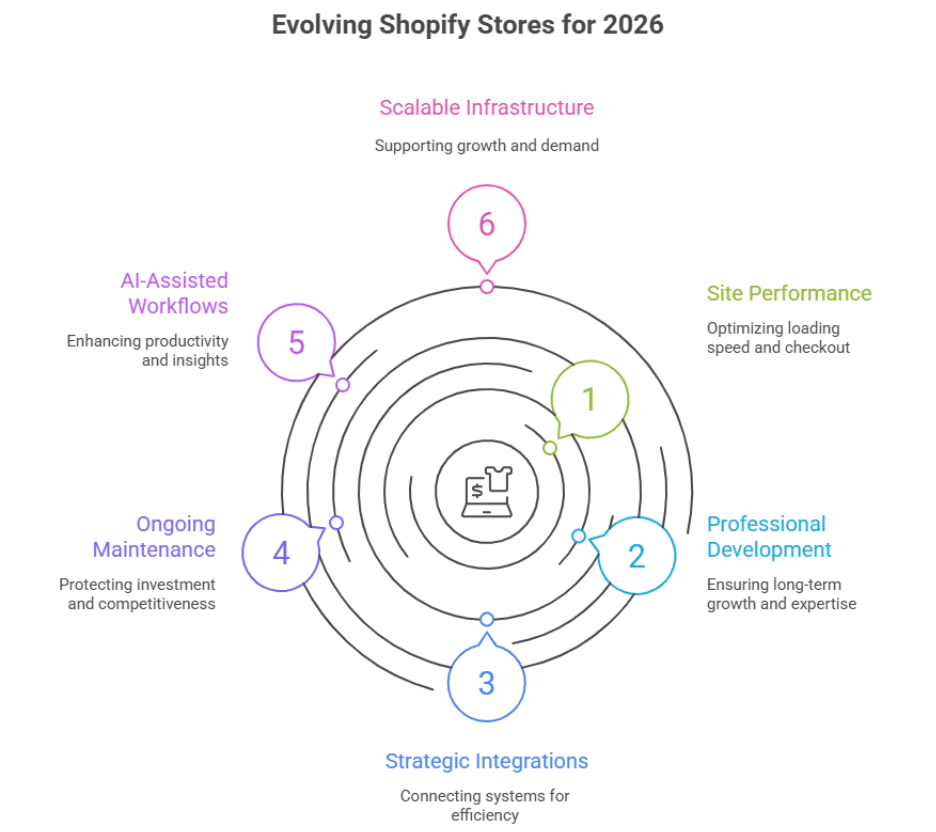
    Why do some Shopify stores generate exceptional revenue while others stall despite using the same platform? The answer lies in multiple factors, including site performance, professional development, strategic integrations, and ongoing maintenance. As a shopify store owner, you may already rely on the Shopify platform, but without expert execution, even high-potential stores can underperform.

    High-revenue Shopify stores look very different after 2025 due to strategic adoption of advanced integrations, performance-focused updates, and professional development practices. Store owners leveraging optimized shopify store design, AI-assisted workflows, and scalable infrastructure achieve higher profitability, better ecommerce performance, and long-term growth heading into 2026.

    Performance is influenced by site architecture, loading speed, checkout optimization, and scalability. Professional development ensures your store is built for long-term growth, while good design, UX-focused layouts, and reliable support increase ecommerce conversions and customer trust. Maintenance and updates protect your investment, keeping your store competitive as Shopify evolves. For instance, while a basic setup may cost a few hundred dollars, a fully optimized, scalable store often requires higher upfront investment but delivers measurable returns over time.

    This blog explores why high-revenue Shopify stores look very different after 2025, highlighting key changes that affect profitability, the impact of 2026 trends, and how strategic choices in design, integration, and development help store owners achieve sustainable growth in the evolving global ecommerce landscape.

    How Shopify stores evolve for profitability in 2026

    How Shopify stores evolve for profitability in 2026

    High-performing Shopify store owners know that profitability in 2026 depends on strategic evolution, not just platform adoption. The Shopify platform continues to expand, offering advanced integration options, scalable infrastructure, and tools that support global ecommerce growth. Businesses that adapt their workflows, design, and technology stack now are better positioned to achieve sustained revenue growth.

    Leveraging Integrations for Enhanced Performance

    Modern online stores thrive by connecting multiple systems through integration. From payment gateways and inventory management to loyalty programs and marketing automation, Shopify store owners can streamline operations and reduce manual effort. Efficient backend management improves order processing, while integrations with third-party apps from the app store enable faster implementation of features that directly impact profitability.

    Optimizing Product Pages and Checkout

    A focus on optimized product pages and streamlined checkout experiences drives higher conversions. Clear product descriptions, intuitive navigation, and responsive design ensure shoppers complete purchases efficiently. Shopify merchants who continually refine these elements see measurable revenue growth, particularly when leveraging analytics and Shopify in 2025 insights to anticipate trends in 2026.

    Expanding Through Global Ecommerce

    Expanding into global ecommerce markets allows Shopify store owners to increase gross merchandise volume (GMV) and overall sales. Multi-currency support, localized content, and region-specific payment processing help businesses tap into international audiences while maintaining profitability. Strategic integrations with shipping and tax tools further simplify cross-border operations.

    Strategic Use of Shopify Plus and Advanced Features

    For larger businesses, Shopify Plus provides advanced features such as custom APIs, automation, and high-volume processing capabilities. By leveraging these tools alongside a well-planned Shopify setup, store owners can scale efficiently while controlling costs. Integrating AI-powered analytics and marketing workflows ensures stores remain competitive and continue delivering profitability in 2026.

    Continuous Monitoring and Adaptation

    Sustaining profitability requires ongoing attention. Regular audits, performance checks, and updates to integrations or Shopify ecosystem tools keep the store optimized. Shopify store owners who invest in continual improvement are better prepared for shifting market demands, evolving consumer behavior, and the expanding opportunities within global ecommerce.

    Key Shopify 2025 changes shaping global ecommerce growth

    The landscape of global ecommerce shifted significantly in 2025, with changes that continue to influence how Shopify stores perform today. Understanding these updates is critical for store owners who want to remain competitive, optimize traffic and sales, and ensure their margins are tighter don’t compromise long-term growth.

    Platform Enhancements Driving Efficiency

    Several core updates to Shopify in 2025 improved operational efficiency and store management:

    • Enterprise-grade tools: Larger Shopify websites gained better scalability and headless commerce options, allowing seamless integration with third-party systems.
    • Seamless backend improvements: The Shopify dashboard was updated for streamlined workflows, reducing administrative burden for stores using Shopify.
    • Transaction fees and shipping costs: Adjustments in transaction fees and optimized shipping costs encouraged more efficient operations and improved profit margins.

    Marketing and Customer Engagement Updates

    Shopify expanded its marketing capabilities, helping e-commerce store owners increase visibility and engagement:

    • Social media integration: Tools for linking social media accounts including TikTok Shop boosted discoverability and sales volume.
    • AI-driven insights: Integration of chatGPT and other AI-powered tools allowed store owners to refine product recommendations, improve brand presence, and optimize traffic and sales.
    • Email and automation: Enhanced Klaviyo integrations provided better targeting for email campaigns and customer segmentation.

    Design, Customization, and Store Appearance

    Store aesthetics and flexibility became a major differentiator in 2025:

    • Go custom and headless commerce: High-growth Shopify stores could implement unique designs, improving user experience and brand presence.
    • Template and theme updates: Both standard Shopify stores and enterprise-grade solutions benefited from modern templates that make the store look professional and optimized for conversions.
    • Top categories optimization: Adjustments in layout and navigation helped increase sales by emphasizing top categories for better shopper engagement.

    Long-Term Impact on Profitability

    • Tighter margins: Many Shopify store owners recognized that while profitability was achievable, margins are tighter, necessitating strategic updates and investment in professional shopify website management.
    • Sustaining growth: Stores that adopted AI-driven analytics, streamlined shipping costs, and leveraged enterprise-grade tools continue to run a still a profitable business heading into Shopify in 2026.

    Conclusion

    High-revenue Shopify stores look very different after 2025 because success is no longer just about choosing a platform—it’s about strategic execution, professional development, and smart integration. Store owners who optimize design, streamline checkout processes, and leverage AI-driven insights achieve higher profitability, improved traffic and sales, and sustainable growth heading into Shopify in 2026.

    The updates introduced in 2025 from enhanced backend efficiency and enterprise-grade tools to social media integration and headless commerce capabilities have reshaped the way shopify store owners operate. By adopting these changes, monitoring performance, and continuously refining workflows, high-growth stores maintain competitive advantage and maximize gross merchandise volume (GMV) while keeping margins tighter under control.

    Ultimately, the stores that thrive are those that combine professional shopify website management with forward-thinking strategies, ensuring their e-commerce store remains scalable, adaptable, and still a profitable business well beyond 2025. Embracing these practices today positions your store to capture new opportunities, enhance brand presence, and sustain long-term success in the evolving global ecommerce landscape.

    Frequently Asked Questions (Why High-Revenue Shopify Stores Look Very Different After 2025)

    Are Shopify stores still profitable in 2025?

    Yes Shopify stores are still profitable in 2025 if you execute well with strong products, marketing, and customer retention. Many merchants report average net profits around 15–30%, and some niche or branded stores earn much more, though results vary by strategy and effort.

    Where will Shopify be in 5 years?

    In 5 years (2030) Shopify is likely to evolve from a basic online store builder into a broader global commerce platform, powering payments, logistics, checkout APIs, and enterprise solutions, expanding internationally and across channels with strong AI integration and deeper ecosystem services.

    What is the outlook for Shopify in 2025?

    In 2025, Shopify’s outlook remains strong with robust revenue and growth, expecting mid-to-high-20% revenue increases and continued profitability through the year. It’s expanding AI tools, global reach, and merchant adoption, though growth may face competition and marketing cost challenges.

    What is the highest earning Shopify store?

    The highest-earning Shopify-powered store today is Herman Miller, with an estimated $821.7 million in revenue, followed by big brands like Peloton and waterdrop® also earning hundreds of millions annually. These are among the top-grossing Shopify stores in 2025.

  • WordPress in 2026 which 2025 Changes Will Matter long-term

    WordPress in 2026 which 2025 Changes Will Matter long-term

    WordPress in 2026 which 2025 Changes Will Matter long-term

    Why do some WordPress websites scale smoothly while others struggle to keep up with business goals? The difference rarely lies in the platform itself. Website performance is shaped by multiple factors, including development quality, architectural decisions, long-term maintenance, and how well evolving technologies are adopted. As a site owner, you may already rely on WordPress for flexibility, but without professional execution, even powerful tools can underperform.

    WordPress in 2026 will be shaped by key 2025 changes, including enhanced AI integration, improved plugin ecosystems, and performance-focused updates from WordPress 6.9. Site owners who adopt professional development, maintain their builds, and leverage these tools will gain long-term business benefits, future-proofing their websites for real-time collaboration and growth.

    Professional development plays a critical role in turning a website into a business asset. Clean code, structured builds, and informed updates ensure stability as platforms evolve. Good design is not only visual it improves usability, conversion flow, and trust. Ongoing support and maintenance protect your investment, especially when updates introduce new capabilities. For example, while a basic setup may cost a few hundred dollars, long-term-ready builds often require thoughtful planning and higher upfront investment to deliver measurable returns.

    Looking ahead to WordPress in 2026, the shifts introduced during 2025 and the growing role of ai will define which websites stay competitive. This blog explores which changes matter long-term, how WordPress adapts, and how smart decisions today support sustainable growth beyond 2026.

    How site owners rely on WordPress AI in 2026

    How site owners rely on WordPress AI in 2026

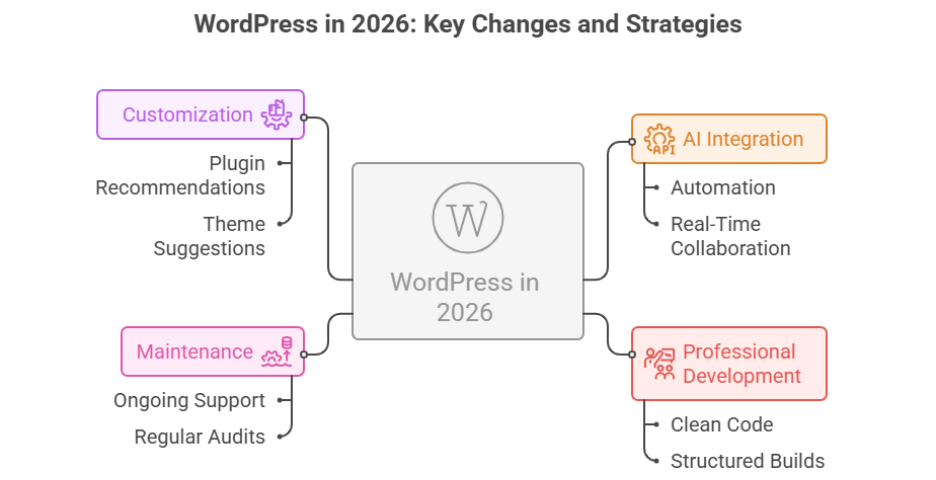
    As WordPress evolves, site owners are increasingly relying on WordPress AI to streamline workflows, enhance performance, and deliver better user experiences. The future of WordPress in 2026 will emphasize automation, real-time collaboration, and smart integrations, allowing businesses to achieve measurable business benefits while maintaining flexibility.

    AI Integration and Real-Time Collaboration

    One of the most significant 2025 changes is the integration of AI directly into the WordPress dashboard. With the abilities API and other AI tools, site owners can automate repetitive tasks, optimize content, and gain insights for performance optimization. Real-time collaboration features allow teams to work on WordPress websites simultaneously, improving efficiency and minimizing errors. This is especially critical for businesses relying on WooCommerce or multi-user blogging platforms, where content speed and accuracy directly impact revenue.

    Customization and Automation for Business Needs

    Modern WordPress development now supports custom development and AI-driven automation. For instance, a WordPress AI client can suggest plugins and themes, recommend performance optimization features, and help maintain core security and bug fixes. This reduces the dependency on expensive plugins and allows site owners to focus on content strategy and business needs rather than manual site management.

    Staying Updated with the WordPress Roadmap

    The WordPress AI team continues to evolve the platform based on feedback from the State of the Word 2025 report. By understanding the roadmap and future development, site owners can prioritize updates, adopt new features, and ensure their WordPress sites remain competitive. Leveraging AI for real-time collaboration, workflow management, and customization ensures that every site aligns with modern best practices while offering business benefits that extend well into 2026.

    Preparing for the Future of WordPress

    To maximize the advantages of WordPress AI, site owners should invest in training, regular audits, and customization aligned with their business needs. The combination of professional development, core platform enhancements, and AI-driven automation positions WordPress in 2026 as a platform where efficiency, innovation, and scalability converge. Companies that embrace these tools now will gain a competitive edge, ensuring that their WordPress websites deliver long-term value and measurable ROI.

    Conclusion

    The journey of WordPress in 2026 is built on the critical shifts introduced during 2025, from AI integration to improved plugin ecosystems and performance-focused updates. For site owners, success is no longer just about choosing a platform—it’s about leveraging professional development, smart customization, and AI-driven automation to maximize efficiency and deliver measurable business benefits.

    By staying updated with the WordPress roadmap, adopting real-time collaboration, and prioritizing structured maintenance, you can future-proof your WordPress website while enhancing user experience, security, and scalability. Thoughtful investment in design, development, and ongoing support ensures your site not only performs well today but continues to grow and adapt to emerging technologies.

    Ultimately, WordPress in 2026 rewards those who make informed, strategic decisions. By embracing AI, automation, and professional best practices, site owners can transform their WordPress websites into resilient, high-performing business assets that drive long-term value, efficiency, and competitive advantage.

    Frequently Asked Questions (WordPress in 2026 which 2025 Changes Will Matter long-term)

    Is WordPress still in demand in 2025?

    Yes WordPress is still in demand in 2025 because it powers around 43% of all websites worldwide and dominates the CMS market with over 60% share, keeping strong need for developers, designers, and site maintenance work.

    What is the future of WordPress?

    In 2025 and beyond, WordPress’s future is strong with AI-driven tools, full-site editing, and no-code design making site building easier, plus headless architecture and enhanced performance/security improvements keeping it modern and competitive for businesses, creators, and developers.

    Will AI replace WordPress?

    No AI won’t replace WordPress itself, but it will transform how sites are built and managed. AI can automate content, design suggestions, and basic tasks, but WordPress’s core platform, plugins, developers, and complex custom work remain essential into the future.

    How much does WordPress pay for 1000 views?

    On WordPress you don’t get a fixed pay per 1,000 views it depends on how you monetize your site. With ads (like AdSense), typical earnings are roughly $1–$8 per 1,000 views, and in top niches it can reach $10+ per 1,000 views. Premium ad networks or affiliate income can boost this further.

  • Lessons from wordpress in 2025 that will shape 2026

    Lessons from wordpress in 2025 that will shape 2026

    Lessons from wordpress in 2025 that will shape 2026

    Why do some WordPress websites thrive effortlessly while others struggle to convert visitors into customers? The difference often goes beyond the platform itself and lies in how a site is designed, built, and maintained. Factors influencing website performance such as optimization, user experience, and plugin integration play a critical role in determining whether your WordPress site can scale effectively.

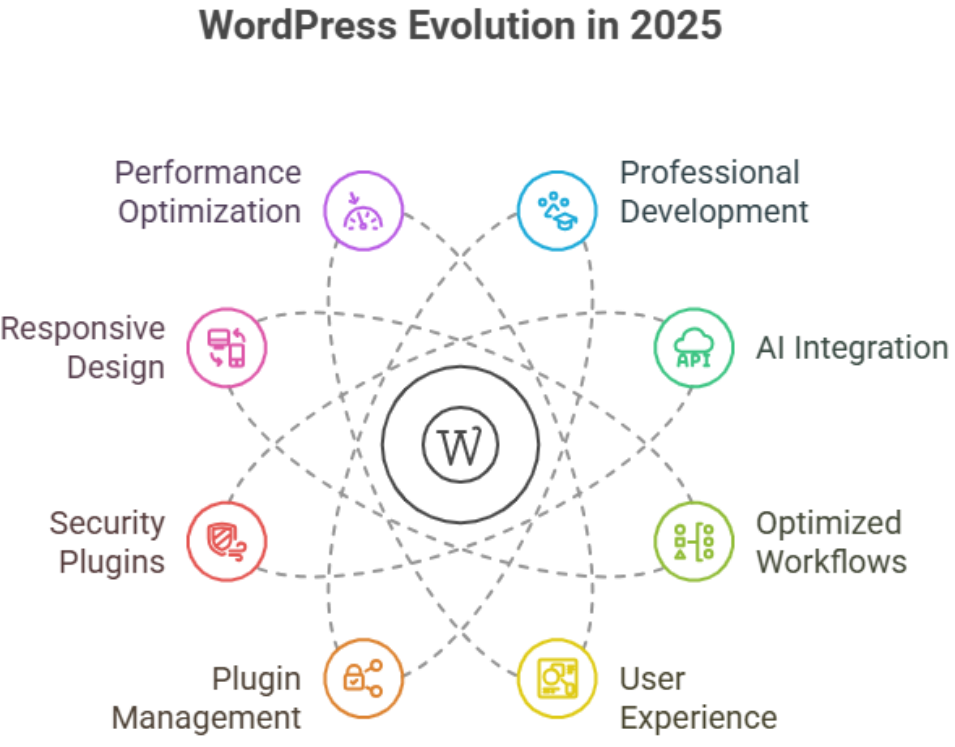
    WordPress in 2025 highlighted the importance of professional development, AI integration, and optimized workflows. Developers and site owners who focused on user experience, plugin management, and intuitive design gained a competitive edge. These lessons will shape 2026, guiding smarter site redesigns, efficient maintenance, and future-ready WordPress roadmaps.

    Professional development for developers and site owners is more important than ever. In 2025, we saw how investing in AI-powered tools, careful workflow planning, and advanced builder techniques not only speeds up development but ensures sites remain flexible for future updates. Good design, ongoing support, and maintenance deliver real value, helping avoid costly errors and downtime. For example, a professional WordPress redesign or plugin integration can vary in pricing, reflecting the complexity and level of expertise required.

    This blog will explore key lessons from WordPress in 2025, including practical insights for developers and site owners, the evolving role of AI, and strategies to optimize workflow, plugins, and overall functionality. By following these lessons, you can shape your roadmap for 2026 and ensure your WordPress projects are smarter, faster, and more future-ready.

    WordPress AI Tools Helping Developers with Real-Time Collaboration

    WordPress AI Tools Helping Developers with Real-Time Collaboration

    As WordPress continues to evolve, AI tools have become essential for developers aiming to streamline workflows, optimize performance, and enhance real-time collaboration. These tools allow developers and site owners to reduce errors, accelerate site redesigns, and ensure WordPress websites remain future-ready.

    How AI Tools Enhance Real-Time Collaboration

    AI tools enable multiple developers and site owners to work simultaneously on a WordPress website without conflicts. Tasks such as content creation, plugin customization, and code updates can now happen in a synchronized environment. This reduces bottlenecks during redesign phases and ensures new features are integrated efficiently.

    Optimizing WordPress Core and Plugins

    With AI-powered insights, developers can natively optimize WordPress core, themes, and plugins for performance and scalability. AI can suggest caching improvements, highlight redundant PHP code, and recommend strategies for performance optimization, creating smoother experiences for users.

    Streamlined Content and Feature Management

    AI tools assist with content creation and management systems, allowing site owners to maintain original content, blog posts, and product updates efficiently. This ensures that sites stay current with web design trends and align content with business objectives.

    Benefits for Site Owners and Developers

    For site owners, AI-enabled collaboration means faster redesign cycles, better portability of WordPress websites, and enhanced analytics. Developers gain seamless repository management, phase updates without disruption, and plan future development efficiently.

    A Strategic Investment for Long-Term Success

    Investing in AI tools is a powerful move for WordPress site owners and developers who want to optimize workflow, reduce reliance on freelance resources, and maintain a competitive edge. Every redesign, plugin integration, and core update is executed efficiently, saving time and costs.

    WordPress 2025 Insights Every Developer Needs for 2026

    WordPress in 2025 offered developers crucial lessons that will directly impact strategies and site performance in 2026. Understanding these insights ensures developers can deliver responsive, secure, and future-ready WordPress websites while optimizing workflows and enhancing real-time collaboration.

    Key Performance and Security Takeaways

    • Invest in Security Plugins: Implementing reliable security plugins in 2025 proved essential for safeguarding WordPress websites against emerging threats. Developers should continue prioritizing these tools in 2026.
    • Optimize for Responsiveness: Responsive design ensures websites perform well across devices, a non-negotiable expectation from users and site owners.
    • Performance Optimization: Efficient caching, code management, and AI-driven tools enhance speed and reliability.

    Enhancing Collaboration and Workflow

    • Real-Time Collaboration: 2025 highlighted how AI-driven real-time collaboration tools streamline teamwork between developers and site owners.
    • Project Management Integration: Embedding project management systems within WordPress workflows improves task tracking, deadlines, and transparency.
    • API Utilization: Leveraging APIs facilitates smoother integrations, especially for SaaS solutions and e-commerce platforms.

    Content and Design Strategies

    • Structured Content: Maintaining a clear content structure improves SEO, user experience, and manageability.
    • Preview Functionality: Allowing site owners to preview content in real-time reduces errors and speeds up the redesign process.
    • Portfolio and E-Commerce Sites: Specific design strategies from 2025 emphasize creating intuitive layouts for both portfolio sites and e-commerce platforms, enhancing engagement and conversions.

    Preparing for 2026

    By integrating lessons from WordPress 2025, developers can deliver smarter, more secure, and user-focused websites. Focusing on security plugins, responsive design, real-time collaboration, and AI-driven tools ensures that workflows are optimized and sites are future-ready, setting a strong roadmap for 2026.

    Conclusion

    The lessons from WordPress in 2025 provide a clear roadmap for success in 2026. Developers and site owners who embrace AI tools, prioritize real-time collaboration, and focus on performance optimization, responsive design, and security plugins are better positioned to deliver WordPress websites that are efficient, scalable, and user-focused. Investing in professional development, strategic workflow planning, and thoughtful site redesigns ensures that your WordPress projects remain future-ready, flexible, and aligned with business objectives. By applying these insights, you can not only streamline development and maintenance but also create websites that engage users, support growth, and maintain a competitive edge in the rapidly evolving digital landscape.

    Frequently Asked Questions (Lessons from wordpress in 2025 that will shape 2026)

    Why do some WordPress websites perform better than others?

    Performance depends on factors like optimization, user experience, plugin integration, and professional development. Sites with efficient workflows, responsive design, and strategic plugin management tend to convert better and scale more effectively.

    How is AI shaping WordPress development in 2025?

    AI tools enhance real-time collaboration, streamline content creation, optimize workflows, and provide insights for plugin and core management. Developers and site owners using AI can reduce errors and accelerate redesigns.

    What should developers focus on for WordPress in 2026?

    Developers should prioritize security plugins, responsive design, real-time collaboration, performance optimization, and future-ready workflows. Understanding lessons from 2025 ensures smoother site updates and better scalability.

    How important is professional development for WordPress site owners?

    Extremely important. Investing in learning AI tools, builder techniques, and best practices ensures site owners can maintain and optimize their websites efficiently while reducing reliance on external resources.

  • What webflow  2025 growth signals for the future

    What webflow  2025 growth signals for the future

    What webflow  2025 growth signals for the future

    Why do some websites built on popular platforms struggle to convert, while others thrive effortlessly? The difference often comes down to more than just the choice between Webflow or WordPress it lies in factors influencing website performance, from professional development quality to thoughtful design and ongoing maintenance. In 2025, businesses increasingly recognize that the real value of good web design extends beyond aesthetics. A carefully optimized user experience, accessible layouts, and seamless AI-driven personalization can dramatically improve engagement and SEO, while data-driven decisions and smart integrations help marketing teams maximize ROI.

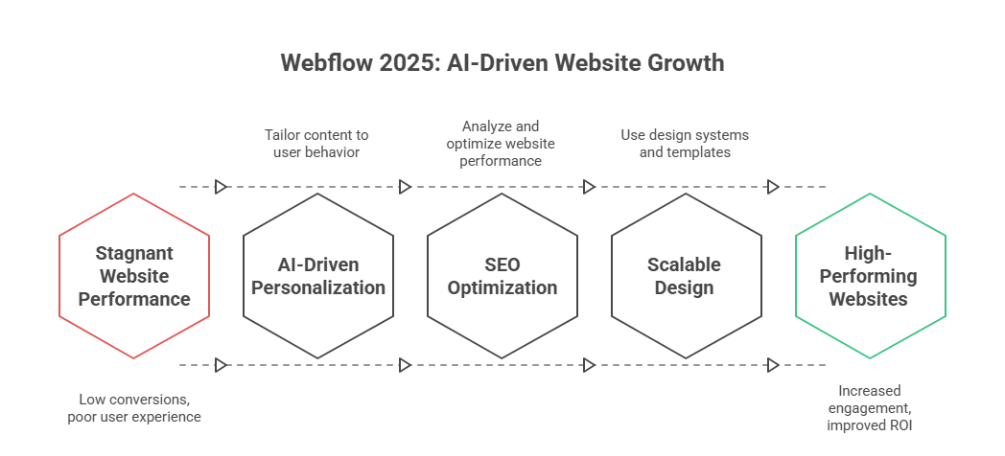
    Webflow in 2025 signals a future driven by AI, no-code efficiency, and seamless integrations. Marketing leaders leverage its SEO, analytics, and personalization capabilities to optimize user experience, improve conversions, and enable data-driven decisions. Businesses using Webflow can scale faster while maintaining modern, high-performing web design.

    Professional development ensures that your website not only looks modern but functions reliably, with features that support growth. Maintenance and support often overlooked keep your site secure, fast, and optimized for conversions. Small investments, such as allocating $2,000–$5,000 for focused improvements or enhancements, can yield measurable results without breaking budgets.

    This blog will explore the growth signals for Webflow in 2025, highlighting how AI, SEO, integration, and no-code capabilities are shaping the future. You’ll learn how marketing leaders use Webflow to optimize websites, improve user experience, and leverage data-driven insights for smarter decisions.

    AI, SEO, Analytics: Key Webflow 2025 Takeaways

    AI, SEO, Analytics: Key Webflow 2025 Takeaways

    Webflow in 2025 continues to redefine how marketing websites are designed, optimized, and scaled. For businesses looking to build smarter, leveraging AI, SEO, and analytics is no longer optional—it’s essential. Understanding these core areas helps marketers, designers, and developers create future-proof web experiences that maximize ROI and deliver measurable impact.

    AI-Driven Personalization Enhances User Experience

    One of the most significant growth signals for Webflow in 2025 is AI-driven personalization. Platforms like Webflow now allow marketers to dynamically tailor content based on user behavior and preferences. By integrating AI, teams can deliver relevant experiences without code, reducing the bottleneck of manual content updates. Designers and developers can combine AI with visual web development and motion design to create immersive digital experiences that resonate with audiences.

    Benefits for Marketing Leaders and Teams

    • Deliver content-rich, personalized experiences across entire websites.
    • Automate repetitive tasks, freeing teams to focus on strategy and design.
    • Improve ROI by increasing engagement and conversion through smarter, data-driven personalization.

    SEO Optimization and Analytics Integration

    In 2025, SEO rankings are increasingly tied to data and user engagement. Webflow’s new tools make it simple to analyze and optimize websites using integrated analytics, allowing marketers to track performance in real-time. Whether you use Webflow for scalable websites or smaller webflow sites, having built-in insights reduces reliance on third-party tools and empowers non-developers to make informed decisions.

    Key Takeaways for SEO in Webflow

    • Leverage analytics to understand user behavior and optimize layout and content placement.
    • Combine dynamic content with AI-driven strategies to improve search visibility.
    • Ensure future-proof websites by aligning design systems, templates, and reusable components with evolving website trends.

    Designing Scalable, Data-Driven Web Experiences

    Webflow’s 2025 state highlights the importance of design and development workflows that support scalable websites. From core areas like accessibility and inclusive design to backend logic and content management, Webflow provides tools to iterate efficiently. Freelancers, teams, and agencies can leverage reusable components and curated collections to streamline projects, ensuring future-proof websites that meet modern web standards.

    Practical Applications

    • Use design systems and templates to maintain consistency across large projects.
    • Integrate analytics to continuously refine digital experiences.
    • Adopt AI and automation for dynamic content, ai-driven personalization, and smarter team collaboration.

    Takeaways:

    By focusing on AI-driven personalization, integrated analytics, and SEO optimization, Webflow in 2025 enables marketers and designers to build content-rich, scalable websites without code. These innovations help teams analyze and optimize continuously, delivering relevant experiences that drive growth, improve ROI, and future-proof web projects.

    Conclusion

    Webflow in 2025 clearly demonstrates that the future of websites is no longer just about aesthetics—it’s about building smarter, scalable, and data-driven digital experiences. By leveraging AI-driven personalization, integrated analytics, and SEO optimization, businesses can create marketing websites that not only engage users but also deliver measurable ROI. Thoughtful webflow design, professional development, and ongoing maintenance ensure your site remains reliable, future-proof, and optimized for growth.

    Marketing leaders and teams who use Webflow effectively can streamline workflows, reduce dependency on developers, and implement dynamic content strategies that respond to real-time user behavior. Small, targeted investments in design systems, templates, and AI integrations can yield outsized results, making modern web development both efficient and impactful.

    Ultimately, the growth signals for Webflow in 2025 point toward a future where content-rich, scalable websites powered by AI and analytics become the standard. By embracing these capabilities, businesses can stay ahead of website trends, improve user experience, and make confident, data-driven decisions for long-term success. Are you ready to take your website to the next level why not contact Integriti Studio today and see how we can help?

    Frequently Asked Questions (What webflow  2025 growth signals for the future)

    What is the future of Webflow?

    The future of Webflow is promising, as it continues evolving into a full-fledged no-code platform for designers and developers. In 2025, its focus on AI-driven design, real-time collaboration, and scalable workflows enables businesses to build responsive, visually compelling websites efficiently, bridging creativity with production-ready functionality.

    Should I learn Webflow in 2025?

    Yes, learning Webflow in 2025 is valuable. Its no-code capabilities, AI-driven design tools, and real-time collaboration features empower designers and developers to build responsive, scalable websites efficiently. Mastering Webflow can enhance your skillset, improve workflow efficiency, and open opportunities in modern web design and digital agencies.

    Is web design still in demand in 2025?

    Yes, web design remains in high demand in 2025. Businesses increasingly prioritize user experience, responsive design, and AI-driven functionality. Skilled designers who can create visually appealing, optimized, and future-ready websites are essential for brand growth, digital engagement, and maintaining a competitive edge in the evolving online marketplace.

    What will marketing look like in 2025?

    Marketing in 2025 will be data-driven, AI-powered, and highly personalized. Brands will leverage advanced analytics, automation, and real-time collaboration tools to deliver targeted campaigns across multiple channels. Creative content, seamless user experiences, and predictive insights will define strategies, making marketing more efficient and measurable than ever.

  • Shopify in 2025 the updates that quietly changed ecommerce

    Shopify in 2025 the updates that quietly changed ecommerce

    Shopify in 2025 the updates that quietly changed ecommerce

    Why do some ecommerce brands grow steadily while others struggle, even on the same platform? The difference is rarely the tool itself—it’s how you use it. In 2025, Shopify introduced a series of quiet but meaningful changes that reshaped how modern ecommerce businesses operate, scale, and compete. These updates didn’t arrive with noise, yet their impact on performance, flexibility, and long-term growth has been significant.

    Shopify in 2025 introduced subtle yet powerful updates that improved ecommerce performance, flexibility, and scalability. These changes focused on smarter workflows, better platform stability, and future-ready features, helping businesses build sustainable growth without complexity while adapting to modern commerce demands.

    Website success today is influenced by far more than themes or apps. Factors like clean development, fast-loading experiences, reliable integrations, and thoughtful architecture directly affect how users engage and convert. Professional development ensures your Shopify setup is not only functional but built to evolve, especially as ecommerce demands become more complex in 2025. Good design, ongoing support, and consistent maintenance often deliver more value than flashy features—especially when even a basic monthly investment compared to enterprise-level builds can shape results.

    This blog explores how Shopify evolved in 2025, the role of ai in shaping smarter ecommerce decisions, and why these updates matter for sustainable digital commerce. You’ll learn what changed, why it matters, and how the right approach helps future-proof your business in 2025 and beyond.

    Shopify in 2025: Quiet Updates Reshaping Modern Ecommerce

    Shopify in 2025: Quiet Updates Reshaping Modern Ecommerce

    In 2025, Shopify quietly rolled out updates that improve efficiency, automation, and user experience. These changes help merchants scale and optimize their stores without complicated processes. Here’s a step-by-step breakdown.

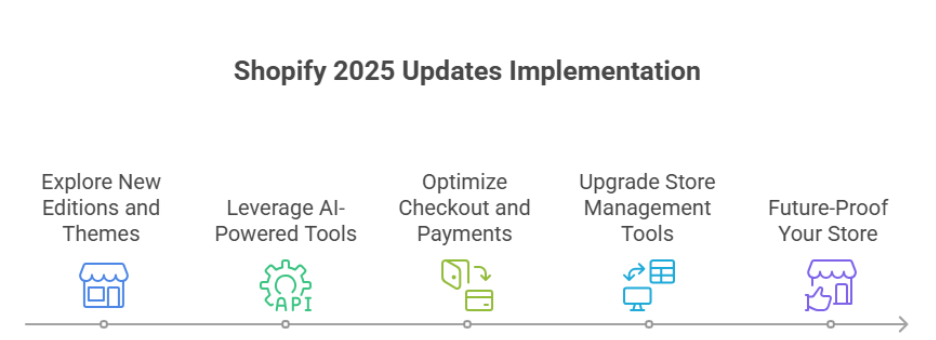
    Step 1: Explore Shopify’s New Editions and Themes

    • What’s new: Shopify editions and new themes provide modern, flexible storefronts.
    • Why it matters: Faster, visually appealing stores improve customer experience and reduce bounce rates.
    • Pro tip: Choose themes that balance design with speed for higher conversions.

    Step 2: Leverage AI-Powered Tools

    • Shopify’s AI and the AI store builder help automate tasks like content creation, personalized recommendations, and product descriptions.
    • Impact: Saves time, reduces errors, and allows merchants to use Shopify more efficiently.
    • Pro tip: Test AI-generated suggestions but keep human oversight for brand voice.

    Step 3: Optimize Checkout and Payments

    • Shopify Payments and updated checkout flows streamline the process and reduce abandoned carts.
    • Shop Pay improvements make transactions faster and smoother.
    • Pro tip: Monitor average order value and conversion metrics after implementing checkout updates.

    Step 4: Upgrade Store Management Tools

    • POS upgrades and admin dashboard improvements simplify daily operations.
    • Refund processes are faster, and analytics are easier to track.
    • Certified Shopify Plus merchants can access scalable B2B commerce workflows.

    Step 5: Future-Proof Your Store for 2026

    • Shopify evolves continuously with AI-driven automation, better storefront builders, and industry-aligned tools.
    • Merchants who use Shopify efficiently now will be ready for higher conversions and growth in the next year.

    Are Shopify 2025 updates quietly holding back growth?

    Even as Shopify continues to evolve in 2025, some updates may unintentionally limit growth for merchants who aren’t leveraging them effectively. Understanding these subtle limitations is key for ecommerce brands seeking to scale without unnecessary friction.

    Checkout Flows – Efficiency vs. Complexity

    Checkout upgrades introduced in Shopify have streamlined the purchasing process, but merchants must evaluate whether their current setup maximizes efficiency. Complex apps or workarounds can slow down checkout, increasing friction for customers. Implementing smart checkout flows ensures fewer abandoned carts while maintaining fast, secure transactions.

    Onboarding and Store Setup – Time Matters

    For new merchants or ecommerce companies expanding into new markets, Shopify’s onboarding and setup process is fast but sometimes requires workarounds to achieve full functionality. Missing these nuances may prevent merchants from leveraging the latest features like headless commerce or advanced personalization.

    Performance and Core Web Vitals

    Even with core web vitals improvements in Shopify, stores may underperform if themes or integrations aren’t optimized. Slow loading times or poorly coded apps can limit conversion potential without compromising the user experience.

    Long-Term Growth Avoiding Hidden Barriers

    While Shopify introduced helpful features in 2025, growth can still be unintentionally restricted if updates aren’t fully leveraged. Strategic planning, automation, and thoughtful use of personalization help merchants launch a store, improve UX, and scale without losing momentum.

    Conclusion

    The updates Shopify introduced in 2025 quietly reshaped ecommerce, offering tools and features that improve efficiency, automation, and scalability. However, these changes alone do not guarantee growth how you use Shopify, optimize checkout flows, leverage AI-powered tools, and maintain strong core web vitals directly impacts results.

    Merchants who actively explore new Shopify editions and themes, streamline onboarding, and implement thoughtful workflows can reduce friction, improve customer experience, and achieve higher conversions. At the same time, overlooking these subtle updates or relying on workarounds may unintentionally hold growth back, even on a leading ecommerce platform.

    Ultimately, success in Shopify 2025 depends on a strategic, proactive approach: combining smart use of technology, personalization, and professional development to launch a store, optimize performance, and scale without stress. By understanding and applying these quiet updates effectively, your business can stay competitive, future-proof operations, and position itself for long-term growth in 2026 and beyond.

    Want expert guidance on leveraging Shopify 2025 updates for your business? Contact Integriti Studio today to get started.

    Frequently Asked Questions (Shopify in 2025 the updates that quietly changed ecommerce)

    Is Shopify still relevant in 2025?

    Yes, Shopify remains highly relevant in 2025. Continuous updates, AI-powered tools, and enhanced e-commerce features help businesses streamline operations, optimize user experience, and scale efficiently. Brands that leverage Shopify’s integrations, analytics, and customizable workflows maintain a competitive edge in an evolving digital marketplace.

    What is Shopify and how does it work in 2025?

    Shopify in 2025 is a comprehensive e-commerce platform that enables businesses to create, manage, and scale online stores. It works by combining AI-driven tools, customizable themes, secure payment gateways, and seamless integrations, allowing merchants to optimize workflows, manage products, and enhance user experience efficiently.

    What is the outlook for Shopify in 2025?

    The outlook for Shopify in 2025 is strong, driven by AI-powered tools, enhanced integrations, and improved scalability for merchants. Businesses using Shopify can expect streamlined operations, better analytics, and more efficient workflows, positioning the platform as a leading solution for both new and established e-commerce ventures.

    Why are businesses moving from Drupal to Shopify in 2025?

    In 2025, businesses are moving from Drupal to Shopify for faster setup, user-friendly management, and superior e-commerce capabilities. Shopify’s AI tools, seamless integrations, and scalable workflows make online store management easier, while Drupal’s complexity and maintenance demands push site owners toward a more efficient, growth-focused platform.