Category: Studioblogs

  • Migrating From Magento to Shopify Successfully

    Migrating From Magento to Shopify Successfully

    Migrating From Magento to Shopify Successfully

    Introduction

    Migrating completely from Magento to Shopify is a very decisive move. Only for businesses seeking a very user friendly, highly scalable, and cost effective eCommerce solution. While Magento is known for its high flexibility and customization. It often requires quite extensive technical expertise to manage properly. On the other hand, Shopify offers a highly intuitive platform with built in tools. Making it ideal for merchants looking for high efficiency and growth.

    A successful migration requires careful planning to highly ensure data integrity, SEO rankings, and very smooth functionality. In this blog, we will walk you through the very essential steps to migrate from Magento to Shopify. That too without disrupting even a fraction of your online business.

    Why Migrate from Magento to Shopify?

    Before jumping into the migration process, it is highly crucial to understand why businesses choose to switch from Magento to Shopify:

    • Ease of Use : Shopify has a highly intuitive and beginner friendly interface as compared to Magento.
    • Lower Maintenance Costs:  Shopify pretty much eliminates the need for highly extensive development and hosting management.
    • Scalability:  Shopify’s cloud based infrastructure quite supports businesses of all sizes without the need for any additional servers or maintenance.
    • App Ecosystem: Shopify has a vast app store for extending functionality without custom development.
    • Security & Reliability: Shopify handles security, updates, and hosting, reducing the burden on store owners.

    Pre-Migration Considerations

    1. Analyze Your Current Magento Store

    Before migrating, audit your current Magento store to understand what needs to be transferred. Key elements include:

    • Products & Categories
    • Customer Data
    • Order History
    • Website Content (pages, blogs, policies, etc.)
    • SEO Elements (meta titles, descriptions, URLs)
    2. Choose the Right Shopify Plan

    Shopify offers multiple plans. Including Basic Shopify and Advanced Shopify. If you run a large scale store, Shopify Plus can also be an option. Select a plan based on your business needs and budget.

    3. Backup Your Magento Store

    Before proceeding with migration, always create a full backup of your Magento database to prevent data loss. Export the entire important data including products, customers, orders, and CSV file imports for a smooth data migration.

    Step by Step Complete Guide to Migrating from Magento to Shopify

    1. Set Up Your Shopify Store

    Once you’ve chosen your plan, set up your Shopify store by:

    • Registering a domain (or connecting your existing one)
    • Selecting a theme that quite perfectly aligns with your brand
    • Configuring general settings such as currency, tax rules, and payment gateways
    2. Use an Automated Migration Tool

    Manual data migration can be highly time consuming and prone to errors. Consider using helpful tools like Cart2Cart, LitExtension, or Matrixify. This will completely automate the process. These tools help transfer:

    • Products and categories
    • Customers and orders
    • CMS pages and blog posts
    3. Manually Review & Clean Up Data

    Once the migration is complete, review your data in Shopify to ensure everything has transferred correctly. Look for:

    • Missing product descriptions or images
    • Incorrect pricing or stock levels
    • SEO settings like URLs and metadata
    4. Redesign Your Store for Shopify

    Since Magento themes cannot be directly transferred, you’ll need to choose a Shopify theme or build a custom design. A Shopify website designer or Shopify design agency can help create a visually appealing and optimized store.

    5. Reconfigure Essential Apps & Integrations

    Shopify offers various apps to replace Magento’s extensions. Ensure that your Shopify store has the necessary apps for:

    • Email marketing
    • Inventory management
    • Analytics and reporting
    • Customer support (Live chat, Helpdesk)
    6. Test Your Store Thoroughly

    Before making your Shopify store live, conduct thorough testing:

    • Check product pages and categories
    • Verify payment and checkout processes
    • Test website speed and mobile responsiveness
    • Ensure customer accounts and order history are intact
    7. Set Up 301 Redirects

    To prevent broken links and maintain SEO rankings, set up 301 redirects for all important URLs. Shopify allows you to redirect old Magento URLs to new ones, ensuring a smooth transition without losing search engine rankings.

    8. Launch Your Shopify Store

    Once everything is in place it will be time to go live! Before officially launching:

    • Announce the migration to customers via email and social media
    • Monitor performance and fix any post-launch issues
    • Keep an eye on analytics to track sales and traffic

    Post-Migration Tips

    1. Monitor Website Performance

    Use tools like Google Analytics and Shopify’s built-in reports to track performance post-migration. Pay attention to traffic fluctuations, conversion rates, and new store functionality.

    2. Optimize SEO & Content

    To maintain and improve SEO rankings:

    • Update meta descriptions and page titles
    • Submit a completely new sitemap to Google Search Console
    • Optimize product pages with relevant keywords
    3. Train Your Team on Shopify

    If your team is used to Magento, they might need some time to get quite familiar with Shopify’s admin interface. Provide training and resources to ensure a very smooth transition.

    4. Engage with Customers

    Keep customers informed about the changes and offer assistance if they face issues. Ensure smooth communication through:

    • FAQs about the new store
    • Live chat support
    • Promotional offers to welcome them to the new platform

    Conclusion

    Migrating from Magento to Shopify can be a total game changer for your entire business. Making store management easier while highly improving user experience. With proper planning, the right migration tools, and thorough testing, you can transition quite smoothly without losing data or customers.

    Following this Magento to Shopify migration checklist and step-by-step guide will help ensure a very successful and hassle free migration process.

    Want your business to be seen and heard online? Explore our Services
     

    Frequently Asked Questions (Migrating From Magento to Shopify Successfully)

    Why should I migrate from Magento to Shopify?

    Shopify offers a highly user-friendly, scalable, and cost-effective eCommerce solution. Unlike Magento, which requires extensive technical knowledge, Shopify simplifies store management with built-in tools, making it ideal for businesses aiming for growth with less complexity.

    Will I lose my SEO rankings during migration?

    Not necessarily. By carefully redirecting old Magento URLs to Shopify URLs and preserving meta titles, descriptions, and alt tags, you can maintain most of your SEO value. Proper planning is crucial.

    How long does the migration take?

    The timeline depends on store size and complexity. Small stores may migrate in 1–2 weeks, while larger stores with thousands of products and custom functionalities could take 4–8 weeks.

    Can I migrate all my data automatically?

    Many tools and apps can automate migration of products, customers, and orders. However, some custom data or extensions may require manual adjustments.

  • AI-Powered Social Strategies: Using Machine Learning to Optimize Campaigns

    AI-Powered Social Strategies: Using Machine Learning to Optimize Campaigns

    AI-POWERED SOCIAL STRATEGIES: USING MACHINE LEARNING TO OPTIMIZE CAMPAIGNS

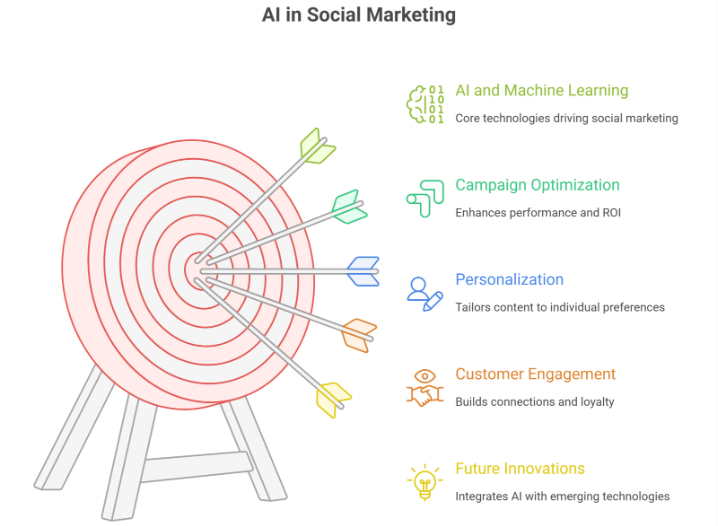
    In the ever-evolving landscape of digital marketing, harnessing the power of artificial intelligence (AI) and machine learning (ML) is not just a competitive advantage it’s a game-changer. Imagine having a marketing assistant that learns from data, predicts trends, and optimizes campaigns in real-time. This is the promise of AI-powered social strategies, where advanced ai algorithms transform data into actionable insights, driving unparalleled results and ROI. By leveraging ai tools and ai content creation tools, marketers can refine their marketing campaigns and social media campaigns for maximum efficiency.

    The Rise of AI in Social Marketing: Where Data Meets Creativity

    The Rise of AI in Social Marketing: Where Data Meets Creativity

    AI isn’t just a buzzword it’s a catalyst for innovation. Picture this: a brand leveraging ai in social media marketing to analyze vast amounts of social media content and social data, from audience demographics to content engagement patterns. By understanding user behavior and social media trends, marketers can craft hyper-personalized campaigns that speak directly to individual preferences. Marketing teams can now integrate ai and machine learning to create personalized campaigns that enhance engagement and conversion rates.

    Imagine using ai to predict emerging trends and consumer behaviors. By staying ahead of the curve, brands can adapt their marketing strategies proactively, ensuring relevance and maximizing impact. Advanced ai allows marketers to optimize campaigns by analyzing ad campaigns, social media advertising, and social media platforms for performance improvement.

    Personalization at Scale: From Segments to Individuals

    Gone are the days of generic messaging. AI enables hyper-personalization, where every interaction feels tailored to the individual. By leveraging ai-driven content, social media content, and ai writing tools, marketers can personalize content strategies and email campaigns at scale. Picture a dynamic content strategy that adapts in real-time based on user preferences, powered by ai. By analyzing historical data and behavioral signals, AI can deliver targeted content that speaks directly to each customer’s interests and needs.

    Imagine an e-commerce site that recommends products based on past purchases, browsing history, and even sentiment analysis of social media posts. By leveraging AI-powered personalization, brands can create seamless, intuitive experiences that foster customer loyalty and drive conversions. Marketers can use ai to automate marketing efforts and social media management, improving user experience and creating personalized campaigns.

    Optimizing Campaign Performance: From Insights to Action

    One of AI’s most significant contributions is its ability to optimize campaign performance. Imagine automating routine tasks like A/B testing, content generation, and ad placement optimization. AI-powered algorithms can analyze analytics, marketing content, and marketing campaigns in real-time, identifying patterns and making data-driven decisions to improve outcomes.

    Consider a scenario where AI predicts the optimal times to post social media posts based on audience behavior. By leveraging machine learning algorithms analyze audience insights, marketers can allocate budget effectively, ensuring maximum ROI across various channels. AI allows marketers to optimize campaigns, enhance engagement strategies, and integrate ai into their marketing platform for better results.

    Enhancing Customer Engagement: Where Automation Meets Authenticity

    AI doesn’t replace human creativity it amplifies it. Picture chatbots powered by ai that provide instant customer support, resolving queries and guiding purchase decisions 24/7. By automating repetitive tasks, brands free up resources to focus on creating social media content and building genuine connections with their audience.

    Imagine using AI to analyze customer feedback and sentiment across social media platforms. By listening to the voice of the customer, brands can respond proactively, addressing concerns and celebrating successes in real-time. AI in social media marketing enables marketing teams to create personalized campaigns, optimize email marketing, and leverage ai tools for social listening and content creation.

    The Future of AI in Social Marketing: Innovations on the Horizon

    As AI continues to evolve, the possibilities are limitless. Imagine integrating AI with augmented reality (AR), allowing customers to visualize products in their own space before making a purchase. Picture predictive analytics that anticipate market shifts and consumer preferences, empowering brands to pivot with agility. AI adoption in marketing ensures marketers can harness ai technologies, ai features, and ai algorithms to stay ahead in trends in marketing.

    In the realm of influencer marketing, AI can match brands with the most relevant influencers based on audience demographics and engagement metrics. By leveraging ai and machine learning, brands can forge authentic partnerships that resonate with their target audience. AI and machine learning are transforming social media strategy, social media advertising, and programmatic advertising, enabling marketing innovation and engagement strategies.

    Embracing AI-Powered Social Strategies: From Concept to Execution

    Embracing AI in social marketing isn’t just about technology—it’s a mindset shift. Picture a future where data fuels creativity, where algorithms optimize performance, and where customer relationships are cultivated at scale. AI can help marketers refine their campaigns, use ai responsibly, and learn how ai offers insights to improve marketing efforts across social media channels.

    As brands navigate this transformative landscape, the key lies in collaboration bringing together data scientists, marketers, and creatives to harness the full potential of ai. By embracing experimentation and continuous learning, brands can unlock new possibilities, driving innovation, engagement, and growth in the age of ai-powered social marketing and the future of social media marketing.

    Frequently Asked Questions (AI-Powered Social Strategies: Using Machine Learning to Optimize Campaigns)

    What is an example of AI optimization?

    An example of AI optimization is using machine learning algorithms to improve supply chain efficiency. AI can analyze historical data, predict demand, and optimize inventory levels, reducing costs and delivery times. This allows businesses to make smarter decisions and streamline operations for better overall performance.

    How do social networks use AI to improve advertising?

    Social networks use AI to analyze user behavior, preferences, and engagement patterns. This enables them to target ads more precisely, predict which content will resonate, and optimize ad placement and timing. As a result, advertisers reach the right audience, increasing conversion rates and overall campaign effectiveness.

    What role does artificial intelligence (AI) play in improving the efficiency of social media marketing campaigns?

    AI enhances social media marketing efficiency by analyzing user data, predicting trends, and personalizing content. It automates tasks like scheduling, audience targeting, and ad optimization, ensuring campaigns reach the right users at the right time, increasing engagement, conversions, and overall return on investment.

    What are 7 types of AI?

    The seven types of AI are: Narrow AI, General AI, Superintelligent AI, Reactive Machines, Limited Memory AI, Theory of Mind AI, and Self-Aware AI. These categories range from task-specific intelligence to advanced systems capable of understanding, learning, and potentially surpassing human cognitive abilities.

  • Beyond Vanity Metrics: Unveiling the Real ROI of Social Media Marketing

    Beyond Vanity Metrics: Unveiling the Real ROI of Social Media Marketing

    BEYOND VANITY METRICS: UNVEILING THE REAL ROI OF SOCIAL MEDIA MARKETING

    In the world of social media marketing, it’s easy to get caught up in the allure of vanity metrics likes, shares, and follower counts. However, true social media roi and social media success isn’t just about visibility; it’s about tangible, measurable returns on investment (ROI). Today, we’ll delve into the real roi of social media, exploring how brands are leveraging marketing strategies, social media analytics, and data-driven tracking metrics that matter to drive meaningful business outcomes and connect social media efforts to real business growth.

    Imagine a clothing brand that meticulously tracks their social media campaigns using google analytics and advanced analytics tools. By analyzing conversion rates, customer acquisition cost, and new customer acquisition alongside metrics like click-through rate, they discover that their Instagram ads targeting a specific audience segment generated a 20% increase in online sales compared to traditional print advertising. This actionable insight enables them to allocate resources more effectively, maximizing marketing roi and revenue generated.

    Consider a tech startup that uses social listening tools to monitor online conversations about their products. By identifying pain points, addressing customer concerns in real-time, and tracking meaningful engagement, they strengthen customer relationships and improve brand perception. As a result, customer retention rates soar, translating into measurable lifetime value and long-term ROI, reflecting real growth.

    Now, let’s explore how brands are moving beyond vanity metrics to unlock the real ROI of social media marketing and measuring social media roi:

    BEYOND VANITY METRICS: UNVEILING THE REAL ROI OF SOCIAL MEDIA MARKETING

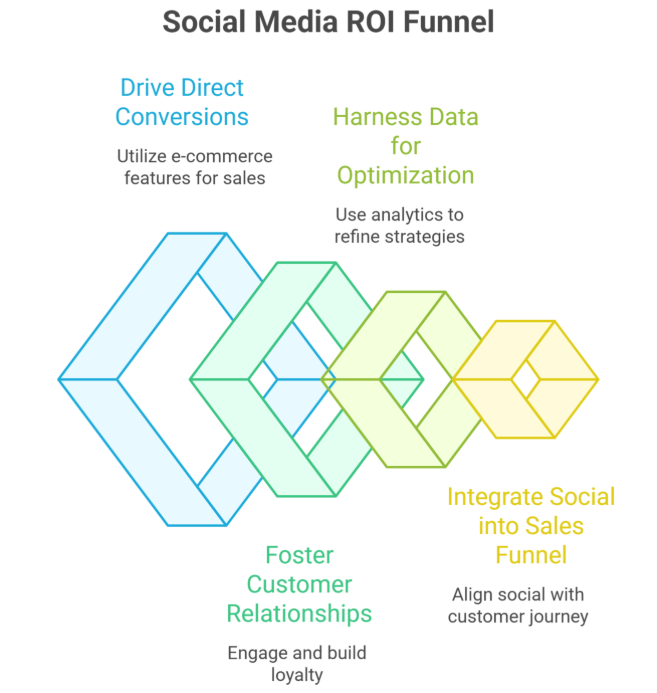
    1. Driving Direct Conversions

    Gone are the days when social media was solely a brand awareness tool. Today, platforms like Instagram and Facebook offer robust e-commerce functionalities, allowing users to discover, explore, and purchase products without leaving the app. Brands are leveraging these direct purchasing features to drive conversions and measure social media roi more effectively, making sure metrics like impression, click-through, and acquisition cost contribute to positive ROI.

    Imagine a beauty brand that integrates Instagram Shopping into their social media strategy. By tagging products in posts and stories, they create a seamless shopping experience for their followers. As a result, they see a significant uptick in online sales directly attributed to their social media efforts, demonstrating clear roi metrics and measurable business results.

    2. Fostering Customer Relationships

    Social media isn’t just a broadcast channel; it’s a two-way conversation. Brands that prioritize engagement rate, meaningful metrics, and relationship-building see tangible returns in customer loyalty and advocacy, contributing to the real impact and actual business growth.

    Take the example of a restaurant that actively engages with customers on Twitter. By responding to reviews, sharing user-generated content, and running interactive polls, they foster a sense of community and loyalty among their followers. This investment in relationships translates into repeat business, positive word-of-mouth referrals, and measurable roi data—key indicators of social media roi and business outcomes.

    3. Harnessing Data for Optimization

    Data is the cornerstone of effective social media marketing. Brands that leverage analytics tools, track metrics such as likes, and experiment with marketing campaigns to optimize social media analytics can improve metrics that reveal meaningful ROI.

    Consider a fitness app that uses A/B testing to refine their ad copy and visuals on Facebook. By experimenting with different messaging strategies, they identify the most compelling approach that resonates with their target audience. This iterative optimization process leads to improved click-through rates, app downloads, and new customer acquisition, directly impacting roi calculation and marketing roi.

    4. Integrating Social into the Sales Funnel

    Successful brands understand that social platforms play a crucial role at every stage of the customer journey. By integrating social into the sales funnel from awareness to consideration to conversion and tracking social media, brands can attribute specific metrics to each stage and measure overall ROI more accurately, connecting your social activity to real business results.

    Imagine a travel agency that runs a Facebook campaign targeting users who have expressed interest in vacation destinations. By retargeting these users with personalized offers, testimonials, and email marketing follow-ups, they drive qualified leads through the sales funnel, resulting in bookings, revenue generated, and positive marketing ROI directly attributable to their social media’s real roi.

    Conclusion: Unlocking the True Value of Social Media Marketing

    In conclusion, the real ROI of social media marketing extends beyond surface-level metrics like follower count, vanity metrics like likes, and metrics such as likes. Brands that focus on driving direct conversions, fostering customer relationships, harnessing data for optimization, and integrating social into the sales funnel see meaningful metrics, truly meaningful ROI, and tangible returns on their investment.

    As we navigate the evolving landscape of digital marketing, let’s shift our focus from vanity metrics to metrics that actually matter, marketing activities that drive real business, and actionable metrics that reveal the true social media ROI. By adopting data-driven strategies, tracking metrics that matter, prioritizing engagement and conversion, and discovering how to measure social effectively, brands can unveil the real roi of social media marketing and maximize the impact of their digital presence, moving beyond vanity metrics to actual business growth.

    Frequently Asked Questions (Beyond Vanity Metrics Unveiling the Real ROI of Social Media Marketing)

    What are vanity metrics in social media?

    Vanity metrics in social media are superficial measurements like likes, followers, or shares that appear impressive but don’t reflect real business impact. They don’t indicate engagement quality, conversions, or ROI, making them less useful for assessing the true effectiveness of marketing campaigns.

    What is the ROI on social media marketing?

    ROI on social media marketing measures the return generated from social media efforts compared to the investment made. It evaluates campaign effectiveness by tracking metrics like conversions, sales, lead generation, and engagement, helping businesses determine the financial impact and optimize strategies for better results.

    How to prove ROI on social media?

    To prove ROI on social media, track key metrics such as conversions, sales, leads, and website traffic generated from campaigns. Compare these results to the cost of advertising, tools, and resources used. Using analytics and attribution models helps demonstrate the tangible financial impact of social media efforts.

    What is the 50 30 20 rule for social media marketing?

    The 50-30-20 rule for social media marketing suggests allocating content strategy as follows: 50% valuable, educational, or informative content; 30% engaging or entertaining posts to build community; and 20% promotional content to drive sales or conversions, ensuring a balanced and effective social media presence.

  • Building Omnichannel Experiences: Integrating Social Media Into a Seamless Customer Journey

    Building Omnichannel Experiences: Integrating Social Media Into a Seamless Customer Journey

    BUILDING OMNICHANNEL EXPERIENCES: INTEGRATING SOCIAL MEDIA INTO A SEAMLESS CUSTOMER JOURNEY

    Hey there, digital explorers! In the exciting world of B2C marketing, let’s dive into how you can turbocharge your customer journey by integrating social media into every step. Buckle up for a thrilling ride where we combine creativity with technology to create seamless, engaging experiences across multiple channels.

    Social Media Safari: Discover and Engage

    First stop: the wild and wonderful world of social media discovery! Imagine Instagram as your virtual fashion runway. Brands strut their stuff with stunning visuals and product tags that let you shop right from your feed. It’s like window shopping, but without leaving your couch!

    Picture this: a cosmetics brand dazzling you with makeup tutorials on TikTok. You’re hooked by the fun, engaging content and inspired to try their latest lip kit. With just a few taps, you’re on their website, ready to make your beauty dreams come true.

    Smooth Sailing to Checkout

    Helloooo, shoppers! Social media isn’t just for likes—it’s your ticket to a seamless path to purchase. Ever browsed Facebook and stumbled upon an ad for the perfect gadget you’ve been eyeing? Click, and you’re whisked away to a personalized shopping experience, complete with exclusive deals just for you.

    Let’s say you’re into fitness. A sports brand sends you a personalized offer via Messenger, tailored to your workout style. Before you know it, you’re hitting “checkout” and gearing up for your next adventure—all thanks to a smooth, social media-powered journey.

    Customer Care Carnival: Support and Relationships

    Need a helping hand? Social media has your back! Imagine tweeting a question to your favorite tech brand and getting a lightning-fast response. They’re not just solving problems—they’re building relationships one tweet at a time.

    Think of Twitter as your direct line to VIP customer service. Brands showcase their dedication to satisfaction by resolving issues publicly and turning frowns into virtual high-fives. It’s customer care with a personal touch!

    Join the UGC Party: User-Generated Content Magic

    Lights, camera, action! Social media is the stage where user-generated content (UGC) steals the spotlight. Brands throw a virtual party, inviting customers to share their stories and star in their campaigns.

    Imagine a travel agency hosting a TikTok challenge. You and fellow adventurers post your epic travel moments with a special hashtag. Suddenly, your story goes viral, inspiring others to embark on their own journeys. It’s not just content—it’s a community coming together to share the joy of exploration.

    Conclusion: Unleash Your Social Side for Epic Omnichannel Adventures!

    Ready to embark on your omnichannel adventure? Integrate social media into your customer journey and watch the magic unfold. From discovery to checkout, from support to storytelling, social media is your secret weapon for building fun, interactive experiences that keep customers coming back for more.

    As you navigate the digital landscape, remember to infuse creativity and authenticity into every interaction. Your customers aren’t just followers—they’re co-stars in your brand’s blockbuster story. So, let’s raise the curtain and let your social media journey begin!