Blog

  • 20 Easy ways to spice up your UI designs

    Did you know that 94% of a website’s first impressions are due to its design?

    There is no doubt about the impact a web or app design has on user experience. If you want to hook your potential customers, then you need to say goodbye to plain UI designs which cannot pop out in an already saturated digital market.

    We have decided to list down 20 tried-and-true techniques that can spice up your designs to ensure a positive user experience for your customers.

    1. Keep it simple

    Having an easy-to-use interface can make or break your digital presence. Keep it simple, stupid (KISS) is a design principle that stresses on keeping designs and systems as simple as possible. If you want to boost the levels of user acceptance and interaction, your safest bet is to avoid complexity. After all the easier a design is to understand and use, the more likely it is to be adopted and engaged with.

    A screenshot of top banner on landing page of Netflix
    Image Source: Netflix

    2. White space is key.

    White space, also known as “negative space,” is a portion of the web page that is left blank or unmarked and plays a pivotal role in communicating which features of the website need to stand out as vital aspects. Research also shows that white spaces are capable of increasing comprehension by around 20%.

    Screenshot to show why white spacing on the layout is important
    Image Source: uxdesign.cc

    3. Unity of elements

    Visual unity is all about harmony. The idea is to create elements that support each other and work together to form a user-friendly and aesthetically pleasing design. Through ensuring this unity the viewers will first look at the whole and then the sum of the parts making that whole. It will improve your design’s balance, contrast, emphasis, and proportion.

    Picture for the unity of elements
    Image Source: Adobe Stock

    4. Focus on content

    When designs are built around content, they become unique. Content provides the designer with insight on how to properly present on devices of all sizes, with good navigation and calls-to-action, and for the highest conversion of customers. Good content blends text and media to help your visitors comprehend what you do, how you do it, and why they need your product or services.

    Screenshot of top section from relume landing page
    Image Source: relume.io

    5. Conduct design audits

    UX audit provides data that illuminates why a product is encountering issues and offers actionable recommendations that can resolve the problems and improve the user experience. You need to delve into both your own business goals and users’ needs to get productive results from the audit.

    6. Consistent Typography

    Selecting a typeface and sticking to it will help you avoid creating confusing and messy interfaces. A good practice that we have incorporated into our user interface design process is to set up a hierarchy of typefaces (one constant font for headers, another for subheadings) and commit to it.

    A picture for Consistent Typography section
    Image Source: uxdesign.cc

    7. Shadows from one source

    Shadows are a great tool to bring more depth and emphasis to your designs which enables users to differentiate between UI elements. However, they need to follow the rules of nature. You can create more realistic shadows by guaranteeing one common source. 

    Graphical user interface, applicationDescription automatically generated
    Image Source: uxdesign.cc

    8. Darker text on light background

    If the content being displayed on the user interface is important and lengthy, then it’s better to keep a light theme with darker text on it for greater readability and legibility. We incorporated a lighter background with darker text on our website to make it easy for visitors to get the information they need.

    Graphical user interface, text, application, emailDescription automatically generated
    Image Source: Integriti

    9. High Contrast for Text Over Images

    What happens if you want to place text on a background image? You can make sure that the text is legible by providing sufficient contrast. Accessibility requirements for color contrast dictate that text should have a contrast ratio of a minimum of 4.5:1. Remember you don’t want users to strain their eyes due to unreadable text, and techniques like semi-opaque overlay, text shadow or outline, and blur can help you avoid this issue.

    A screenshot from integriti.io website
    Image Source: Software Development Services

    10. Irregular backgrounds

    When it comes to designing a website or an app, it’s clear that the screen background is very important to the overall look of the UI. Irregular backgrounds can help you create truly eye-catching designs which leave a lasting impression on the users. 

    Screenshot of stripe main landing website
    Image Source: Stripe

    11. Highlighted icons

    Icons can speed up user interactions when they are easy to recognize and the meaning behind them is well communicated. By highlighting icons, you can add more style, clarity, and visual appeal to your user interface designs.

    A picture of highlighted icon
    Image Source: funnelcrm.com

    12. Subtle lines to break text

    Visual dividers are handy in dividing pieces of content into groups, sections, or options. They help in setting up a visual hierarchy and make the design layout clearer and more digestible. For our website, we have used lines as a visual divider to break content apart, but you can also employ other dividers like color, negative space, shadows, and images.

    A screenshot image from content marketing page the website link is integriti.io
    Image Source: Content Marketing

    13. Gradient borders and backgrounds

    With the sheer volume of content in the digital world, businesses need to find ways to break through the clutter and get their target customer’s attention. Gradients can help you stand out. They are versatile and can be used as both the focal point of a design and a background element. They can be bold or subtle, the choices are extensive. One look at our website and logo, and you will know how much we love gradients! We have used this technique in our design to reflect our two major services: Software development and Digital marketing.

    A screenshot from content marketing page inside the integriti.io website
    Image Source: Content Marketing

    14. Solid shadows

    This technique is for those companies who wish to stand out from the crowd and entertain their users. Particularly associated with Neubrutalism design thought, these shadows offer a sharp contrast and have no blur on them.

    Shape, rectangleDescription automatically generated
    Image Source: dribbble.com

    15. Layered text

    Layering text and other design elements will add visual depth to your UI and your headings will get a unique characterful look. Notice how this technique blends text realistically into the background image shown below.

    screenshot of Slider Revolution landing page
    Image Source: Slider Revolution

    16. Use of imagery

    Research shows that photos, icons and images are the top visual elements appreciated by consumers in a web design. An image’s ability to engage and communicate with viewers is enormous. Compared to text-based descriptions, complex concepts can be conveyed more effectively through the right imagery.

    Took screenshot from dribbble.com
    Image Source: dribbble.com

    17. Dot grid designs

    They are an easy way to add some visual excitement to your web or app designs. Grid designs add texture and can be used to fill out a space on the page. Note how compared to say a block of color, a grid of dots is not too visually heavy. 

    website screenshot from mailersend
    Image Source: mailersend

    18. Hand-drawn elements

    Like many other components of web design, we have highlighted, hand-drawn elements are a great way to express individuality. Hand-drawn elements are ideal for creating an emotive and human design and can be a reminder for the users that there is a human behind the website.

    Screenshot from Jam.dev
    Image Source: Jam.dev

    19. Glassmorphism

    As the name suggests, glassmorphism uses the properties of glass to enrich modern UI designs. A favorite approach of brands like Apple and Microsoft, it gives a translucent or transparent look to its elements and works well on vibrant, colorful backgrounds which accentuate the glass effect. This design style is great for visual hierarchy and emphasizes the content you want to highlight.

    A picture describing Glassmorphism
    Image Source: dribbble.com

    20. Darkmode

    The dark mode user interface refers to designs where the light-colored text sits on a dark background. Dark UIs’ popularity comes from their sleek and contemporary visual appeal and their ability to improve eye fatigue. For products where users are likely to be engaged for a longer period, adding a dark theme to UI design is a must.

    The picture describes ow to select colours for dark mode
    Image Source: dribbble.com

    UI Design is a link between customers and your website which helps ensure a positive user experience through visually appealing designs, easy navigation, and effective visual hierarchy. We hope these techniques can help you in creating a beautiful and successful UI for your brand. 

    Also, check out our list of the latest UX trends to dominate fashion eCommerce. 

  • 10 most common JavaScript issues you need to look out for

    JavaScript is a powerful and popular programming language used to create dynamic and interactive websites. It’s nothing new to have robust JavaScript-based libraries and frameworks for developing single-page applications (SPAs), graphics and animation, and server-side JavaScript platforms. JavaScript is now fully commonplace in the realm of web app development, making it a crucial ability to know.

    As with any programming language, there are several issues that development teams encounter when using JavaScript. From creating memory leaks to confusion about equality, developers must be aware of these common issues and how to resolve them.

    In this article, we’ll discuss 10 of the most common JavaScript issues that businesses face and how to resolve them. By understanding and addressing these issues, your development team can create more efficient and reliable code.  

    So, let’s get started!

    Creating Memory Leaks

    Memory leaks occur when you allocate memory for an object or variable but do not free it when it is no longer required. This can cause your application to use more memory than it needs and can lead to performance issues. To prevent this, development teams need to be aware of the types of objects and variables they are using and ensure they are properly freed when they are no longer needed.

    When creating memory leaks, developers should keep in mind the lifespan of the objects and variables they are working with. If an object or variable is not needed anymore, developers should make sure to free the associated memory as soon as possible. Furthermore, developers need to be aware of any external libraries or frameworks they are using and make sure to properly dispose of any objects or variables associated with them.

    Thinking There Is Block-level Scope

    One of the most common issues developers face is thinking that there is block-level scope in JavaScript. The block-level scope is the concept that variables declared within a certain block of code are only accessible within that block. This is not the case in JavaScript, as variables are scoped to the function, and they are declared in. This can lead to confusion and unexpected behaviour when working with variables.

    To avoid this issue, developers should be aware of the scope of variables they are working with. In addition, developers should make use of the let keyword to ensure that variables are only accessible within the block they are declared in. This will help to avoid confusion and unexpected behaviour when working with variables.

    Incorporating Helpful Error Handling into JavaScript Code

    Error handling is an important part of any software application. Unfortunately, it is often overlooked or neglected when it comes to JavaScript code. Error handling is essential for ensuring that your application is stable and reliable. It can help to catch and fix errors before they become a problem.

    When incorporating error handling into your JavaScript code, it is important to make use of the try/catch statement. This statement will allow you to catch any errors that occur in your code and handle them accordingly. Furthermore, you should make use of the console.error() method to log any errors that occur. This will help to ensure that any errors that occur in your application are properly handled and logged.

    Setting a Breakpoint and Examining Data with Firebug

    Firebug is a powerful debugging tool for JavaScript code. It allows developers to set breakpoints in their code and examine the data associated with it. This can be extremely useful for understanding how your code is working and can help to identify and fix errors quickly.

    When using Firebug to debug your JavaScript code, it is important to understand the different types of breakpoints that can be set. There are line breakpoints, which will pause the code execution at a particular line of code, and conditional breakpoints, which will pause the code execution when a certain condition is met. It is also important to understand the data that can be examined with Firebug. This includes variables, functions, and objects.

    Failure to Use “Strict Mode”

    Strict mode is a feature of JavaScript that helps to enforce better coding practices. It helps to eliminate certain types of errors and can lead to more reliable code. Unfortunately, many developers do not make use of this feature and as a result, their code may be more prone to errors.

    To make use of strict mode, developers need to add the “use strict” directive at the beginning of their JavaScript code. This will enable strict mode and help to ensure that their code is more reliable. Furthermore, developers should make use of the “strict” keyword when creating functions and classes. This will ensure that any errors that occur in these functions or classes are caught and handled properly.

    Providing a String as the First Argument to setTimeout or setInterval

    setTimeout and setInterval are two of the most used methods in JavaScript. They allow developers to schedule tasks to be performed later. One of the most common issues developers face when using these methods is providing a string as the first argument instead of a function. This can lead to unexpected behaviour or errors in your code.

    To avoid this issue, you should always make sure to provide a function as the first argument to setTimeout and setInterval. If the function needs to be executed at a later time, developers should make sure to wrap it in an anonymous function. This will ensure that the function is executed at the correct time and with the correct parameters.

    Creating Incorrect References to Instance Methods

    When creating object-oriented applications in JavaScript, developers need to be aware of the instances of objects they are working with. One common issue developers face is creating incorrect references to instance methods. This can lead to unexpected behaviour or errors in your code.

    To avoid this issue, developers should make sure to use the “this” keyword when referencing instance methods. This will ensure that the correct instance of the object is being used. Furthermore, developers should make use of the bind() method to bind the context of a function to a specific instance of an object. This will help to ensure that the correct instance is being referenced when the function is called.

    Failure to Properly Leverage Prototypal Inheritance

    Prototypal inheritance is a powerful feature of JavaScript that allows developers to extend an object’s functionality. Unfortunately, many developers do not take advantage of this feature and as a result, their code can be less efficient and less reliable.

    To take advantage of prototypal inheritance, developers should make use of the prototype keyword when creating objects. This will allow them to create objects that inherit the properties and methods of other objects. Furthermore, developers should make use of the extend() method to easily extend the functionality of an existing object. This will help to ensure that their code is more efficient and reliable.

    Inefficient DOM Manipulation

    DOM manipulation is an essential part of any JavaScript application. Unfortunately, many developers do not take the time to optimize their DOM manipulation code and as a result, their applications can be slow and inefficient.

    To optimize the DOM manipulation code, developers should make use of the querySelector() and querySelectorAll() methods. These methods will allow developers to select elements quickly and efficiently from the DOM. Furthermore, developers should make use of the createElement() and appendChild() methods to create and add elements to the DOM. This will help to ensure that their DOM manipulation code is fast and efficient.

    Confusion About Equality

    Equality is an important concept in any programming language. Unfortunately, many developers are confused about the different types of equality in JavaScript and as a result, their code can be unreliable.

    In JavaScript, there are two types of equality: strict equality (===) and loose equality (==). Strict equality checks for both the value and the type of a variable, while loose equality only checks for the value. To avoid confusion, developers should always make use of strict equality when comparing two variables. This will help to ensure that their code is more reliable.

    In this blog post, we looked at 10 common JavaScript issues that developers face. From creating memory leaks to confusion about equality, these issues can lead to unexpected behaviour or errors in your code. To avoid these issues, developers should make sure to understand the different types of errors in JavaScript and make use of the tools and features available to them. By doing so, they can ensure that their code is more reliable and efficient.

    Need to get a team of expert java developers who can support your development efforts? Explore how our software engineering models can help your business here.

  • 10 Creative Interactive Facebook Post Ideas To Get Your Audience Engaged

    Facebook still reigns supreme for exposing your content to a broad audience. Businesses from all niches can find or even curate a loyal following with the right marketing. 

    (Here are some key learning points to take home!)

    Key takeaways:

    • Posting content is simply not enough, it needs to be engaging! What better way to increase engagement than having your content interactive?
    • Story games are immensely popular on Facebook and Instagram. Make sure to make the most of the options available. We strongly suggest using the Poll and Questions feature!
    • Video content does amazingly well on social media nowadays. Have your audience interact with your reels on stories or better yet, go live and speak to them in real time!

    Interactive Facebook posts ideas:

    1. Polls

    The internet loves polls! Facebook in specific, allows you to gather insights from your audience with ease while giving you a good idea of what they’re interested in. With the amount of interaction, polls also have the added benefit of allowing you to track the success of your different content types, gauging which is most popular and useful for your audience.

    Tip: To create a poll on Facebook, you need to first create a poll question. Make sure that the question you choose is hooking enough to make your audience want to engage with it.

    A limitation of Facebook polls is that you can only conduct them in stories.

    2. Quizzes

    A quiz is one of the most engaging types of content on Facebook. It can also be a great way to get your target audience to interact with your brand in a meaningful way. Facebook users love quizzes because they can learn something new, interact with others and make new friends. 

    Let’s not forget, it’s all about building a community around your brand.

    You can run quizzes for your business that allow you to engage your target audience with information about your products and services. Facebook’s native quiz tools create custom quizzes. 

    These tools allow you to create multiple-choice questions and also integrate with external services like Survey Monkey and Interaction. This can help you crowdsource your questions and quizzes.

    3. Fill-in-the-Blanks

    A fill-in-the-blank post can be a great way to engage your target audience. It can also be a good way to gauge their interests and help you uncover the needs and interests of your customers. Facebook users love fill-in-the-blank posts because they give them a focus and guide through which to enter their thoughts and feelings. 

    These types of interactive posts can also be a good way to connect with others as a business, especially to gather feedback. 

    Social listening is key when it comes to sustaining and building relationships with your audience.

    You can create a fill-in-the-blank post in a variety of ways. You can use a free or paid tool to create a template, or you can simply type out your content on a computer and paste it onto Facebook. You can also create a fill-in-the-blank post using an iOS or Android app.

    4. Video Contests

    If you’re looking for a different type of fun interactive post that will engage your audience and get them talking, a Facebook contest could be the perfect fit. Internet users love to take part in contests, and they also enjoy watching videos. This means you can use contests to not only engage your audience but also to increase the traffic your content generates.

    You can create a Facebook contest using Facebook’s native tools. You can create multiple prizes and different contests. When creating your contest, be sure to include instructions and rules on how the contest works.

    5. Caption Contests

    Like polls, caption contests can help you gauge the interests of your Facebook followers. They can also be a fun way to get your brand name out there and build some brand equity. Caption contests are a fun and easy way to spread your brand name, engage your fans, and also gauge their interests. 

    Caption contests are brilliant for audience involvement. 

    A tip: post a fun brain teaser!

    6. Add-your pictures

    The picture-adding feature is available on Facebook stories. The feature is shared by Meta-owned Instagram too and is one of the best methods to create a cycle of content. 

    To have your audience interact with your story and take the time to share their take on the brief, make sure that you write something entertaining. 

    Likewise, the brief shouldn’t be too specific either. Everyone has a unique experience and Facebook is a platform with a diverse audience. To ensure high-level participation, your initial brief should be something that most people can relate to.

    For example, “post a picture that sums up your month” or, “the 3rd picture in your gallery will be your mood for the week”.

    7. User-Generated Content

    Facebook users love to share content from businesses and brands that they love. One way to boost your own content and get more likes is to ask your fans for user-generated content. You can create a survey or survey-style post asking your fans to submit photos, videos, polls or other types of posts that they would like to see from you. 

    Or, you can even use a Facebook app to create surveys. When creating surveys or other types of posts that include user-generated content, make sure that you’re not asking too much. If a post goes over the 30-second time limit, it will be less likely to be seen and viewed. In 2023 short and crisp video content does best on Facebook.

    8. Live Q&A

    Facebook users love getting inside information from businesses and brands that they love. An effective way to increase engagement on your Facebook posts is to host a live Q&A session. A live Q&A post will allow you to create a direct connection between your brand and your audience.

     You can do this by asking your fans’ questions and allowing them to provide insight into what they like and what they want to see more of from you. You can host a live Q&A session using a Facebook app, or you can do it by creating a custom post. When creating your post, include the right tags so that the right people see it and can see you.

    Apart from asking what clients want to see more, you could also have them ask questions about your brand and answer them in real time!

    9. Live Events

    Another great way to boost engagement on your page is to host live events on Facebook. Live events allow you to create an interactive experience for your fans, allowing them to get involved in your content and giving you real-time feedback and insight into how you can improve your brand and business.

    People love life events because they provide an interactive experience that’s outside of the typical social media posting. Also, Facebook users are more engaged during live events than when reading a mere post.

    10. Giveaways

    Facebook users love giveaways, and honestly, who doesn’t! An audience is more likely to interact with your posts for giveaways, as opposed to your typical Facebook posting. A giveaway can boost engagement and shares on your posts, especially if it is great! 

    People love giveaways because they’re a great way to get your name out there and give your fans something to talk about. Many businesses also choose to host them on Facebook to boost their brand awareness.

    Conclusion

    Verdict: are interactive posts for Facebook all that important?

    Facebook is the largest social network in the world, and it continues to grow, attract new users, and garner more attention from businesses of all niches. Facebook post ideas can be challenging, but they don’t have to be. With the tips presented in this article, you can integrate creative and effective Facebook post ideas that will get your brand in front of your target audience.

    While these cover the ideas for Facebook, boost your Instagram engagement with Instagram story games

  • Is It Time for Fashion Brands to Put Social Justice First?

    In the past few years, the world has seen a massive shift in social consciousness and attitudes towards social justice. From the #MeToo movement to Black Lives Matter, it seems like everyone is joining the cause to fight for a better world and a fairer society.

    But what about the fashion industry? Is it time for fashion brands to put social justice first? This blog article will explore the concept of brand activism, how the fashion industry has embraced social justice, the benefits and challenges of incorporating social justice into fashion brands, and some tips for launching a successful social justice campaign.

    Photo by tiday on Pixabay

    What is Brand Activism?

    Brand activism, or corporate activism, is a term used to describe the practice of companies engaging in social justice initiatives. This could include anything from donating to charities, campaigning for legislation, or launching their own social change campaigns. Brand activism is often viewed as a way for companies to show their commitment to social causes, as well as to demonstrate their corporate values.

    At its core, brand activism is an attempt to establish an emotional connection between a company and its customers. By engaging in social justice initiatives, companies can demonstrate that they are not only profitable, but that they are also willing to use their platform to make a difference in the world.

    How has the Fashion Industry Embraced Social Justice?

    The fashion industry has been one of the earliest adopters of brand activism. Many fashion brands have long been associated with social causes, such as environmentalism, philanthropy, and animal rights.

    In recent years, this has shifted to include more explicit forms of activism, with fashion brands taking a stand on social issues such as racism, sexism, and LGBTQ+ rights. Major fashion labels such as Nike, Gucci, and Prada have all launched social justice campaigns to show their support for these causes.

    Source: Adidas

    These campaigns often take the form of public campaigns, collaborations with non-profit organizations, and the use of their platforms to raise awareness of social issues. Nike’s “Just Do It” campaign is a prime example of this, with its focus on diversity and inclusivity.

    Benefits of Incorporating Social Justice into Fashion Brands

    There are many benefits to incorporating social justice into fashion brands. For one, it helps to create a positive brand image. By taking a stand on important social issues, fashion brands can demonstrate that they are committed to making a difference in the world. 

    This is one of the best branding and social media marketing techniques that can help to attract customers who share the same values and want to support companies that are making a positive impact.

    In addition, social justice campaigns can help to boost a fashion brand’s visibility. By engaging in public campaigns, fashion brands can reach a wider audience and increase their visibility. This can be particularly helpful for smaller brands that don’t have the resources to launch big campaigns.

    By taking a stand they can foster loyalty and trust in the brand, which can lead to long-term customer relationships.

    Challenges of Incorporating Social Justice into Fashion Brands

    While there are many potential benefits to incorporating social justice into fashion brands, there are also some challenges that need to be addressed. For one, it can be difficult for fashion brands to balance their commitment to social justice with their need to remain profitable. Social justice campaigns can be expensive and time-consuming, and if not managed properly, can lead to losses in profits.

    In addition, fashion brands need to be aware of the potential backlash that can come with taking a stand on social justice issues. If a fashion brand’s campaign is perceived as insincere or opportunistic, it can lead to negative publicity and a loss of credibility.

    Finally, fashion brands need to be aware of the potential legal implications of their social justice campaigns. If a fashion brand is too vocal in their support of a particular cause, it could lead to legal issues. For example, if a fashion brand supports a political candidate, they could be seen as making a political contribution, which could be illegal in some countries.

    Examples of Successful Social Justice Campaigns

    One of the most successful social justice campaigns in recent years was the “We Are All Human” campaign by the fashion label H&M. The campaign featured a series of photographs of models from different backgrounds, with the aim of promoting diversity and inclusivity. The campaign was a huge success, with people from all over the world sharing their stories and showing their support for the cause.

    Another successful social justice campaign was the “Love Your Body” campaign by Dove. The campaign aimed to promote body positivity and encourage people to accept and love their bodies, regardless of shape or size. The campaign was hugely successful, with Dove receiving positive feedback and praise for their efforts.

    Examples of Unsuccessful Social Justice Campaigns

    Unfortunately, not all social justice campaigns have been successful. One example is the “Choose Love” campaign by Nike. The campaign featured a series of videos of people from different backgrounds and cultures, but was widely criticized for its heavy-handed approach and lack of nuance.

    Another example is the “Love Has No Labels” campaign by Pepsi. The campaign aimed to promote diversity and inclusivity but was widely derided for its inauthentic messaging and lack of substance. Many people felt that the campaign was merely capitalizing on the social justice movement, without actually making a meaningful contribution.

    Source: Twitter

    Key Success Factors for a Successful Social Justice Campaign

    So, what makes a successful social justice campaign? Here are some key success factors to consider:

    • Authenticity: Your campaign must be authentic and sincere. It must demonstrate that you genuinely care about the causes you are supporting and have a genuine desire to make a difference.
    • Transparency: Your campaign must be transparent and honest. You should be clear about your goals and objectives, and make sure that you are not taking advantage of the social justice movement for your own gain.
    • Engagement: Your campaign must be engaging and inspiring. It should be something that people can relate to and get behind.
    • Creativity: Your campaign should be creative and original. It should stand out from the crowd and capture people’s attention.
    • Impact: Your campaign should have a tangible impact. It should be something that people can see and feel, and that will make a real difference in the world.

    Developing a Social Justice Campaign

    Developing a successful social justice campaign requires careful planning and execution. Here are some tips for developing a successful campaign:

    1. Identify Your Goals: Before you start developing your campaign, it’s important to identify your goals. What do you want to achieve? What message do you want to convey? What action do you want people to take?
    2. Choose Your Platform: Choose the right platform for your campaign. This could include a website, social media, or even traditional media.
    3. Create a Strategy: Develop a strategy for your campaign. This should include a timeline, budget, and target audience.
    4. Develop Content: Develop content for your campaign. This could include videos, photographs, or even stories.
    5. Measure Results: Track the results of your campaign. This will help you identify what’s working and what needs to be improved.

    Tips for Launching a Social Justice Campaign

    Once you have developed your campaign, it’s time to launch it. Here are some tips for launching a successful social justice campaign:

    • Build Partnerships: Build partnerships with organizations and influencers that share your values and goals. This will help to broaden your reach and amplify your message.
    • Use Social Media: Use social media to get the word out. Post regularly and engage with your followers.
    • Create a Hashtag: Create a hashtag for your campaign. This will help to create a sense of community and encourage people to join the conversation.
    • Collect Feedback: Collect feedback from your followers. This will help you identify what’s working and what needs to be improved.
    • Measure Results: Track the results of your campaign. This will help you identify what’s working and what needs to be improved.

    Conclusion

    It’s clear that the fashion industry is embracing social justice, and there are many potential benefits to incorporating social justice into fashion brands. However, there are also some challenges that need to be addressed, and it’s important for fashion brands to be aware of these before launching a social justice campaign.

    With careful planning and execution, fashion brands can create successful social justice campaigns that make a real difference in the world. By taking a stand on important issues and using their platform to make a positive impact, fashion brands can demonstrate their commitment to social change and create an emotional connection with their customers.

    The world is changing and it’s time for fashion brands to join the cause. Is it time for fashion brands to put social justice first? The answer is a resounding yes.

  • Website Performance vs Features: What Really Matters in 2026 

    Website Performance vs Features: What Really Matters in 2026 

    Website Performance vs Features: What Really Matters in 2026 

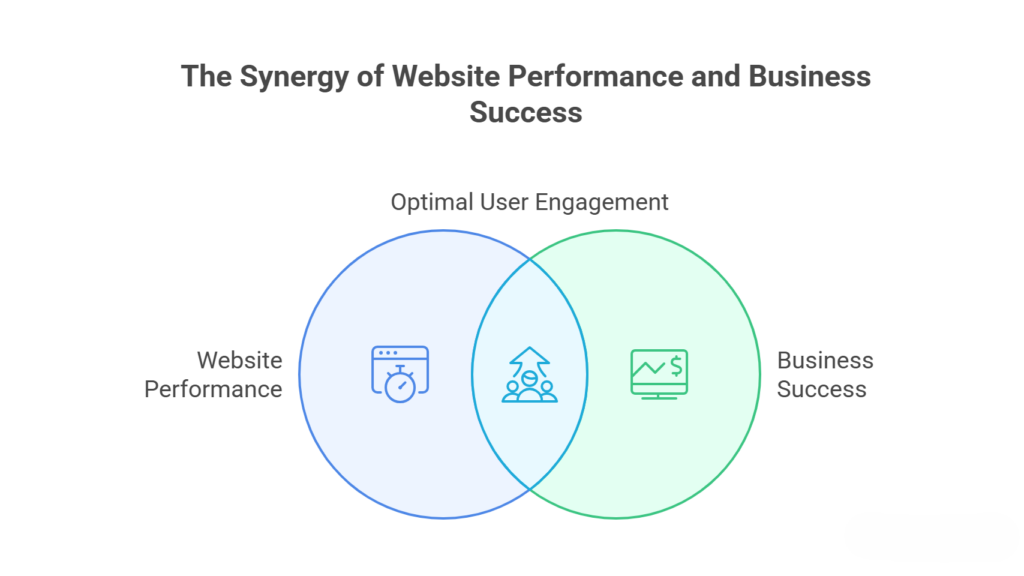
    The user of 2026 would demand fast smooth and easy to use websites. A lot of companies believe that flashy additions are going to impress visitors yet in case your site loads slowly is cumbersome or disorienting, the flashy additions are in vain. What really drives engagement performance or features?  

    Here is a good elucidation of the reason why performance is important when the features are value-adding, and why it is essential to balance the two. 

    Why Website Performance Still Matters 

    Why Website Performance Still Matters

    Speed Shapes First Impressions 

    Tourists make decisions in a few seconds on whether to stay on your site. It takes only one second to decrease conversions. As an example Amazon discovered that 100ms delay costs them 1 percent in sales. Users in 2026 will have near-instant load time slow web pages which will put them at risk of losing it instantly. 

    Mobile Experience Is Critical 

    Mobile devices have become the biggest source of internet traffic. A desktop-heavy site can be a sight-to-behold but it can be exasperating to use on a smartphone. Responsive designs and Progressive Web Applications (PWAs) are used to guide users through the application without issues to enhance retention and engagement. 

    SEO Depends on Performance 

    The speed of interactivity and visual stability of a site make it rank among the top of search engines such as Google. Core Web Vitals are no longer a luxury they define whether your site will be in the highest search results. A site full of tools but slow is a sluggish site and unless optimized it will not be ranked highly on the search result list. 

    Reliability and Security Require Efficiency 

    Any additional plug-in or heavy script adds to the threat of attacks or crashes. Fast product delivery networks (CDNs) and code optimization of images and other fast-loading content ensure your site remains stable and secure even when its traffic spikes or it is targeted by malicious users. 

    User Experience Beats Fancy Features 

    Advanced menus pop-ups or glitzy widgets usually disorient the visitors. Smoother experience is made by simple navigation and fast responses because of clean layouts. The Apples site is a fine example: barebones attractive but not cluttered fast and practical without being overloaded. 

    Advantages of Balancing Performance & Features 

    Better Conversions 

    The sites that load fast with meaningful features would enable the visitors to browse and purchase. In the case of a Shopify store where the product is instantly searched and the checkout is instant the store is more likely to sell more than a site that has heavy animations that slow down the navigation process. 

    Improved User Retention 

    The ease of use and reliability of the websites is likely to boost revisits among the users. The moderate approach will make sure there is balancing of the features by where personalized recommendations will contribute to the value of the user but make sure that they are not annoyed with the lag/clutters. 

    Enhanced Brand Reputation 

    Websites that are reliable and responsive are trustworthy. Slow or glitchy websites are a sign of unprofessionalism whereas a fast well-featured one indicates that your brand is concerned with the end user. This enhances credibility and creates word of mouth recommendations. 

    Lower Maintenance Costs 

    Websites that are feature-intensive are more difficult to maintain and contain errors more likely than others. Efforts by Lean sites where tools are well selected save time and money by cutting short the time spent on downtime of the site due to conflict of plugins and security threats. 

    Wider Audience Reach 

    Optimized sites can be loaded successfully on a slow network or an outdated device. Combining performance with the necessary features such as accessibility options will make sure that your site will be able to attract all types of users that will increase your audience and engagement. 

    Final Thoughts 

    Performance should always come at first speed reliability and usability from the foundation. Features should enhance not hinder the user experience. The smartest websites in 2026 are fast, functional, and enjoyable giving users exactly what they need without frustration. 

    If your website could only focus on speed features or accessibility which would you prioritize and why? 

    Frequently Asked Questions (Website Performance vs Features: What Really Matters in 2026)

    Which matters more in 2026 website performance or features?

    Both are important but performance is critical. A fast smooth and reliable site ensures users stay long enough to benefit from features.

    How does website speed affect conversions?

    Even a one-second delay can reduce conversions. Fast-loading sites keep users engaged and increase sales opportunities.

    Are flashy features harmful?

    Not inherently but heavy animations or complex tools can slow down the site, frustrate users, and harm SEO if not optimized.

    Why is mobile performance so important?

    Mobile traffic dominates the web. Sites must load quickly and be responsive to provide smooth experiences on smartphones and tablets.

  • How AI Is Transforming Modern Website Development Workflows 

    How AI Is Transforming Modern Website Development Workflows 

    How AI Is Transforming Modern Website Development Workflows 

    In the recent past, the creation of a Web site was a slow and very manualized process. It meant that developers had to create everything on their own and that the work of the designer was independent, and that when it came to launching new products it could take a long time to test. 

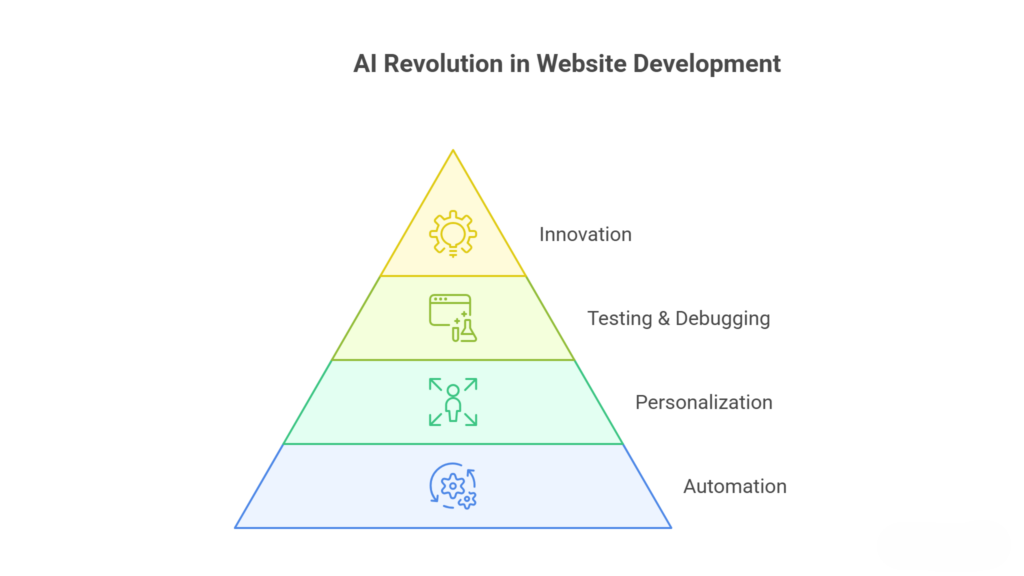
    Artificial Intelligence is currently taking a significant part in streamlining and accelerating the development of websites. Since code creation to user experience, AI is assisting teams to work smarter rather than harder.  

    AI is becoming the inevitable component of the contemporary workflow as the companies strive to introduce quicker and smoother digital experiences. Let us discuss the ways in which it is radically changing the development of websites in a more practical manner. 

    How AI is Reshaping Website Development Processes

    How AI is Reshaping Website Development Processes 

    Faster Code Generation and Development 

    AI-powered tools have now the ability to help the developer write simpler code snippets, propose better solutions, and even detect mistakes during writing. This goes a long way in saving time used on repetitive operations.  

    The developers will also have time to work on more of the advanced features and general functionality rather than wasting time on simple coding, and thus the development process will be much easier. 

    Smarter UI/UX Design Decisions 

     The process of design is no longer creatively oriented, but now it is evidenced by facts. AI applications monitor the actions of the users and recommend layouts and colors and other features that enhance interactivity.  

    This assists the designers in coming up with websites which are not only attractive in terms of aesthetics but also convenient, so that the visitor experiences fewer hitches. 

    Automated Testing and Bug Detection 

    One of the most important stages of development is testing and it is now more efficient and dependable with the help of AI. It has the ability to scan the code, identify bugs, and draw the possible problems prior to the online launch of the site. This helps to cut down on manual labor, and the end product is able to work on most devices and browsers. 

    Personalized User Experiences 

    Artificial intelligence enables websites to provide personalized content depending on the preferences of the browsing history and the behavior of the user. This implies that the visitors watch more relevant content.  

    This kind of personalization enhances user engagement, retention of the user on the site, and improved chances of converting. 

    Content Optimization and SEO Support 

    AI applications allow enhancing the content of the website by recommending superior keywords headings and layout. They also examine trends to prescribe those topics that have higher chances of doing well.  

    It is now less difficult to optimize their content and enhance their visibility on search engines by businesses without fully using the art of guesswork. 

    Why AI-Driven Workflows Are the Future of Web Development 

    Reduced Development Time and Costs 

    With artificial intelligence repetitive tasks are automated and fastened leading to a reduction in the time needed to put up and launch websites. This has a direct beneficial effect on development costs.  

    AI is a great investment in all types of business both startups and major corporations since it has the capacity to promote more when taken in a short period of time. 

    Better Collaboration Between Teams 

    The AI tools can be used to facilitate the workflow by offering common knowledge and automation of some tasks. This eases alignment among the developers the designer and the marketer. The result is the enhanced flow of the projects and the absence of delays and misunderstandings. 

    Continuous Improvement Through Data 

    AI does not cease working once a site has been opened. It still compiles user behavior and performance metrics analysis to give an insight on the way to improve it. This enables companies to update themselves with data and make their websites effective and relevant as time goes by. 

    Scalability for Growing Businesses 

    With the increase in websites, controlling traffic and features has become complicated. This is managed with the help of AI that optimizes performance and automates where it can. This will make sure that the websites will be stable and efficient even as the business grows. 

    Staying Competitive in a Fast-Changing Market 

    The Internet is changing rapidly, and companies will have to keep up with it to remain in the frame of reality. The AI-based workflows enable companies to innovate quicker and provide better user experiences. Early adopters of AI will find it easier to be ahead of others and keep up with evolving customer demands. 

    Final Thoughts 

    AI is disrupting site development, making it faster smarter and more efficient. It does not only lessen the manual labor but also enhances the quality of the product.  

    In a world where businesses are interested in expanding, staying competitive, and relevant the use of AI is not an option anymore. 

    Frequently Asked Questions (How AI Is Transforming Modern Website Development Workflows)

    How is AI changing website development workflows?

    AI automates repetitive tasks like coding testing and design suggestions making development faster smarter and more efficient.

    Can AI build a complete website on its own?

    AI tools can generate layouts and code but human developers are still needed for customization strategy and complex features.

    Does AI reduce the need for web developers?

    No AI enhances developers’ productivity rather than replacing them allowing them to focus on creativity and problem-solving.

    How does AI improve website design?

    AI analyzes user behavior and suggests layouts, colors and UX improvements to create more engaging and user-friendly designs.

  • Top 5 Benefits of Switching to a Headless Ecommerce Platform for Your Business 

    Top 5 Benefits of Switching to a Headless Ecommerce Platform for Your Business 

    Top 5 Benefits of Switching to a Headless Ecommerce Platform for Your Business

    Operating an ecommerce company is not the same as it was several years ago. Customers no longer simply go to your site and put the products in the cart and check them out. They shop on the go message on social media and even shop with the help of apps or smart gadgets. 

    Customer visits your internet site but it takes an additional few seconds to load. In frustrating fashion they go shopping with your competitor. Sounds familiar? It is precisely in this regard that ecommerce is running down. 

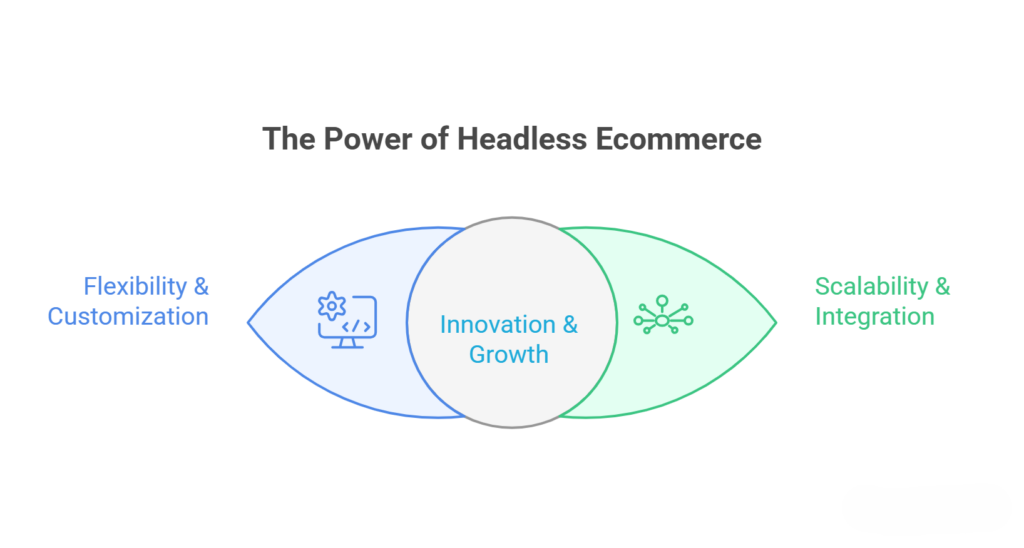
    That is why headless ecommerce is becoming more popular towards business model shifts. It is not only a trend but smarter to ensure flexible fast and future-ready online stores. Provided that you still use the old set-up you could be already losing out on the opportunities without even noticing it. 

    The top 5 benefits of switching to a headless ecommerce platform and why it can be a game changer for your business. 

    Why Headless Ecommerce is Becoming the Smart Choice for Modern Businesses 

    Why Headless Ecommerce is Becoming the Smart Choice for Modern Businesses 

    Freedom to Create Unique Customer Experiences 

    Design constraints are considered one of the largest threats of conventional ecommerce platforms. You are often forced to use already built themes and as such you will find your store resembling many others.  

    Headless ecommerce does not necessarily commit to the front-end. This leaves you to have full creativity to come up with your own way of doing your web site. It can be its sophisticated animations, special layouts, or its interactive product pages on which you can construct an experience founded on what reflects your brand. 
     

    Split it this way as opposed to renting a service house that is already fully furnished you are constructing your own house just the way you want. 

    Faster Website Performance That Keeps Users Engaged 

    Speed matters more than ever. Research indicates that a one-second delay in page load can lead to less conversion. The customers now demand quick solutions and wait until your site loads will not happen.  

    The reason why headless ecommerce enhances performance is that it further decouples the front-end and the back end. This also enables developers to maximize the speed without references to the backend processes.  

    The result? Faster smoother shopping experience that keeps the users entertained and charts lower bounces. And in ecommerce faster is virtually always better selling. 

    Seamless Omnichannel Selling Without Extra Hassle 

    The current consumers do not follow a single platform. They may find out about your product on Instagram may review your site and may end up buying it with your mobile application.  

    A traditional system may be frustrating and time consuming to manage all these channels separately. However, with headless ecommerce, all the things are combined by means of APIs so it is not hard to run multiple platforms using a single backend.  

    That is to say that you maintain your products prices and stocks all across without requiring any additional effort. Its similarity is that it has the capability to control more than one screen through one remote. 

    Faster Updates and Time-to-Market 

    In online business, time is of the essence. Delay may cost you money whether it is a seasonal sale launching of a new product or a marketing activity. The traditional platforms can take a long time to implement because they entail numerous rearrangements throughout the system.  

    That is what Headless ecommerce offers you to make updates and not interfere with the whole set-up. Do you need to create a landing page for a new campaign? You can do it faster. Need to tweak your design? No problem. This flexibility assists businesses to be flexible and act fast in the market. 

    Scalability That Grows with Your Business 

    The purpose of every ecommerce business is to grow and growth has its challenges such as increased traffic increased products, and increased complexity. The traditional systems are notorious in that they fail to play along with this growth. Headless ecommerce is constructed on the basis of scalability. When you can deal with surges in traffic enter new markets and Elements with development of sophisticated tools without having to recreate your entire infrastructure.  

    Ahead of a startup intending to grow or with an established brand moving to new markets around the globe, headless architecture prevents your platform from growing on top of you. 

    What Makes Headless Ecommerce a Long-Term Investment 

    Better Personalization for Modern Customers 

    The current customers demand customization. They desire products suggestions that are aligned to their interests and the content that they find relevant.  

    Headless ecommerce simplifies the process of incorporating personalization tools and providing custom experience on various channels. This not only augments customer satisfaction but also augments the conversion rates. 

    Stronger Integration with Modern Technologies 

    Technology is changing fast whether it is AI-driven suggestions, voice search, or any smart gadget. Conventional channels have difficulties in keeping pace with these developments. 

    Headless systems nevertheless are created in such a way that they can be easily integrated with new tools and technology. This ensures that your business does not undergo huge system renovations. 

    Reduced Dependency on a Single Platform 

    When you use the conventional ecommerce site you tend to be bound by its functions and news. When the platform alters anything you must fit.  

    Headless ecommerce minimizes this reliance by providing you with control over various sections of your system. It is possible to upgrade or replace any part without influencing the entire setup. 

    Improved Security and Stability 

    The isolation of the front and the back end provide additional security. Although one component of the system may have a hitch, it does not cause a problem in the rest of the system.  

    This gives your ecommerce to store a more stable state and is less vulnerable to major disruptions. 

    Competitive Advantage in a Crowded Market 

    There is a high level of competition in the ecommerce. There are thousands of outlets that sell similar products at potentially the same prices often. The only thing that is really differentiating is the experience you have.  

    Headless ecommerce enables you to build a more rapid intelligent and engaging experience which might give you an advantage over your rivals. And in the contemporary market that can be the difference. 

    Final Thoughts 

    Replacing a headless ecommerce is not merely an experience of changing your technology but it is an experience of changing your whole business strategy. The proliferation of the users of better performance and flexibility to scalability and personalization is difficult to overlook.  

    Although the first transformation might be associated with planning and investment it can be justified by the long-term benefits. Headless ecommerce is the right place to be, in case you want to remain competitive and stay future-ready. 

  • Unlocking the Future: Why Headless Ecommerce Platforms are Essential For Modern Retail

    Unlocking the Future: Why Headless Ecommerce Platforms are Essential For Modern Retail

    Unlocking the Future: Why Headless Ecommerce Platforms are Essential For Modern Retail

    The retail environment is changing at a rate never seen before. The consumers nowadays do not only require products but also a smooth fast and personalized experience at shopping. The conventional ecommerce systems such as Shopify or WooCommerce have been good enough ten years ago but the shortcomings are becoming clear. 

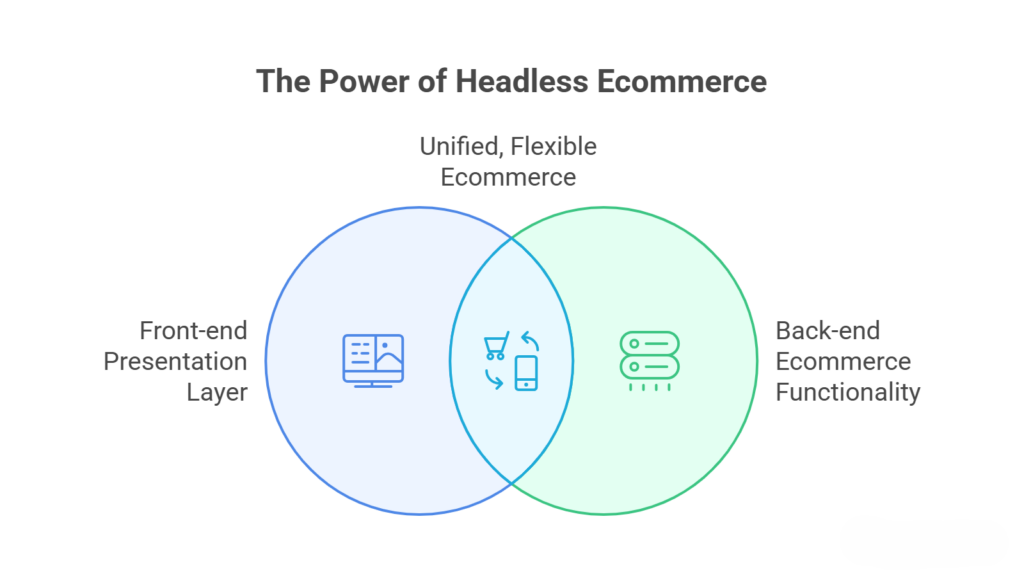
    Headless ecommerce platforms are brought into play here. The interface that the customers deal with is called the front-end and is separated in a headless architecture with the back end (inventory database and payment systems). This partitioning enables companies to operate websites, mobile app kiosks and even IoT devices separately but have a single backend. 

    To retain its competitiveness headless ecommerce is no longer an option to learn and apply to modern retailers. It is time to dive into the reasons why this strategy is defining the future of retail. 

    What is Headless Ecommerce and How It Works 

    What is Headless Ecommerce and How It Works

    The Core Concept 

    In headless ecommerce the monolithic platform is divided into front-end and back-end. The front end gets into communication with the back end via APIs (Application Programming Interfaces).  

    Think about your site or mobile application being the front-end, and the rest is the back end that drives the processing of product orders and transactions. Such a division permits more freedom of rapidity and management. 

    Why It’s Called Headless 

    The name headless is due to the fact that the front seat or the head is lost in the back seat. The front-end channels allow businesses to exploit a number of channels without changing the back-end system. 

    APIs Are the Heart of Headless Ecommerce 

    The APIs enable retailers to distribute both content and product information through various platforms at the same time. Its experience be it through its mobile apps’ social commerce voice assistants or IoT devices is consistent and seamless. 

    Flexibility in Design and UX 

    Separation of the front-end and back end allows the creators and programmers to complete freedom. There are no restrictions regarding using pre-made templates because custom layouts animations and interactive functions can be developed. 

    Benefits of Headless Ecommerce for Modern Retailers 

    Improved Customer Experience 

    Consumers on this day are impatient. Their frustration can easily be caused by slow pages loading or interfaces that are hard to use. Headless ecommerce systems are quicker more receptive and able to provide individual experiences raising the interaction and transformations. 

    Omnichannel Selling Made Easy 

    Contemporary retail is multi-channel in its conception. Online stores social commerce mobile app and marketplaces work at the same time. Headless platforms enable retailers to align inventory and content in all channels without reconstructing platforms on a case-by-case basis. 

    Faster Time-to-Market 

    Any additions of new content of campaigns or seasonal offers are faster on headless platforms. Retailers by API integrations are able to introduce new features and designs more quickly than in traditional systems. 

    Scalability and Future-Proofing 

    Headless architecture is easily scalable. They are exposed to heavy loads of traffic, incorporate micro services and endorse the use of third party’s tools without significant modifications. This makes the system future proof and it is easier to adopt emerging technologies and platforms. 

    Improved Security and Maintenance 

    Separation of the back end and front end is also very helpful in terms of security. The possible violations are constrained and restricted in scope and the maintenance or updating can be carried out without impacting the user experience. 

    Real-World Use Cases 

    Fashion Retailers 

    Top brands use headless technology to provide customized recommendations on product dynamic pages and speed up checkouts with any device. 

    Electronics and Gadgets 

    Detailed specifications and interactive demos are needed in the complex products. Headless ecommerce allows custom product page 3D models with interactive guides and rich media content. 

    Omnichannel Grocery Stores 

    In the case of grocery retailers the interaction between the customers and the retailer can be done through mobile apps web or in-store kiosks. Headless systems incorporate livestock status and provide seamless checkouts in all channels. 

    Global Expansion 

    Retailers expanding internationally can easily to implement the multi-language help multiple currencies and local payment gateways without redesigning their systems for each region. 

    Challenges to Consider 

    Initial Setup Cost 

    Headless platforms can be costly to develop initially with API integrations. But in the long run ROI in terms of flexibility and scalability would usually win over the initial investment. 

    Skilled Development Required 

    The requirement of having distinct front-end and back-end parts dictates that the developers are skilled and those that are conversant with integrations and APIs. 

    Multi-Platform Maintenance 

    Customizing and scaling headless ecommerce offers have more control and this is compensated by the complexity involved in managing multiple front-end experiences. 

    Final Thoughts 

    The future of the retail of modern times is the headless ecommerce. It enables retailers to offer more automated and enhanced customized shopping opportunities. Although some companies might be able to use regular platforms to gain competitive advantage and develop over time, headless architectures can be of significant interest to them.  

    Headless ecommerce is no longer merely a technical option but it is strategic decision on how to remain a market leader in an environment that is highly dynamic. 

    Frequently Asked Questions (Unlocking the Future: Why Headless Ecommerce Platforms are Essential For Modern Retail)

    What is headless ecommerce?

    It’s an ecommerce setup where the front-end and back-end are separate, giving you ultimate flexibility and faster site updates.

    Why choose headless over traditional ecommerce?

    Headless allows faster performance, easy customization, and omnichannel selling all without disturbing your backend.

    Who should go headless?

    Brands wanting personalized experiences, multi-channel sales, or rapid innovation will benefit the most.

    Does it improve website speed?

    Yes! Decoupling front-end and back-end makes your site faster, smoother, and more responsive.

  • Shopify App Overload: Why Fewer Apps Can Increase Your Sales 

    Shopify App Overload: Why Fewer Apps Can Increase Your Sales 

    Shopify App Overload: Why Fewer Apps Can Increase Your Sales

    Shopify apps are designed to make your store better smarter and more profitable. But there’s a point where adding more apps stops helping and starts hurting. 

    Many store owners don’t notice when this shift happens. They keep installing apps for every new feature, assuming it will improve performance. This often leads to a slower store with a cluttered interface and a frustrating user experience. 

    The Hidden Impact of Too Many Apps 

    The Hidden Impact of Too Many Apps 

    Why Every App Adds More Than Just Features 

    When you install a Shopify app, you’re not just adding functionality you’re also adding extra code that needs to load every time a visitor opens your store. This includes scripts styles and background processes that all compete for speed and performance. 

    Over time these small additions build up. What once was a fast and smooth store gradually becoming heavy and slower to respond especially on mobile devices where performance matters the most. 

    How App Stacking Creates Performance Issues 

    Most apps are built independently which means they are not always optimized to work efficiently together. When multiple apps try to load at the same time they can delay how quickly your store becomes usable. 

    This doesn’t always break your site, but it creates subtle delays that affect how users experience your store and those delays are enough to make people leave. 

    How App Overload Affects Your Sales 

    Slower Speed Pushes Visitors Away 

    A slow-loading store is one of the fastest ways to lose potential customers. Visitors expect pages to load quickly and when they don’t they leave without exploring further. 

    This directly increases your bounce rate and reduces the number of people who even get a chance to see your products. 

    Too Many Elements Reduce Clarity 

    When your store is filled with popups, banners chat widgets and promotional tools it can feel overwhelming. Instead of guiding users toward a purchase it creates distractions that break their focus. 

    Checkout Experience Becomes Less Reliable 

    The checkout process is where everything matters most. If additional apps slow down or interfere with this step even interested buyers may abandon their carts. This is one of the costliest effects of app overload because it impacts users who are already ready to buy. 

    Why Fewer Apps Often Perform Better 

    A Lean Store Loads Faster and Feels Smoother 

    When you reduce the number of apps your store becomes lighter. Pages load faster navigation feels smoother and users can move through your site without delays. 

    This creates a seamless experience that naturally encourages visitors to stay longer and explore more. 

    Cleaner Design Improves Decision-Making 

    With fewer distractions users can focus on what actually matters to your products. A clean and simple interface makes it easier for customers to understand your offerings and act. 

    How to Reduce Apps Without Losing Functionality 

    Focus on What Actually Drives Results 

    Start by reviewing each app and asking whether it directly contributes to sales or user experience. If an app doesn’t clearly support your goals it’s likely unnecessary. 

    Avoid Feature Duplication 

    Many stores unknowingly use multiple apps for similar purposes. This adds extra load without adding real value. Consolidating features into fewer tools can significantly improve efficiency. 

    Use Shopify’s Built-In Capabilities 

    Shopify already includes many features that store owners overlook. Relying on built-in functionality reduces the need for additional apps and keeps your store lighter. 

    Final Thoughts 

    Using Shopify apps is essential but using too many can quietly damage your store’s performance. What feels like improvement on the surface often creates hidden friction underneath. 

    If your goal is to increase sales the solution isn’t always adding more features. Sometimes it’s about simplifying your store and focusing on what truly matters. 

    A faster cleaner and more focused store don’t just look better it performs better. And in eCommerce, better performance always leads to better results. 

    Frequently Asked Questions (Shopify App Overload: Why Fewer Apps Can Increase Your Sales)

    How do you increase your sales on Shopify?

    Increase sales on Shopify by optimizing speed improving UX using upsells SEO email marketing ads mobile optimization high-quality images and reducing checkout friction effectively.

    What are the most common Shopify mistakes to avoid?

    Common Shopify mistakes include slow themes too many apps poor UX weak SEO bad product pages unclear pricing ignoring mobile optimization, and complicated checkout processes hurting conversions.

    Does having an app increase business?

    Having an app can increase business by improving customer experience engagement and retention but success depends on usability value marketing and how well it complements your overall strategy.

    Is headless Shopify worth it?

    Headless Shopify is worth it for large brands needing flexibility and speed, but small businesses often find it costly, complex, and unnecessary compared to traditional setups.

  • Headless CMS vs WordPress Future of Web Development 

    Headless CMS vs WordPress Future of Web Development 

    Headless CMS vs WordPress Future of Web Development 

    The online world is quickly changing. The businesses in the modern world desire fast flexible and forward-thinking digital experiences rather than a web site. The tools that we have been using over the years such as WordPress continue to run millions of sites across the world. Developers and brands are evolving in the manner in which they develop websites due to emerging solutions such as Headless CMS.  

    It is not a technical point. The bottom line is to choose the most appropriate platform that will see the company through in the long term to enable it to deliver across multiple channels at scale and speed. 

    Headless CMS vs WordPress 

    Headless CMS vs WordPress 

    WordPress Strengths and Limitations 

    WordPress is perhaps the most used content management system globally driving more than 40 percent of websites around the globe. The greatest strength it has is that it is easy and convenient. Thousands of themes and plugins mean that businesses are able to get websites up and running with minimal technical expertise. Blog publishing requires content updates and small design modifications are easily understandable and easy to control without requiring the developer to be present.  

    WordPress is not without its flaws. When websites become complex, managing high traffic by incorporating numerous third-party applications or providing content on more than one platform can begin to slow down. Plugins may not get along with other plugins heavy themes will slow down the site and repeated updates would be a maintenance nightmare. 

    • WordPress is ideal for blogging small businesses and content-heavy websites where convenience outweighs advanced flexibility.  

    WordPress works best when your website requirements are straightforward. Once you need highly interactive experiences or multi-channel content delivery WordPress may feel restrictive. 

    What is a Headless CMS? 

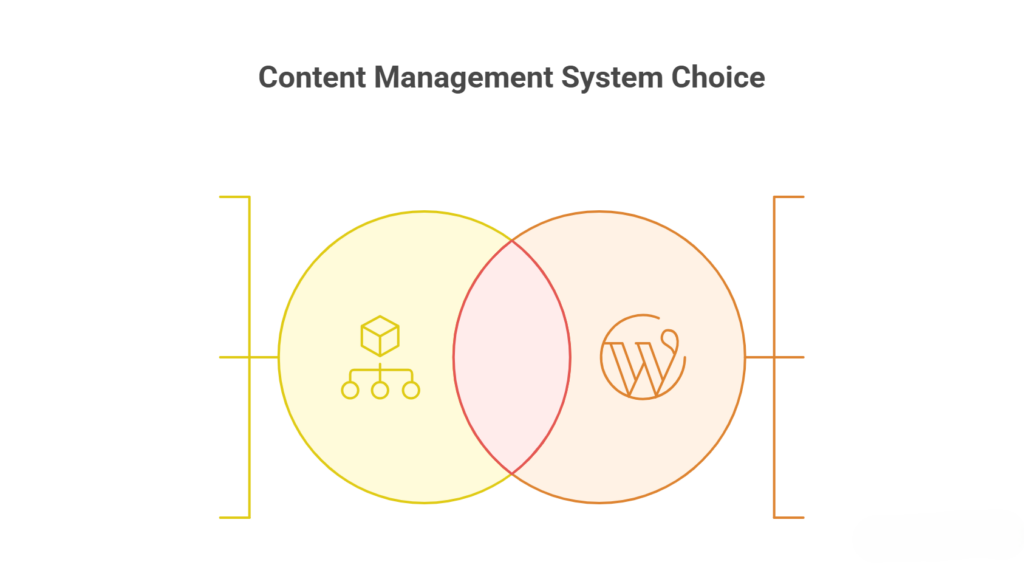
    Legacy CMS Headless CMS separates the backend content storage and management layer with the frontend in the display or presentation layer. Content is centrally stored and served to any platform websites mobile apps or other IoT devices via APIs. This segregation provides the developers with full-fledged control of the frontend design. It is no longer restricted by themes or templates that enable one to have a unique interactive and performance optimized experience.  

    Consider a multinational retail brand that would like a seamless delivery of the same content to its mobile app in the web, digital kiosks. Headless CMS has enabled the staff to handle the content centrally and developers to deliver to other platforms without needless duplication of efforts. 

    Performance and Scalability 

    The digital first world of today depends on performance. Google focuses on Core Web Vitals and the user anticipates have to be able to load at lighting speed. This can be a struggle for WordPress when it is overloaded with heavy theme and unoptimized media. Headless CMS is made fast and scalable. 

    The content delivered through APIs and the latest frontend frameworks such as React Vue or Next.js Headless CMS will provide higher load speed and facilitate transitions faster and easier and can handle traffic spikes. 

    Key benefits include: 

    • Optimized frontend for faster user experience  
    • Lightweight codebase reducing server load  
    • Easier scalability without overhauling the backend  

    This makes Headless CMS an attractive choice for enterprises or growing businesses that prioritize performance and user engagement. 

    Multi-Channel Content Delivery 

    Multi-platform delivery is among the most outstanding benefits of Headless CMS. The content is produced once and it can be shown anywhere on websites apps smart devices or even AR/VR experiences. The marketing teams can update content at a central point and it automatically reflects on all platforms.  

    This will provide uniform branding and reduce the workload of coordinating the content of the various channels. WordPress has begun to provide the headless features, however, it was not a multi-channel delivery core and so Headless CMS offers a much better fit to this situation. 

    The Future: Hybrid and Strategic Approaches 

    Hybrid Approach for Maximum Flexibility 

    Businesses are using a hybrid approach combining WordPress as a content backend with a Headless frontend. This method allows teams to maintain the familiar WordPress interface while taking advantage of Headless CMS’s performance and flexibility. 

    Practical points: 

    • Centralized content management across multiple channels  
    • Freedom to experiment with modern frontend technologies  
    • Faster site speed and improved SEO without abandoning WordPress  

    Hybrid setups are particularly useful for businesses transitioning from small-scale websites to larger multi-platform digital ecosystems. 

    Performance-First Web Development 

    The future of web development is an API-first performance-driven approach. Headless architecture enables the developers to manage all layers to be the best in speed security and responsiveness. Today the brands that embrace this approach are more user experience SEO and ready to integrate with future technology. 

    Cost vs Long-Term Maintenance 

    Headless CMS integrations are usually more expensive to initially install and implement and may need more technical expertise but generally they lower maintenance problems in the long run. WordPress is inexpensive when doing simple projects but it gets expensive when it gets complicated. Knowing the total cost of ownership is also important when considering future growth. 

    SEO and User Experience 

    Website performance is also closely associated with SEO and UX. Headless CMS offers more authority over site speed structured material and multi-platform uniformity that enhances user experience and search positions. WordPress may also accomplish the same outcome though it may need proper management of the use of the plugins and constant optimization. 

    Final Thoughts 

    Whether you should use WordPress or Headless CMS has no correct or wrong answer it is a matter of whether it fits your business objectives. WordPress is easy to use and quick to set up ideal content centric sites. Headless CMS boasts of scalable multi-channel delivery and user experiences of high performance. 

    Hybrid strategies may represent the most future-proof approach combining the best of both worlds. 

    If your content could reach every device instantly, would you choose the convenience of WordPress or the flexibility and performance of a Headless approach? 

    Frequently Asked Questions (Headless CMS vs WordPress Future of Web Development)

    What is the future of headless CMS?

    The future of headless CMS includes AI-driven content, omnichannel delivery faster performance composable architecture and wider adoption with platforms like Contentful leading innovation globally.

    Is WordPress replacing Web Development?

    No single CMS is universally better than WordPress options like Contentful and Webflow excel depending on scalability flexibility and use case.

    Which CMS is better than WordPress?

    WordPress is not replacing web development; it simplifies website creation but custom complex or high-performance sites still require professional development skills and frameworks.

    Will WordPress replace web developers?

    WordPress will not replace web developers it aids beginners but custom functionality complex sites and advanced optimization still require skilled developer expertise.