Blog

  • Is It Time for Fashion Brands to Put Social Justice First?

    In the past few years, the world has seen a massive shift in social consciousness and attitudes towards social justice. From the #MeToo movement to Black Lives Matter, it seems like everyone is joining the cause to fight for a better world and a fairer society

    But what about the fashion industry? Is it time for fashion brands to put social justice first? This blog article will explore the concept of brand activism, how the fashion industry has embraced social justice, the benefits and challenges of incorporating social justice into fashion brands, and some tips for launching a successful social justice campaign.

    ‍

    Photo by tiday on Pixabay

    What is Brand Activism?

    Brand activism, or corporate activism, is a term used to describe the practice of companies engaging in social justice initiatives. This could include anything from donating to charities, campaigning for legislation, or launching their own social change campaigns. Brand activism is often viewed as a way for companies to show their commitment to social causes, as well as to demonstrate their corporate values.

    At its core, brand activism is an attempt to establish an emotional connection between a company and its customers. By engaging in social justice initiatives, companies can demonstrate that they are not only profitable but that they are also willing to use their platform to make a difference in the world.

    How has the Fashion Industry Embraced Social Justice?

    The fashion industry has been one of the earliest adopters of brand activism. Many fashion brands have long been associated with social causes, such as environmentalism, philanthropy, and animal rights.

    In recent years, this has shifted to include more explicit forms of activism, with fashion brands taking a stand on social issues such as racism, sexism, and LGBTQ+ rights. Major fashion labels such as Nike, Gucci, and Prada have all launched social justice campaigns to show their support for these causes.

    ‍

    Source: Adidas

    These campaigns often take the form of public campaigns, collaborations with non-profit organizations, and the use of their platforms to raise awareness of social issues. Nike’s “Just Do It” campaign is a prime example of this, with its focus on diversity and inclusivity.

    Benefits of Incorporating Social Justice into Fashion Brands

    There are many benefits to incorporating social justice into fashion brands. For one, it helps to create a positive brand image. By taking a stand on important social issues, fashion brands can demonstrate that they are committed to making a difference in the world.

    This is one of the best branding and social media marketing techniques that can help to attract customers who share the same values and want to support companies that are making a positive impact.

    In addition, social justice campaigns can help to boost a fashion brand’s visibility. By engaging in public campaigns, fashion brands can reach a wider audience and increase their visibility. This can be particularly helpful for smaller brands that don’t have the resources to launch big campaigns.

    By taking a stand they can foster loyalty and trust in the brand, which can lead to long-term customer relationships.

    Challenges of Incorporating Social Justice into Fashion Brands

    While there are many potential benefits to incorporating social justice into fashion brands, there are also some challenges that need to be addressed. For one, it can be difficult for fashion brands to balance their commitment to social justice with their need to remain profitable. Social justice campaigns can be expensive and time-consuming, and if not managed properly, can lead to losses in profits.

    In addition, fashion brands need to be aware of the potential backlash that can come with taking a stand on social justice issues. If a fashion brand’s campaign is perceived as insincere or opportunistic, it can lead to negative publicity and a loss of credibility.

    Finally, fashion brands need to be aware of the potential legal implications of their social justice campaigns. If a fashion brand is too vocal in their support of a particular cause, it could lead to legal issues. For example, if a fashion brand supports a political candidate, they could be seen as making a political contribution, which could be illegal in some countries.

    Examples of Successful Social Justice Campaigns

    One of the most successful social justice campaigns in recent years was the “We Are All Human” campaign by the fashion label H&M. The campaign featured a series of photographs of models from different backgrounds, with the aim of promoting diversity and inclusivity. The campaign was a huge success, with people from all over the world sharing their stories and showing their support for the cause.

    Another successful social justice campaign was the “Love Your Body” campaign by Dove. The campaign aimed to promote body positivity and encourage people to accept and love their bodies, regardless of shape or size. The campaign was hugely successful, with Dove receiving positive feedback and praise for their efforts.

    Examples of Unsuccessful Social Justice Campaigns

    Unfortunately, not all social justice campaigns have been successful. One example is the “Choose Love” campaign by Nike. The campaign featured a series of videos of people from different backgrounds and cultures, but was widely criticized for its heavy-handed approach and lack of nuance.

    Another example is the “Love Has No Labels” campaign by Pepsi. The campaign aimed to promote diversity and inclusivity but was widely derided for its inauthentic messaging and lack of substance. Many people felt that the campaign was merely capitalizing on the social justice movement, without actually making a meaningful contribution.

    Source: Twitter

    Key Success Factors for a Successful Social Justice Campaign

    So, what makes a successful social justice campaign? Here are some key success factors to consider:

    • Authenticity: Your campaign must be authentic and sincere. It must demonstrate that you genuinely care about the causes you are supporting and have a genuine desire to make a difference.
    • Transparency: Your campaign must be transparent and honest. You should be clear about your goals and objectives, and make sure that you are not taking advantage of the social justice movement for your own gain.
    • Engagement: Your campaign must be engaging and inspiring. It should be something that people can relate to and get behind.
    • Creativity: Your campaign should be creative and original. It should stand out from the crowd and capture people’s attention.
    • Impact: Your campaign should have a tangible impact. It should be something that people can see and feel, and that will make a real difference in the world.

    Developing a Social Justice Campaign

    Developing a successful social justice campaign requires careful planning and execution. Here are some tips for developing a successful campaign:

    1. Identify Your Goals: Before you start developing your campaign, it’s important to identify your goals. What do you want to achieve? What message do you want to convey? What action do you want people to take?
    2. Choose Your Platform: Choose the right platform for your campaign. This could include a website, social media, or even traditional media.
    3. Create a Strategy: Develop a strategy for your campaign. This should include a timeline, budget, and target audience.
    4. Develop Content: Develop content for your campaign. This could include videos, photographs, or even stories.
    5. Measure Results: Track the results of your campaign. This will help you identify what’s working and what needs to be improved.

    Tips for Launching a Social Justice Campaign

    Once you have developed your campaign, it’s time to launch it. Here are some tips for launching a successful social justice campaign:

    • Build Partnerships: Build partnerships with organizations and influencers that share your values and goals. This will help to broaden your reach and amplify your message.
    • Use Social Media: Use social media to get the word out. Post regularly and engage with your followers.
    • Create a Hashtag: Create a hashtag for your campaign. This will help to create a sense of community and encourage people to join the conversation.
    • Collect Feedback: Collect feedback from your followers. This will help you identify what’s working and what needs to be improved.
    • Measure Results: Track the results of your campaign. This will help you identify what’s working and what needs to be improved.

    Conclusion

    It’s clear that the fashion industry is embracing social justice, and there are many potential benefits to incorporating social justice into fashion brands. However, there are also some challenges that need to be addressed, and it’s important for fashion brands to be aware of these before launching a social justice campaign.

    With careful planning and execution, fashion brands can create successful social justice campaigns that make a real difference in the world. By taking a stand on important issues and using their platform to make a positive impact, fashion brands can demonstrate their commitment to social change and create an emotional connection with their customers.

    The world is changing, and it’s time for fashion brands to join the cause. Is it time for fashion brands to put social justice first? The answer is a resounding yes.

    ‍

  • 10 most common JavaScript issues you need to look out for

    JavaScript is a powerful and popular programming language used to create dynamic and interactive websites. It’s nothing new to have robust JavaScript-based libraries and frameworks for developing single-page applications (SPAs), graphics and animation, and server-side JavaScript platforms. JavaScript is now fully commonplace in the realm of web app development, making it a crucial ability to know.

    As with any programming language, there are several issues that development teams encounter when using JavaScript. From creating memory leaks to confusion about equality, developers must be aware of these common issues and how to resolve them.

    In this article, we’ll discuss 10 of the most common JavaScript issues that businesses face and how to resolve them. By understanding and addressing these issues, your development team can create more efficient and reliable code.

    So, let’s get started!

    Creating Memory Leaks

    Memory leaks occur when you allocate memory for an object or variable but do not free it when it is no longer required. This can cause your application to use more memory than it needs and can lead to performance issues. To prevent this, development teams need to be aware of the types of objects and variables they are using and ensure they are properly freed when they are no longer needed.

    When creating memory leaks, developers should keep in mind the lifespan of the objects and variables they are working with. If an object or variable is not needed anymore, developers should make sure to free the associated memory as soon as possible. Furthermore, developers need to be aware of any external libraries or frameworks they are using and make sure to properly dispose of any objects or variables associated with them.

    Thinking There Is Block-level Scope

    One of the most common issues developers face is thinking that there is block-level scope in JavaScript. The block-level scope is the concept that variables declared within a certain block of code are only accessible within that block. This is not the case in JavaScript, as variables are scoped to the function, and they are declared in. This can lead to confusion and unexpected behaviour when working with variables.

    To avoid this issue, developers should be aware of the scope of variables they are working with. In addition, developers should make use of the let keyword to ensure that variables are only accessible within the block they are declared in. This will help to avoid confusion and unexpected behaviour when working with variables.

    Incorporating Helpful Error Handling into JavaScript Code

    Error handling is an important part of any software application. Unfortunately, it is often overlooked or neglected when it comes to JavaScript code. Error handling is essential for ensuring that your application is stable and reliable. It can help to catch and fix errors before they become a problem.

    When incorporating error handling into your JavaScript code, it is important to make use of the try/catch statement. This statement will allow you to catch any errors that occur in your code and handle them accordingly. Furthermore, you should make use of the console.error() method to log any errors that occur. This will help to ensure that any errors that occur in your application are properly handled and logged.

    Setting a Breakpoint and Examining Data with Firebug

    Firebug is a powerful debugging tool for JavaScript code. It allows developers to set breakpoints in their code and examine the data associated with it. This can be extremely useful for understanding how your code is working and can help to identify and fix errors quickly.

    When using Firebug to debug your JavaScript code, it is important to understand the different types of breakpoints that can be set. There are line breakpoints, which will pause the code execution at a particular line of code, and conditional breakpoints, which will pause the code execution when a certain condition is met. It is also important to understand the data that can be examined with Firebug. This includes variables, functions, and objects.

    Failure to Use “Strict Mode”

    Strict mode is a feature of JavaScript that helps to enforce better coding practices. It helps to eliminate certain types of errors and can lead to more reliable code. Unfortunately, many developers do not make use of this feature and as a result, their code may be more prone to errors.

    To make use of strict mode, developers need to add the “use strict” directive at the beginning of their JavaScript code. This will enable strict mode and help to ensure that their code is more reliable. Furthermore, developers should make use of the “strict” keyword when creating functions and classes. This will ensure that any errors that occur in these functions or classes are caught and handled properly.

    Providing a String as the First Argument to setTimeout or setInterval

    setTimeout and setInterval are two of the most used methods in JavaScript. They allow developers to schedule tasks to be performed later. One of the most common issues developers face when using these methods is providing a string as the first argument instead of a function. This can lead to unexpected behaviour or errors in your code.

    To avoid this issue, you should always make sure to provide a function as the first argument to setTimeout and setInterval. If the function needs to be executed at a later time, developers should make sure to wrap it in an anonymous function. This will ensure that the function is executed at the correct time and with the correct parameters.

    Creating Incorrect References to Instance Methods

    When creating object-oriented applications in JavaScript, developers need to be aware of the instances of objects they are working with. One common issue developers face is creating incorrect references to instance methods. This can lead to unexpected behaviour or errors in your code.

    To avoid this issue, developers should make sure to use the “this” keyword when referencing instance methods. This will ensure that the correct instance of the object is being used. Furthermore, developers should make use of the bind() method to bind the context of a function to a specific instance of an object. This will help to ensure that the correct instance is being referenced when the function is called.

    Failure to Properly Leverage Prototypal Inheritance

    Prototypal inheritance is a powerful feature of JavaScript that allows developers to extend an object’s functionality. Unfortunately, many developers do not take advantage of this feature and as a result, their code can be less efficient and less reliable.

    To take advantage of prototypal inheritance, developers should make use of the prototype keyword when creating objects. This will allow them to create objects that inherit the properties and methods of other objects. Furthermore, developers should make use of the extend() method to easily extend the functionality of an existing object. This will help to ensure that their code is more efficient and reliable.

    Inefficient DOM Manipulation

    DOM manipulation is an essential part of any JavaScript application. Unfortunately, many developers do not take the time to optimize their DOM manipulation code and as a result, their applications can be slow and inefficient.

    To optimize the DOM manipulation code, developers should make use of the querySelector() and querySelectorAll() methods. These methods will allow developers to select elements quickly and efficiently from the DOM. Furthermore, developers should make use of the createElement() and appendChild() methods to create and add elements to the DOM. This will help to ensure that their DOM manipulation code is fast and efficient.

    Confusion About Equality

    Equality is an important concept in any programming language. Unfortunately, many developers are confused about the different types of equality in JavaScript and as a result, their code can be unreliable.

    In JavaScript, there are two types of equality: strict equality (===) and loose equality (==). Strict equality checks for both the value and the type of a variable, while loose equality only checks for the value. To avoid confusion, developers should always make use of strict equality when comparing two variables. This will help to ensure that their code is more reliable.

    In this blog post, we looked at 10 common JavaScript issues that developers face. From creating memory leaks to confusion about equality, these issues can lead to unexpected behaviour or errors in your code. To avoid these issues, developers should make sure to understand the different types of errors in JavaScript and make use of the tools and features available to them. By doing so, they can ensure that their code is more reliable and efficient.

    ‍

  • 20 Easy ways to spice up your UI designs

    ‍Did you know that 94% of a website’s first impressions are due to its design?

    There is no doubt about the impact a web or app design has on user experience. If you want to hook your potential customers, then you need to say goodbye to plain UI designs, which cannot pop out in an already saturated digital market.

    We have decided to list down 20 tried-and-true techniques that can spice up your designs to ensure a positive user experience for your customers.

    1. Keep it simple

    Having an easy-to-use interface can make or break your digital presence. Keep it simple, stupid (KISS) is a design principle that stresses keeping designs and systems as simple as possible. If you want to boost the levels of user acceptance and interaction, your safest bet is to avoid complexity. After all, the easier a design is to understand and use, the more likely it is to be adopted and engaged with.

    A screenshot of top banner on landing page of Netflix
    Image Source: Netflix

    2. White space is key.

    White space, also known as “negative space,” is a portion of the web page that is left blank or unmarked and plays a pivotal role in communicating which features of the website need to stand out as vital aspects. Research also shows that white spaces are capable of increasing comprehension by around 20%.

    Screenshot to show why white spacing on the layout is important
    Image Source: UX Design

    3. Unity of elements

    Visual unity is all about harmony. The idea is to create elements that support each other and work together to form a user-friendly and aesthetically pleasing design. Through ensuring this unity, the viewers will first look at the whole and then the sum of the parts making that whole. It will improve your design’s balance, contrast, emphasis, and proportion.

    Picture for the unity of elements
    Image Source: Adobe Stock

    4. Focus on content

    When designs are built around content, they become unique. Content provides the designer with insight on how to properly present on devices of all sizes, with good navigation and calls-to-action, and for the highest conversion of customers. Good content blends text and media to help your visitors comprehend what you do, how you do it, and why they need your product or services.

    Screenshot of top section from relume landing page
    Image Source: relume.io

    5. Conduct design audits

    UX audit provides data that illuminates why a product is encountering issues and offers actionable recommendations that can resolve the problems and improve the user experience. You need to delve into both your own business goals and users’ needs to get productive results from the audit.

    6. Consistent Typography

    Selecting a typeface and sticking to it will help you avoid creating confusing and messy interfaces. A good practice that we have incorporated into our user interface design process is to set up a hierarchy of typefaces (one constant font for headers, another for subheadings) and commit to it.

    A picture for Consistent Typography section
    Image Source: UX Design

    7. Shadows from one source

    Shadows are a great tool to bring more depth and emphasis to your designs, which enables users to differentiate between UI elements. However, they need to follow the rules of nature. You can create more realistic shadows by guaranteeing one common source.

    Graphical user interface, applicationDescription automatically generated
    Image Source: UX Design

    8. Darker text on light background

    If the content being displayed on the user interface is important and lengthy, then it’s better to keep a light theme with darker text for greater readability and legibility. We incorporated a lighter background with darker text on our website to make it easy for visitors to get the information they need.

    Graphical user interface, text, application, emailDescription automatically generated

    9. High Contrast for Text Over Images

    What happens if you want to place text on a background image? You can make sure that the text is legible by providing sufficient contrast. Accessibility requirements for color contrast dictate that text should have a contrast ratio of a minimum of 4.5:1. Remember, you don’t want users to strain their eyes due to unreadable text, and techniques like semi-opaque overlay, text shadow, or outline, and blur can help you avoid this issue.

    A screenshot from integriti.io website

    10. Irregular backgrounds

    When it comes to designing a website or an app, it’s clear that the screen background is very important to the overall look of the UI. Irregular backgrounds can help you create truly eye-catching designs that leave a lasting impression on users.

    Screenshot of stripe main landing website
    Image Source: Stripe

    11. Highlighted icons

    Icons can speed up user interactions when they are easy to recognize, and the meaning behind them is well communicated. By highlighting icons, you can add more style, clarity, and visual appeal to your user interface designs.

    A picture of highlighted icon

    12. Subtle lines to break text

    Visual dividers are handy in dividing pieces of content into groups, sections, or options. They help in setting up a visual hierarchy and make the design layout clearer and more digestible. For our website, we have used lines as a visual divider to break content apart, but you can also employ other dividers like color, negative space, shadows, and images.

    A screenshot image from content marketing page the website link is integriti.io

    13. Gradient borders and backgrounds

    With the sheer volume of content in the digital world, businesses need to find ways to break through the clutter and get their target customers’ attention. Gradients can help you stand out. They are versatile and can be used as both the focal point of a design and a background element. They can be bold or subtle; the choices are extensive. One look at our website and logo, and you will know how much we love gradients!

    A screenshot from content marketing page inside the integriti.io website

    14. Solid shadows

    This technique is for those companies that wish to stand out from the crowd and entertain their users. Particularly associated with Neubrutalism design thought, these shadows offer a sharp contrast and have no blur on them.

    Shape, rectangleDescription automatically generated
    Image Source: Dribbble

    15. Layered text

    Layering text and other design elements will add visual depth to your UI, and your headings will get a unique, characterful look. Notice how this technique blends text realistically into the background image shown below.

    screenshot of Slider Revolution landing page
    Image Source: Slider Revolution

    16. Use of imagery

    Research shows that photos, icons, and images are the top visual elements appreciated by consumers in a web design. An image’s ability to engage and communicate with viewers is enormous. Compared to text-based descriptions, complex concepts can be conveyed more effectively through the right imagery.

    Took screenshot from dribbble.com
    Image Source: Dribbble

    17. Dot grid designs

    They are an easy way to add some visual excitement to your web or app designs. Grid designs add texture and can be used to fill out a space on the page. Note how, compared to say a block of color, a grid of dots is not too visually heavy.

    website screenshot from mailersend
    Image Source: mailersend

    18. Hand-drawn elements

    Like many other components of web design, we have highlighted that hand-drawn elements are a great way to express individuality. Hand-drawn elements are ideal for creating an emotive and human design and can be a reminder for the users that there is a human behind the website.

    Screenshot from Jam.dev
    Image Source: Jam.dev

    19. Glassmorphism

    As the name suggests, glassmorphism uses the properties of glass to enrich modern UI designs. A favorite approach of brands like Apple and Microsoft, it gives a translucent or transparent look to its elements and works well on vibrant, colorful backgrounds, which accentuate the glass effect. This design style is great for visual hierarchy and emphasizes the content you want to highlight.

    A picture describing Glassmorphism
    Image Source: Dribbble

    20. Darkmode

    The dark mode user interface refers to designs where the light-colored text sits on a dark background. Dark UIs’ popularity comes from their sleek and contemporary visual appeal and their ability to improve eye fatigue. For products where users are likely to be engaged for a longer period, adding a dark theme to UI design is a must.

    The picture describes ow to select colours for dark mode
    Image Source: Dribbble

    UI Design is a link between customers and your website, which helps ensure a positive user experience through visually appealing designs, easy navigation, and effective visual hierarchy. We hope these techniques can help you in creating a beautiful and successful UI for your brand.

    Also, check out our list of the latest UX trends to dominate fashion eCommerce.

    ‍

  • 7 social media marketing myths to walk out on in 2023

    The abundance of data on the internet about any given topic means that there is a lot of inaccurate information too. Social media is one of those spheres where personal experience and factual information very commonly butt heads. Considering the number of narratives, it can become difficult to differentiate fact from fiction.

    To tackle the issue, we present 7 social media marketing myths businesses need to leave behind for optimal marketing success in 2023!

         1. It’s important to be omnipresent on social media

    One of the most common misconceptions businesses that are new to social media have is wanting to establish their presence on every social media platform. Don’t get us wrong, we understand how covering some fronts are important for most but it doesn’t mean that they should try to incorporate every website or app in their social media strategy.

    Focusing on platforms where the target audience is predominantly present is the way to go. For example, fashion brands can look into having Instagram, Facebook, TikTok and Pinterest accounts as these are most popularly used among the fashion folk.

    Narrowing down the approach can help brands better understand the platform, and their audience and create relevant content accordingly.

    A tip: Identifying marketing goals can effectively help a brand decide which platform to use.‍

         2. More Followers = More Business

    ‍

    Illustration of raising hands showing why engagements is important for every digital marketing plan
    Source: Brindle Marketing

    Increasing followers and engagement is undoubtedly a core part of any social media marketing plan. What can be an error is marketers focusing only on this aspect. Malpractices like buying Instagram followers or Facebook likes are common and can affect the strategy negatively in the long run.

    A healthier approach would be to check the quality of followers rather than the quantity. Having an influx of followers may not mean the best engagement or ROI whereas a focused and even limited pool of users may be the best to increase sales. One of the core practices of a successful marketing strategy is to identify and target the audience properly.

    If confused, head over to a competitor’s profile to check out what they are posting. If the engagement is healthy, the brand will understand the type of content its target audience is attracted to.

         3. It’s okay to wing your marketing 

    Many businesses jump on the social media marketing bandwagon by joining social media platforms without actually having a plan in place. To promote and grow their brand properly having a strategy and a dedicated team behind is extremely important.

    Without a plan of action, the content being released won’t be conversion-focused and may end up with the wrong audience too.

    A set of goals and a strategy devised to achieve said goals will help the brand stay on track and also provide scalable growth opportunities.

    Things to do:

    • Identify marketing goals
    • Identify target market
    • Create a content strategy
    • Develop content
    • Post at the right time
    • Check what works and what needs to go

         4. Giving credit isn’t important because its social media

    It’s fairly common for brands to land in hot water because of a “stolen” idea. We say stolen because they don’t give credit where it’s due. In today’s digital landscape, social justice is at an all-time high and users of a platform are quick to call out companies engaging in intellectual theft.

    This goes beyond intellectual property and encompasses feature posts, images, videos or even a phrase. Marketers may not think of giving credit as an important aspect but it can cost a brand significantly.

    If re-sharing content, a great way to give credit to the creator is simply mentioning them in the comment or caption.

          5. Newer platforms shouldn’t be taken seriously

    It’s a common misconception that social media apps like BeReal and TikTok shouldn’t be taken seriously. Well, TikTok is well on its way to becoming one of the most downloaded apps thanks to its predominantly GenZ and millennial audience that loves authentic short-form video content.

    If The Washington Post can join TikTok and include it in its marketing strategy, doesn’t that speak for the influence the app has?

    List of Top favorite people's social media platforms in 2022 year.
    Source: Hootsuite 

    B2B and B2C companies alike are rushing to add it into their content strategies to put the human and light side of their brands to the forefront. While many new social media platforms may be pulling in numbers and it’s great to look into them, we’d still suggest researching platforms that house the majority of a brand’s target audience.

         6. Social media is only for the immature

    Businesses that wish to target middle-aged or elderly people sometimes think of social media marketing as unprofitable because of the assumption that their target audience might not be internet users. The Meta-owned platform, Facebook, houses a whopping population of 35.9% of the entire audience with people aged 45 and above in the US alone.

    While there are platforms mainly used by GenZ users, apps like Facebook boast a much more mature audience too. The older generation may be a little late to the party, but business owners and users alike have realised the power of social media and are steadily inching towards it.

    These websites are great to sell products and connect with people of all ages. Adding to that, brands can listen to what their consumers say about their product or service and provide better assistance too. ‍

         7. It’s best to play it safe and stick with old strategies

    A survey of 1,000 marketers by HubSpot revealed that 80% of participants said they would change their social media strategies from 2021-2022.

    While this may be a year ago, the sentiment holds true even more so. Consumer behaviour is always evolving and consequently, so do social media platforms. To be using the same approach in a completely different climate may be stunting a brand’s growth.

    For example, Instagram introduced reels in 2020 to offer a TikTok-like experience. By 2021 it was announced that reels would be prioritised in the algorithm and pushed to a wider audience. Similarly, Instagram also introduced a dual-picture feature heavily inspired by the BeReal app in August.

    The social media marketing world is always agile and it’s beneficial for marketers to tweak their strategies according to what’s new for optimal performance.

    Now that you’ve read about some falsehoods propagated by word of mouth, it’s better to pay heed to research-backed methods and numbers. For things that you’d like to incorporate into your next strategy, look into the top social media marketing trends.

    To sum up:

    • It’s not important to be on every social platform.
    • It’s better to focus on the quality of followers than the quantity.
    • Always have a strategy in place.
    • Always give credit if sharing content.
    • New platforms have great marketing potential.
    • Social media platforms have all age groups present. You only need to find the one most used by your target audience.
    • Stay on top of changing marketing trends by modifying your strategy.

    ‍

  • Boost Your Bottom Line: How Ecommerce Rewards Programs Can Drive Customer Retention

    ‍

    ‍

    Image Source: FoxCU

    Ecommerce business owners can understand the importance of keeping customers happy and coming back for more. The implementation of an ecommerce rewards program could be the first step in doing so. In this blog post, I’ll be discussing how ecommerce rewards programs can help drive customer retention, and the benefits they can bring to a business.

    Introduction to Ecommerce Rewards Programs

    An ecommerce rewards program is a loyalty program that rewards customers for their purchases and engagement with your brand. These programs are designed to incentivize customers to keep coming back to your store and make repeat purchases. Rewards can come in many forms, such as discounts, free products, or exclusive access to sales and promotions.

    Why Customer Retention is Crucial for Ecommerce Businesses

    Customer retention is the lifeblood of any ecommerce business. It’s much more cost-effective to keep a customer than to acquire a new one. In fact, it costs five times as much to acquire a new customer than to retain an existing one. Additionally, repeat customers tend to spend more than new customers, making them even more valuable to your business.

    Benefits of Ecommerce Rewards Programs

    Implementing an ecommerce rewards program can bring many benefits to your business. First and foremost, it can increase customer loyalty and retention. By offering rewards for purchases and engagement, you’re giving customers a reason to keep coming back to your store. This can also lead to an increase in customer lifetime value, as they’ll be more likely to make repeat purchases and spend more over time.

    Ecommerce rewards programs can also help to increase customer engagement and satisfaction. By giving customers a sense of exclusivity and appreciation, they’ll feel more connected to your brand and be more likely to recommend you to others. This can lead to increased word-of-mouth marketing and a larger customer base.

    Ecommerce Rewards Program Statistics

    The statistics speak for themselves when it comes to ecommerce rewards programs. According to a study by LoyaltyLion, businesses with rewards programs see a 20% increase in customer retention. Additionally, 81% of consumers say that loyalty programs make them more likely to continue doing business with a brand.

    The Different Types of Ecommerce Rewards Programs

    There are many different types of ecommerce rewards programs you can implement for your business. Here are a few examples:

    • Points-based programs: Customers earn points for purchases and can redeem them for rewards.
    • Tiered programs: Customers move up tiers based on their spending and earn more rewards as they go.
    • Referral programs: Customers earn rewards for referring new customers to your store.
    • VIP programs: Customers are given exclusive access to sales, promotions, and other perks.

    Tip: Kill two birds with one stone by having your consumers create user-generated content for your business and offering a reward for it!

    Easy Workflow Integrations for Ecommerce Rewards Programs

    Implementing an ecommerce rewards program doesn’t have to be complicated. There are many easy workflow integrations available that can help streamline the process. Here are a few examples:

    • Gorgias: Customer service platform that integrates with rewards programs to provide a seamless customer experience.
    • Yotpo: Marketing platform that includes a rewards program feature.
    • Postco: Shipping and returns platform that integrates with rewards programs to offer customers rewards for their shipping and return activities.
    • Carbon Click: Carbon offsetting platform that offers rewards for customers who offset their carbon footprint.

    Ecommerce Rewards Program Tips for Success

    Implementing an ecommerce rewards program is one thing, but making it successful is another. Here are a few tips to help ensure your rewards program is a success:

    • Keep it simple: Customers are more likely to participate in a rewards program if it’s easy to understand and use.
    • Offer valuable rewards: Make sure the rewards you offer are actually valuable to your customers.
    • Promote your program: Make sure your customers know about your rewards program and how to participate.
    • Measure your success: Track your program’s success and make adjustments as needed.

    Best Practices for Implementing Ecommerce Rewards Programs

    When implementing an ecommerce rewards program, there are a few best practices to keep in mind:

    • Make it easy to join: Customers should be able to join your rewards program with minimal effort.
    • Offer a variety of rewards: Offer rewards that appeal to a variety of customers.
    • Personalize the experience: Use customer data to personalize the rewards experience for each individual customer.
    • Continuously improve: Monitor your program’s success and make adjustments as needed to ensure its continued success.

    Conclusion: Why Ecommerce Rewards Programs are a Must-Have for Customer Retention

    In conclusion, ecommerce rewards programs are a must-have for any ecommerce business looking to improve customer retention and boost their bottom line. By incentivizing customers to keep coming back to your store and engaging with your brand, you’ll see increased loyalty, engagement, and customer lifetime value. With the help of easy workflow integrations and best practices for implementation, you can make your rewards program a success and keep your customers happier than ever before.

    Now that you know the benefits of ecommerce rewards programs, why not implement one for your own business? Your customers will thank you, and your bottom line will too.

    ‍

  • Bridging the Expertise Gap: Staff Augmentation’s Key Role in Digital Transformation

    Bridging the Expertise Gap: Staff Augmentation’s Key Role in Digital Transformation

    ‍Bridging the Expertise Gap: Staff Augmentation’s Key Role in Digital Transformation

    ‍

    The digitaltransformation era has ushered in a wave of unprecedented technologicaladvancements, changing the way businesses operate, interact with customers, andmake strategic decisions. To stay competitive and relevant in today’sfast-paced business landscape, organizations must embrace digitaltransformation. However, many companies face a significant challenge: theexpertise gap. This gap often arises due to the shortage of skilledprofessionals who can lead and implement digital initiatives.

    Staff augmentation isemerging as a crucial strategy to bridge this expertise gap and drivesuccessful digital transformation.

    Before we move on tothe essential role of staff augmentation in digital transformation, we need tounderstand this expertise gap.


    Understanding theExpertise Gap

    The expertise gap indigital transformation is a complex challenge that organizations face whentrying to adopt and integrate advanced technologies into their operations.

    Here are some keyreasons behind this gap:

    • RapidTechnological Advancements:Technology evolves at an exponential rate. Keeping up with the latest trends,tools, and platforms can be overwhelming for in-house teams.
    • Shortageof Skilled Talent: The demandfor tech-savvy professionals often exceeds the supply. Finding and retainingtop-tier talent in fields like AI, data science, cybersecurity, and cloudcomputing can be a daunting task.
    • BudgetConstraints: Hiring full-timeexperts in emerging technologies can be expensive. Many businesses may not havethe financial resources to maintain a dedicated team for every digitalinitiative.
    • ProjectSpecificity: Some digitaltransformation projects require specialized skills that might not be needed onan ongoing basis. In such cases, hiring full-time employees may not becost-effective.

    Bridging the Gapwith Staff Augmentation

    Staff augmentation is astrategic solution that involves hiring external experts or teams to workalongside your in-house staff on a temporary or project-specific basis.

    Here’s how staffaugmentation plays a pivotal role in digital transformation:

    • Accessto Specialized Skills: Staffaugmentation allows organizations to tap into a vast pool of specializedtalent. Whether you need data scientists, cloud architects, or cybersecurityexperts, you can quickly find the right professionals for your project.
    • Flexibility: Businesses can scale their workforce up or downbased on project requirements. This flexibility is particularly valuable fordigital transformation initiatives, where resource needs can fluctuate.
    • Cost-Efficiency: Instead of the high costs associated withhiring full-time employees, staff augmentation allows you to pay for theexpertise you need when you need it. This cost-effective approach cansignificantly reduce project expenses.
    • AcceleratedProject Delivery: By bringingin experts with the necessary skills and experience, organizations can expediteproject timelines. This acceleration is crucial in the competitive digitallandscape.
    • KnowledgeTransfer: Collaborating withexternal experts provides a unique opportunity for knowledge transfer. Yourin-house teams can learn from the experts, enhancing their skills andcapabilities.
    • RiskMitigation: Digitaltransformation projects often carry risks, such as technical challenges anddelays. Staff augmentation helps mitigate these risks by ensuring that theright talent is available to address any issues promptly. 

    Conclusion

    Digital transformationis no longer a choice but a necessity for businesses seeking long-term success.However, the expertise gap can pose a significant challenge. Staff augmentationemerges as a strategic solution, enabling organizations to harness specializedskills, maintain flexibility, control costs, and accelerate project delivery.By bridging the expertise gap with staff augmentation, businesses can embracedigital transformation with confidence, remain competitive, and pave the wayfor a more innovative future.

  • Email Marketing Templates: The Secret Weapon Your Retail Brand Needs 

    Email Marketing Templates: The Secret Weapon Your Retail Brand Needs 

    ‍

    Image Source: FreeImages‍ 

    As a retail brand, you’re always looking for ways to reach out to potential customers and keep your existing ones engaged. One of the best ways to do this is through email marketing. However, creating effective email campaigns can be time-consuming and challenging. That’s where email marketing templates come in. In this article, we’ll explore why email marketing templates are the secret weapon your retail brand needs and how you can use them to your advantage. 

    Introduction to Email Marketing Templates 

    Email marketing templates are pre-designed emails that you can use as a starting point for your email campaigns. These templates come in various designs and formats, including newsletters, promotional emails, and event invitations. The templates are customizable, which means you can add your brand’s logo, colors, and other elements to make them unique to your business. By using email marketing templates, you can save time, streamline your email campaigns, and ensure consistency in your brand messaging. 

    Benefits of Using Email Marketing Templates 

    There are several benefits to using email marketing templates for your retail brand. Firstly, they save time. Instead of spending hours creating emails from scratch, you can choose a template that fits your needs and customize it to your liking. Secondly, they ensure consistency in your brand messaging. By using templates, you can ensure that your emails have a consistent look and feel, which can help build brand recognition and loyalty. Thirdly, templates are often designed to be mobile-responsive, meaning they will look great on any device. This is crucial as more and more people are using their mobile devices to check their emails. 

    Types of Email Marketing Templates 

    There are various types of email marketing templates that you can use for your retail brand. These include: 

    Newsletters 

    Newsletters are a great way to keep your customers updated about your brand, new products, and promotions. Newsletter templates often include a header image, a featured article, and links to other articles or products. 

    Promotional Emails 

    Promotional emails are designed to promote a specific product or service. These templates often include a catchy subject line, a product image, and a call-to-action button. 

    Event Invitations 

    If your retail brand is hosting an event, you can use email marketing templates to invite your customers. These templates often include an event banner, details about the event, and RSVP instructions. 

    How to Create Effective Email Templates for Your Brand 

    Creating effective email templates for your retail brand involves several steps: 

    Step 1: Define Your Goals 

    Before you start creating email templates, you need to define your goals. What do you want to achieve with your email campaigns? Do you want to increase sales, build brand loyalty, or drive traffic to your website? Once you’ve defined your goals, you can create templates that align with them. 

    Step 2: Choose a Design 

    The design of your email templates is crucial. You need to choose a design that reflects your brand’s personality and resonates with your target audience. Your templates should be visually appealing, easy to read, and mobile-responsive. 

    Step 3: Write Compelling Copy 

    The copy of your email templates should be clear, concise, and compelling. Your subject line should grab the reader’s attention, and your content should be easy to scan. Use persuasive language and a clear call-to-action to encourage your readers to take action. 

    Step 4: Test and Refine 

    Once you’ve created your email templates, it’s essential to test them before sending them out. Send test emails to yourself or a small group of colleagues to ensure that everything looks and works as it should. Refine your templates based on feedback and analytics. 

    Best Practices for Creating Email Templates 

    To ensure that your email templates are effective, there are several best practices you should follow: 

    Use a Clear Call-to-Action 

    Your call-to-action should be clear and easy to understand. Use action-oriented language, and make it easy for your readers to take action. 

    Keep it Simple 

    Your email templates should be easy to scan and read. Use short paragraphs, bullet points, and images to break up the text. 

    Personalize Where Possible 

    Personalization can help increase engagement and conversions. Use your reader’s name in the subject line and greeting, and segment your email list to send targeted messages. 

    Be Consistent 

    Consistency is key to building brand recognition and loyalty. Use a consistent tone, design, and messaging across all your email campaigns.  

    Utilizing tools like Mailchimp for Email Marketing Templates 

    Mailchimp is a popular email marketing platform that allows you to create and send email campaigns, including templates. Here are some tips for using Mailchimp for email marketing templates: 

    Use Pre-Built Templates 

    Mailchimp offers a range of pre-built templates that you can use as a starting point for your email campaigns. These templates are easy to customize, and you can add your brand’s colors, logo, and other elements. 

    Create Your Own Templates 

    If you want to create your own templates, Mailchimp’s drag-and-drop email builder makes it easy to do so. You can choose from a range of design elements, including images, text, and buttons, and customize them to your liking. 

    Automate Your Email Campaigns 

    Mailchimp allows you to automate your email campaigns, which can save you time and ensure consistency. You can set up automated campaigns for welcome emails, abandoned cart reminders, and more. 


    Graphical user interface, textDescription automatically generated

    ‍

    Source: Mailchimp 

    Top Email Campaign Templates for Retail Brands 

    Here are some of the top email campaign templates for retail brands: 

    Abandoned Cart Reminder 

    An abandoned cart reminder email is an excellent way to remind customers about items they left in their carts. These emails often include a product image, a call-to-action button, and a discount code to encourage customers to complete their purchase. 

    Welcome Email 

    A welcome email is an opportunity to introduce your brand to new subscribers. These emails often include a welcome message, a discount code, and details about your brand and products. 

    New Product Announcement 

    If your retail brand is launching a new product, you can use email templates to announce it to your customers. These templates often include a product image, product details, and a call-to-action button. 

    How to Personalize Email Templates for Better Engagement 

    Personalization can help increase engagement and conversions. Here are some tips for personalizing your email templates: 

    Use the Reader’s Name 

    Using the reader’s name in the subject line and greeting can help make your email feel more personal. 

    Segment Your Email List 

    Segmenting your email list allows you to send targeted messages to specific groups of customers. For example, you can segment your list by location, purchase history, or interests. 

    Use Dynamic Content 

    Dynamic content allows you to show different content to different subscribers based on their interests or behavior. For example, you can show different products to subscribers who have previously purchased from your brand. 

    Measuring Success with Email Marketing Templates 

    Measuring the success of your email campaigns is crucial to improving your results. Here are some metrics to track: 

    Open Rate 

    The open rate measures the percentage of subscribers who opened your email. A high open rate indicates that your subject line was compelling and relevant to your subscribers. 

    Click-Through Rate 

    The click-through rate measures the percentage of subscribers who clicked on a link in your email. A high click-through rate indicates that your content was relevant and engaging. 

    Conversion Rate 

    The conversion rate measures the percentage of subscribers who completed a desired action, such as making a purchase. A high conversion rate indicates that your call-to-action was effective. 

    Conclusion: The Power of Email Marketing Templates for Retail Brands 

    Email marketing templates are a powerful tool for retail brands. By using templates, you can save time, ensure consistency, and improve the effectiveness of your email campaigns. Follow the best practices outlined in this article and use Mailchimp to create effective templates that resonate with your target audience. Personalize your templates where possible and measure your success to continually improve your results. With the right email marketing templates, your retail brand can build brand loyalty, drive traffic to your website, and increase sales. 


    ‍

  • How Code Reviews Can Make Or Break Your IT project?

    All code is guilty until proven innocent.

    Do you know that the cost of a defect increases by an order of magnitude for each consecutive stage of the software development cycle?

    This means that discovering bugs earlier can significantly save money in terms of the effort of the technical teams and can lead to better ROI. Moreover, once issues are allowed to reach the production stage, they become more difficult to diagnose and solve.

    In order to execute the project on time and within budget, preventing errors is better than fixing them. One great asset in identifying issues early on is a rigorous code review process. Code Review is the practice of systematically convening with one’s fellow programmers to check each other’s code for defects and has been shown to boost code quality and streamline the software development process. Moreover, it is also a great way to facilitate cross-training, mentoring, and learning among developers.

    Coding Sans’s State of Software Development in 2018 report highlighted that 67.66% of software developers utilized peer code review to safeguard code quality. Additionally, that percentage is even higher among successful software developers; 73.53% of the top developers employ this practice. Despite its virtues, many people still often turn a blind eye to peer code reviews as they perceive performance testing to be adequate for validation. However, neglecting code reviewing can result in severe consequences for your project delivery.

    So why are code reviews critical in executing software development smoothly? Here are four ways in which peer code reviews can add value to your IT project:

    • Code Quality And Defect Detection
    • Strong Collaboration And Knowledge Exchange
    • Streamlined Testing and Development
    • Enhanced Project Delivery

    High Code Quality

    Code reviews promise high quality as issues and errors are resolved before they skyrocket out of control. These inspections build quality into your process with excellent ROI and can reduce defects in your code by around 80%. Reviews also bring about consistency in meeting coding standards and project requirements. It improves the quality of code by concentrating on readability, maintainability, complexity, performance, and duplicated code.

    Any discussion and collaboration on code will inherently improve readability. Also, a comprehensive review process will result in the style of code becoming similar in the team. This code standardization will provide for enhanced readability with superior support and maintenance. Developers also bring in their A-game and are more likely to write clean and concise code if they’re aware that their co-workers would be reviewing it.

    Collaboration & Knowledge Exchange

    All projects have unwritten rules and implicit understandings often referred to as “institutional” or “tribal” knowledge. Code review can facilitate the transfer of this knowledge from an expert professional to a new team member. This knowledge-sharing between team encourages internal learning and presents opportunities for mentoring junior team members. With the mentor directly reviewing his junior’s work but the junior developer examining the senior’s code, junior team members’ progress will be accelerated.

    Collaboration between developers along with code standardization will bolster team productivity. This will reduce schedule delays if a team member is unavailable as any developer can take up the reins and continue steering the ship. Good reviews also encourage the development of T-shape professionals. These are individuals who are specialists in one area but have enough knowledge in the other domains to assist the continuous flow of the software development process.

    Improved Testing & Development

    Code reviews also take into account whether the code has well-designed automated tests or not. Moreover, optimizing code and consistently meeting standards will bear fruit in the form of a source code that is easier to understand for testers and specialists. Also, discovering bugs early on will help save time and money as there will be fewer delays in development due to further testing and revisions.

    When the QA team gets involved in the code reviewing process, both the programming knowledge of quality analysts and the communication between teams will be improved significantly. Testers will know what part of the code defines a particular functionality of the project, therefore strengthening teamwork.

    Effective Project Delivery

    Every software project starts with a well-defined scope and requirements. There’s a high chance of a developer misinterpreting one of these requirements and creating a useless feature. An effective code review process will validate the developed feature against the expected one. This verifies developed features and guarantees that all misinterpretations associated with the project scope or requirements are addressed at the earliest.

    Employing a consistent coding pattern and better documentation under code reviewing will make it convenient for developers to analyze existing code. This will help the project stay on track as developers will be spending more time adding features or upgrading existing ones. Also, this will benefit in the long run as well as it will be easier to onboard new developers to the project. Technical collaboration via code reviews also results in better estimates and project planning.

    Conclusion

    Overall, the peer code review process remains a critical stage in the software development lifecycle and can play a key role in enhancing the quality of code, team collaboration, and project delivery. When done right, it is a great tool to not only streamline development but also reduce the effort needed by the development team. Moreover, software testing alone has limited efficacy in defect detection. In his book, Code Complete, Steve McConnel reports that the average bug detection rate is 25% for unit testing, 35% for function testing, and 45% for integration testing. In comparison, design and code inspections have an average defect detection rate of 55% and 60%. These reviews are also crucial in establishing consistency in the source code and enabling superior testing and smoother integration. By mitigating errors, code reviews ensure the delivery of high-value solutions to clients on budget and time.

  • How to Outperform in Technical Interview?

    Are you feeling stressed out about your next tech interview?

    A technical interview is a demanding and specialized process where candidates are tested on their coding and problem-solving skills as well as soft skills and personality. This can be quite a stressful experience for candidates, especially where whiteboard interviews are concerned. As an award-winning IT services provider, we want to share our expertise and offer guidance on how to shine in your next technical interview.

    Smart practice

    It is extremely important to research and practice common coding challenges and tech interview questions beforehand. Familiarity with the type of problems you are likely to encounter in the interview will help in improving your confidence in your knowledge. We recommend practicing coding without the help of a code editor. Also, consider timing yourself to get accustomed to the time pressure. Remember, creating a more realistic scenario makes the preparation more effective.

    Don’t panic

    In technical interviews, interviewers are not just evaluating how a candidate breaks down a problem but are also interested in analyzing how they debug a problem. So, if there is an error with your code, do not panic! Avoid thrashing the code in desperation and maintain your logical flow. Treat your mistake as an opportunity to impress the interviewer.

    Communicate

    While completing your coding challenges, it is recommended to communicate your thought process to the recruiters. Good Interviewers are not always looking for completely accurate solutions. Instead, they are more concerned with your critical thinking abilities and tech fundamentals. It is recommended to talk out loud while solving the problem to avoid losing out on the position due to a minor blunder. Remember most interviews are designed to test the basic requirement of a job. While recruiters will not try to pull additional information out of you, we encourage our candidates to share their expertise and knowledge organically in the interview.

    Recruiters often write off good candidates by citing reasons like technical skills gap. Hence, candidates need to exhibit their technical expertise effectively. We hope these suggestions can assist job seekers in out-performing their next tech interview.

    If you have any additional queries or are interested in collaborating, contact us now!

  • How to fix errors while upgrading to Magento 2

    7 errors encountered while migrating, and how to fix them!

    As newer versions of Magento are released from time to time, merchants seek out a smooth upgradation process.

    Magento 2 was released in 2015 with revamped architecture and exciting new features. Magento 2 is now considered the top choice of eCommerce business owners. As Magento 1’s popularity diminishes and Magento 2 takes its place instead, businesses enlist migration services. The process of migration is not always smooth and can prove to be a challenge for some businesses.

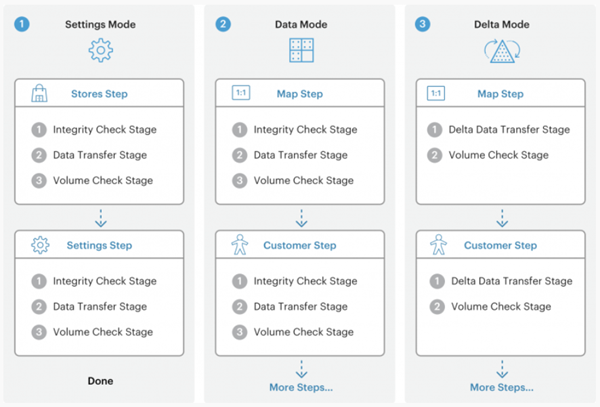
    The Data Migration Tool (DMT) is a command-line interface used for migrating data from one Magento version to another. This tool verifies consistency between database structures, tracks the transfer progress, verifies tests and creates logs.

    The tool operates in 3 modes which are shown in Figure 1.

    1. Settings Mode  

    Manages and migrates configuration settings 

    1. Data Mode  

    Migrates data in bulk to the destination database  

    1. Delta Mode  

    Transfers incremental data updates to Magento storefront and admin panel while running previous migration modes  

    Image of Data migration tool steps
    Figure 1: DMT modes

    Before we discuss the issues faced while migrating, let’s briefly talk about the process of migration itself.  

    You can make a backup of your data with the following command: 

    mysqldump -uadmin  -p databasename target> databasename target.sql

    In order to initiate the migration, you will use the following command:  

    bin/magento migrate:data [-r|–reset] [-a|–auto] {<path to config.xml>}

    Now that we have covered the basics of getting started with migration, let’s move on to explore some of the most frequent issues faced when using DMT, and how you can solve them!  

    1. Mapping Issue with Fields and Source Documents  

    Have you ever seen the following error show up on your screen while migrating?  

    • bash Source documents are not mapped: <EXTENSION_TABLE> 
    • bash Source fields are not mapped. Document: <EXTENSION_TABLE>. Fields: <EXTENSION_FIELD> 

    An error like this appears when the Data Migration Tool is trying to check for consistency between the source and destination databases. Internal tests are run to check for data consistency between tables and fields. Instead of the word ‘Source’ in the error message, you may also see the word ‘Destination’ which implies the same problem.  

    Solution   

    To resolve this error, here are some practical solutions you can adopt:  

    1. Configure the Data Migration Tool  
      Executing the –a argument will help auto-resolve errors and will ensure that the migration does not stop  
    1. You may also choose to ignore database entities that are not needed by adding <ignore> tag to the entity in the map.xml file  

    Here is how you can insert the <ignore> tag:  


    ...    

    …
               

    sales_flat_invoice_grid            


    sales_flat_order_address.address_id            

    …        

    …

    ‍

    2. Classes not mapped in records

    While migrating an error like this may also appear: 

    Class <extension/class_name> is not mapped in record <attribute_id=196>

    This error occurs at the Entity Attribute Value migration step. Usually, it is due to the missing class of an extension.  

    Solution 

    You resolve this error, you can:  

    1. Reinstall the existing extension 
    1. In the eav-attribute-groups.xml.dist, add the attribute that causes this error to <ignore> 
    1. Add class mapping using class-map.xml.dist file  

    3. Foreign Key Constraint Failure  

    You may also encounter an error like this:  

    Foreign key <KEY_NAME> constraint fails on source database. Orphan records id: <id_1>, <id_2> from <child_table>.<field_id> has no referenced records in <parent_table>

    This occurs when there are missing database records in the parent_table, to which the field_id of the child_table is pointing to.  

    Solution  

    Some viable solutions for this can be:  

    1. Delete the records from the child_table if not needed. 
    1. Disable the Data Integrity step by modifying the DMT’s config.xml.

    4. URL Rewrite Duplication  

    There are duplicates in URL rewrites: 

    Request path: towel.html Store ID: 2 Target path: catalog/product/view/id/10 

    Request path: towel.html Store ID: 2 Target path: catalog/product/view/id/12 

    The above error occurs when two entries use the same request path and store ID pair but with two different target path values. The target path in a URL must be specified by a unique pair of request path + store ID.  

    Solution 

    Resolution to this can be to enable the auto_resolve_url_rewrite_duplicates in the config.xml file. This configuration adds a hash-string to the conflicting records of URL rewrite and shows the resolution result in the command line interface.  

    5. Entity Mismatch  

    Mismatch of entities in the document: <DOCUMENT> Source:

    Mismatch of entities in the document: <DOCUMENT> Source:

    <COUNT_ITEMS_IN_SOURCE_TABLE>

    Destination: <COUNT_ITEMS_IN_DESTINATION_TABLE> 


    This error usually shows up when a customer places an order while the store is under active migration. To be precise, this occurs during the volume check setup (the stages are shown in Figure 2 below). This is when the Adobe Commerce database record encounters a mismatch between the original destination, and the final destination. It is common when a store is under migration for the website to say so and not take any orders. But some stores do allow orders to be compiled, and as soon as migration is done, those orders are automatically given the status of placed orders.   

    Solution  

    A possible solution to resolve this error would be to run the Data Migration Tool in delta mode to transfer incremental changes. 

    Image of checking stages for migration
    Figure 2: Check-stages for migration

    6. Deltalog not installed  

    You may encounter this error as well:  

    Deltalog for <TABLE_NAME> is not installed 

    This means that deltalog tables (with prefix m2_c1_*) were not found. Data Migration Tool (DMT) installs these tables during data migration as well as database triggers which track changes and fill deltalog tables.  

    Encountering this error means that you are trying to migrate from a copy of the store and not the live store itself. Copy does not contain triggers and deltalogs needed to complete delta migration therefore resulting in a failure. 

    Solution  

    To troubleshoot this, testing of the migration process needs to be done. A specialized team is responsible for carrying out testing and the process usually entails scoping, dependencies/interactions, test cases, non-functional testing, and functional application tests.  

    Here are some important arguments for migration configuration:  

    bin/magento migrate:settings [-r|–reset] {<path to config.xml>}

    [-r|–reset] stands for an optional argument that starts the migration from the beginning, which can be used for testing migration. 

    [-a|–auto] is also an options argument that prevents the migration from stopping if it encounters integrity check errors. 

    {<path to config.xml>} is the absolute file system path to the migration tool’s config.xml file: this argument is required. 

    7. MySQL Packets 

    MySQLError1153 – got a packet bigger than ‘max_allowed_packet’ bytes 

    This error occurs when MySQL is running in default settings.  

    Solution 

    To solve this error, use the following steps.  

    1. For the client, specify the following command: 

    mysql –max_allowed_packet=100M -u root -p database < dump.sql

    1. Change the my.cnf or my.ini file (usually found in /etc/mysql/) under the mysqld section and set:  

    max_allowed_packet=100M 

    You can also use the MySQL console to log these commands:  

    set global net_buffer_length=1000000;  

    set global max_allowed_packet=1000000000;

    We have discussed 7 common errors that one can encounter while upgrading Magento versions and migrating data. If you are considering migrating your own e-store to Magento or if you are considering upgrading your Magento version, it’s better to discuss with experts who have hands-on experience.  

    At Integriti, we have a capable team of web developers who can make your migration process smoother!