Category: io

  • Boost Your Bottom Line: How Ecommerce Rewards Programs Can Drive Customer Retention

    Image Source: FoxCU

    Ecommerce business owners can understand the importance of keeping customers happy and coming back for more. The implementation of an ecommerce rewards program could be the first step in doing so. In this blog post, I’ll be discussing how ecommerce rewards programs can help drive customer retention, and the benefits they can bring to a business.

    Introduction to Ecommerce Rewards Programs

    An ecommerce rewards program is a loyalty program that rewards customers for their purchases and engagement with your brand. These programs are designed to incentivize customers to keep coming back to your store and make repeat purchases. Rewards can come in many forms, such as discounts, free products, or exclusive access to sales and promotions.

    Why Customer Retention is Crucial for Ecommerce Businesses

    Customer retention is the lifeblood of any ecommerce business. It’s much more cost-effective to keep a customer than to acquire a new one. In fact, it costs five times as much to acquire a new customer than to retain an existing one. Additionally, repeat customers tend to spend more than new customers, making them even more valuable to your business.

    Benefits of Ecommerce Rewards Programs

    Implementing an ecommerce rewards program can bring many benefits to your business. First and foremost, it can increase customer loyalty and retention. By offering rewards for purchases and engagement, you’re giving customers a reason to keep coming back to your store. This can also lead to an increase in customer lifetime value, as they’ll be more likely to make repeat purchases and spend more over time.

    Ecommerce rewards programs can also help to increase customer engagement and satisfaction. By giving customers a sense of exclusivity and appreciation, they’ll feel more connected to your brand and be more likely to recommend you to others. This can lead to increased word-of-mouth marketing and a larger customer base.

    Ecommerce Rewards Program Statistics

    The statistics speak for themselves when it comes to ecommerce rewards programs. According to a study by LoyaltyLion, businesses with rewards programs see a 20% increase in customer retention. Additionally, 81% of consumers say that loyalty programs make them more likely to continue doing business with a brand.

    The Different Types of Ecommerce Rewards Programs

    There are many different types of ecommerce rewards programs you can implement for your business. Here are a few examples:

    • Points-based programs: Customers earn points for purchases and can redeem them for rewards.
    • Tiered programs: Customers move up tiers based on their spending and earn more rewards as they go.
    • Referral programs: Customers earn rewards for referring new customers to your store.
    • VIP programs: Customers are given exclusive access to sales, promotions, and other perks.

    Tip: Kill two birds with one stone by having your consumers create user-generated content for your business and offering a reward for it! 

    Easy Workflow Integrations for Ecommerce Rewards Programs

    Implementing an ecommerce rewards program doesn’t have to be complicated. There are many easy workflow integrations available that can help streamline the process. Here are a few examples:

    • Gorgias: Customer service platform that integrates with rewards programs to provide a seamless customer experience.
    • Yotpo: Marketing platform that includes a rewards program feature.
    • Postco: Shipping and returns platform that integrates with rewards programs to offer customers rewards for their shipping and return activities.
    • Carbon Click: Carbon offsetting platform that offers rewards for customers who offset their carbon footprint.

    Ecommerce Rewards Program Tips for Success

    Implementing an ecommerce rewards program is one thing, but making it successful is another. Here are a few tips to help ensure your rewards program is a success:

    • Keep it simple: Customers are more likely to participate in a rewards program if it’s easy to understand and use.
    • Offer valuable rewards: Make sure the rewards you offer are actually valuable to your customers.
    • Promote your program: Make sure your customers know about your rewards program and how to participate.
    • Measure your success: Track your program’s success and make adjustments as needed.

    Best Practices for Implementing Ecommerce Rewards Programs

    When implementing an ecommerce rewards program, there are a few best practices to keep in mind:

    • Make it easy to join: Customers should be able to join your rewards program with minimal effort.
    • Offer a variety of rewards: Offer rewards that appeal to a variety of customers.
    • Personalize the experience: Use customer data to personalize the rewards experience for each individual customer.
    • Continuously improve: Monitor your program’s success and make adjustments as needed to ensure its continued success.

    Conclusion: Why Ecommerce Rewards Programs are a Must-Have for Customer Retention

    In conclusion, ecommerce rewards programs are a must-have for any ecommerce business looking to improve customer retention and boost their bottom line. By incentivizing customers to keep coming back to your store and engaging with your brand, you’ll see increased loyalty, engagement, and customer lifetime value. With the help of easy workflow integrations and best practices for implementation, you can make your rewards program a success and keep your customers happier than ever before.

    Now that you know the benefits of ecommerce rewards programs, why not implement one for your own business? Your customers will thank you, and your bottom line will too.
  • Bridging the Expertise Gap: Staff Augmentation’s Key Role in Digital Transformation

    Bridging the Expertise Gap: Staff Augmentation’s Key Role in Digital Transformation

    Bridging the Expertise Gap: Staff Augmentation’s Key Role in Digital Transformation

    The digitaltransformation era has ushered in a wave of unprecedented technologicaladvancements, changing the way businesses operate, interact with customers, andmake strategic decisions. To stay competitive and relevant in today’sfast-paced business landscape, organizations must embrace digitaltransformation. However, many companies face a significant challenge: theexpertise gap. This gap often arises due to the shortage of skilledprofessionals who can lead and implement digital initiatives.

    Staff augmentation isemerging as a crucial strategy to bridge this expertise gap and drivesuccessful digital transformation.

    Before we move on tothe essential role of staff augmentation in digital transformation, we need tounderstand this expertise gap.


    Understanding theExpertise Gap

    The expertise gap indigital transformation is a complex challenge that organizations face whentrying to adopt and integrate advanced technologies into their operations.

    Here are some keyreasons behind this gap:

    • RapidTechnological Advancements:Technology evolves at an exponential rate. Keeping up with the latest trends,tools, and platforms can be overwhelming for in-house teams.
    • Shortageof Skilled Talent: The demandfor tech-savvy professionals often exceeds the supply. Finding and retainingtop-tier talent in fields like AI, data science, cybersecurity, and cloudcomputing can be a daunting task.
    • BudgetConstraints: Hiring full-timeexperts in emerging technologies can be expensive. Many businesses may not havethe financial resources to maintain a dedicated team for every digitalinitiative.
    • ProjectSpecificity: Some digitaltransformation projects require specialized skills that might not be needed onan ongoing basis. In such cases, hiring full-time employees may not becost-effective.

    Bridging the Gapwith Staff Augmentation

    Staff augmentation is astrategic solution that involves hiring external experts or teams to workalongside your in-house staff on a temporary or project-specific basis.

    Here’s how staffaugmentation plays a pivotal role in digital transformation:

    • Accessto Specialized Skills: Staffaugmentation allows organizations to tap into a vast pool of specializedtalent. Whether you need data scientists, cloud architects, or cybersecurityexperts, you can quickly find the right professionals for your project.
    • Flexibility: Businesses can scale their workforce up or downbased on project requirements. This flexibility is particularly valuable fordigital transformation initiatives, where resource needs can fluctuate.
    • Cost-Efficiency: Instead of the high costs associated withhiring full-time employees, staff augmentation allows you to pay for theexpertise you need when you need it. This cost-effective approach cansignificantly reduce project expenses.
    • AcceleratedProject Delivery: By bringingin experts with the necessary skills and experience, organizations can expediteproject timelines. This acceleration is crucial in the competitive digitallandscape.
    • KnowledgeTransfer: Collaborating withexternal experts provides a unique opportunity for knowledge transfer. Yourin-house teams can learn from the experts, enhancing their skills andcapabilities.
    • RiskMitigation: Digitaltransformation projects often carry risks, such as technical challenges anddelays. Staff augmentation helps mitigate these risks by ensuring that theright talent is available to address any issues promptly. 

    Conclusion

    Digital transformationis no longer a choice but a necessity for businesses seeking long-term success.However, the expertise gap can pose a significant challenge. Staff augmentationemerges as a strategic solution, enabling organizations to harness specializedskills, maintain flexibility, control costs, and accelerate project delivery.By bridging the expertise gap with staff augmentation, businesses can embracedigital transformation with confidence, remain competitive, and pave the wayfor a more innovative future.

  • Design Patterns in Magento 2 – Object Manager and Factories

    Adobe Commerce, also known as Magento, has been a dominating e-Commerce platform for the past decade. It has reinvigorated itself with flexible communication by introducing complex architecture based on a combination of design patterns. Object Manager and Factories are noteworthy aspects of the design pattern. In fact, Magento 2 attributes a lot to Object Manager functionality. Diagram 1.0 shows the object manager workflow.  

    Image of Design Patterns in Magento 2
    Diagram 1.0: Object Manager Flow

    Object Manager fulfils the following:  

    • Object creation in factories and proxies.  
    • Implementing the singleton pattern by returning the same shared instance of a class when requested.  
    • Dependency management by instantiating the preferred class when a constructor requests its interface.   
    • Automatically instantiating parameters in class constructors. 

    Object Manager Interface is the part of Magento framework used for the implementation of method createmethod getmethod config.   

    Create method creates new objects based on the parameters of “type” and “arguments”. The first is a string type value that contains the name of the object type. The latter contains the list of arguments required for the new instance of an object. This is initialized using the factory method to generate a new instance by its type. What the factory method does is identify a preference for the interface when $type parameter is used. In other cases, class gets generated directly.  

    /**   * Create new object instance   * @param string $type   * @param array $arguments   * @return mixed   */  public function create($type, array $arguments = []) { return $this->_factory->create($this->_config->getPreference($type), $arguments); } Get method is particularly important because it retrieves the cached object instance.  Through it, Object Manager provides part of the Object lifestyle configuration. What this means is that some types of objects can be either shared or not be it Singleton or Transient.  In the di.xml file, the shared parameter is responsible for this:   {typeName} Implementation of this method goes like this:  /**   * Retrieve cached object instance   * @param string $type   * @return mixed   */  public function get($type)  {       $type = ltrim($type, '\');       $type = $this->_config->getPreference($type);     if (!isset($this->_sharedInstances[$type])) {           $this->_sharedInstances[$type] = $this->_factory>create($type);       }       return $this->_sharedInstances[$type];   } With $type the Object Manager class identifies a preference for the interface if it is declared, and returns a cached instance of the object if it is present in the pull of previously generated (shared) objects.  Method Config is an entry point for the whole application initialization during the HTTP calls and the area initialization.  In this phase, the object manager works on collecting all preferences described in the di.xml in one place – global configuration.   /**   * Configure di instance   * Note: All arguments should be pre-processed (sort order, translations, etc) before passing to method configure.   *   * @param array $configuration   * @return void   */  public function configure(array $configuration)  {       $this->_config->extend($configuration);   } Object Manager supports backward compatibility. For example, sometimes it is required to add a new parameter to the object constructor and to follow backward compatibility, a newly added object has to be declared via the manager.   /**   * @param ResourceConnection $resource   * @param MagentoStoreModelStoreManagerInterface $storeManager   * @param MagentoCatalogModelConfig $config   * @param QueryGenerator $queryGenerator   * @param MetadataPool|null $metadataPool   * @param TableMaintainer|null $tableMaintainer   */ public function __construct(MagentoFrameworkAppResourceConnection $resource,       MagentoStoreModelStoreManagerInterface $storeManager,     MagentoCatalogModelConfig $config,     QueryGenerator $queryGenerator = null,     MetadataPool $metadataPool = null,     TableMaintainer $tableMaintainer = null  ) {     $this->resource = $resource;     $this->connection = $resource->getConnection();     $this->storeManager = $storeManager;     $this->config = $config;     $this->queryGenerator = $queryGenerator ?: ObjectManager::getInstance()->get(QueryGenerator::class);     $this->metadataPool = $metadataPool ?:  ObjectManager::getInstance()->get(MetadataPool::class);     $this->tableMaintainer = $tableMaintainer ?:  ObjectManager::getInstance()->get(TableMaintainer::class); }

    Object Manager uses factory methods quiet a lot. Now we’ll take a look at the factories and the implementation.  

    What a factory method does is defines an interface for creating an object but lets the subclasses decide which class to instantiate. The factory method lets a class defer instantiation to subclasses which is useful for constructing individual objects for a specific purpose without the requestor knowing the specific class being instantiated.  

    In Magento the factory method gets applied to all layers of the application. The software application has a defined contract for object initialization and the method guarantees the fulfilment for different classes. So, in a nutshell, decoupling of both – objects and the construction takes place simultaneously.  

    One of the core features of the Magento 2 is code generation and it simplifies data object factory generation. Data object is a part of the service layer of the Magento architecture and represent entities such as customer or catalog. As per interface declaration, factory method is ideal to generate new instances of those objects.  

    Factory constructor consists of two parameters: Object name and class name of the data object entity and this is how it works. 

    /**   * Get default constructor definition for generated class   *   * @return array   */   protected function _getDefaultConstructorDefinition()  { return [         'name' => '__construct',         'parameters' => [               ['name' => 'objectManager', 'type' => '\' . MagentoFrameworkObjectManagerInterface::class],               ['name' => 'instanceName', 'defaultValue' => $this->getSourceClassName()],   ],   'body' => "$this->_objectManager = $objectManager;n$this->_instanceName = $instanceName;", 'docblock' => [     'shortDescription' => ucfirst(static::ENTITY_TYPE) . ' constructor',     'tags' => [       ['name' => 'param',         'description' => 'MagentoFrameworkObjectManagerInterface $objectManager',     ],       ['name' => 'param', 'description' => 'string $instanceName'],       ],     ]   ];   } Factories can also be auto-generated in the following way.   /**   * Factory constructor   *   * @param MagentoFrameworkObjectManagerInterface $objectManager   * @param string $instanceName   */ public function __construct( MagentoFrameworkObjectManagerInterface $objectManager, $instanceName = '\Magento\Customer\Api\Data\CustomerInterface'  ) {       $this->_objectManager = $objectManager;      $this->_instanceName = $instanceName;   } Factory method implementation needs only one public method – create.  A $create array contains: Name of the method – create  Method parameters – a not required data array that consists of initialized class properties and their values Body – the core of the factory (code that is responsible for the new object instance generation)  Dockblock and tags – contains additional information   /**   * Returns list of methods for class generator   *   * @return array */  protected function _getClassMethods()  {       $construct = $this->_getDefaultConstructorDefinition();   // public function create(array $data = array())  $create = [     'name' => 'create',     'parameters' => [['name' => 'data', 'type' => 'array', 'defaultValue' => []]],     'body' => 'return $this->_objectManager->create($this->_instanceName, $data);', 'docblock' => [                               'shortDescription' => 'Create class instance with specified parameters', 'tags' => [                                           ['name' => 'param', 'description' => 'array $data'], [                                     'name' => 'return',                                     'description' => $this->getSourceClassName()                                     ],                                 ],                             ],                           ];                           return [$construct, $create];   } Let's review body of the method and review it on the automatically generated example:   /**   * Create class instance with specified parameters   *   * @param array $data   * @return MagentoCustomerApiDataCustomerInterface */  public function create(array $data = [])   {       return $this->_objectManager->create($this->_instanceName, $data);   }

    In Magento 2, the core of the factory method is the object managers usage together with the create method. It takes an instance name and combines it with some parameters in order to initiate a completely new object. Factory method usage is aimed at the new object initialization by following a specific contract of decoupling objects. Like in all other software applications architecture52, Magento 2 uses an approach for handling object generations. The most frequently used aspect is the Data object initialization on the service layer. The factory method is simple to use and doesn’t have any negative effects on the application layers.  

  • Ecommerce UX Trends To Dominate Clothing and Fashion Market

    The world of eCommerce is saturated with cutthroat competition over getting customers’ attention, particularly in the apparel industry. With the rise of online shopping over the recent years, eCommerce has become an important playing ground for most fashion and apparel brands. Research shows that by 2025, the e-commerce fashion market is expected to generate a revenue of approximately 331.7 billion U.S. dollars in North America alone.

    With Ecommerce more valuable today than ever before, it’s important to unlock the doors to new ideas and styles. Apparel brands need to create their eCommerce site differently than their competitors and get a lot of new visitors to their sites.

    Most visitors take about 0.05 seconds to form an opinion about a website. This is where a good user experience comes in. For Ecommerce, UX is crucial because it makes sure that your customers can easily navigate your website, find the product they require, buy it, and move on.

    As per UX Planet, for every dollar spent on UX, the company can expect a return on investment of up to $100. A good UX design raises a website’s conversion rate by approximately 200% and 80% of consumers are ready to pay extra for a better experience. The easier it is for people to buy from you, the greater your online revenue will be. That’s why it’s important for businesses to make sure they offer the best UX possible and stay ahead of all the new trends.

    So, how can apparel brands create high-converting digital experiences?

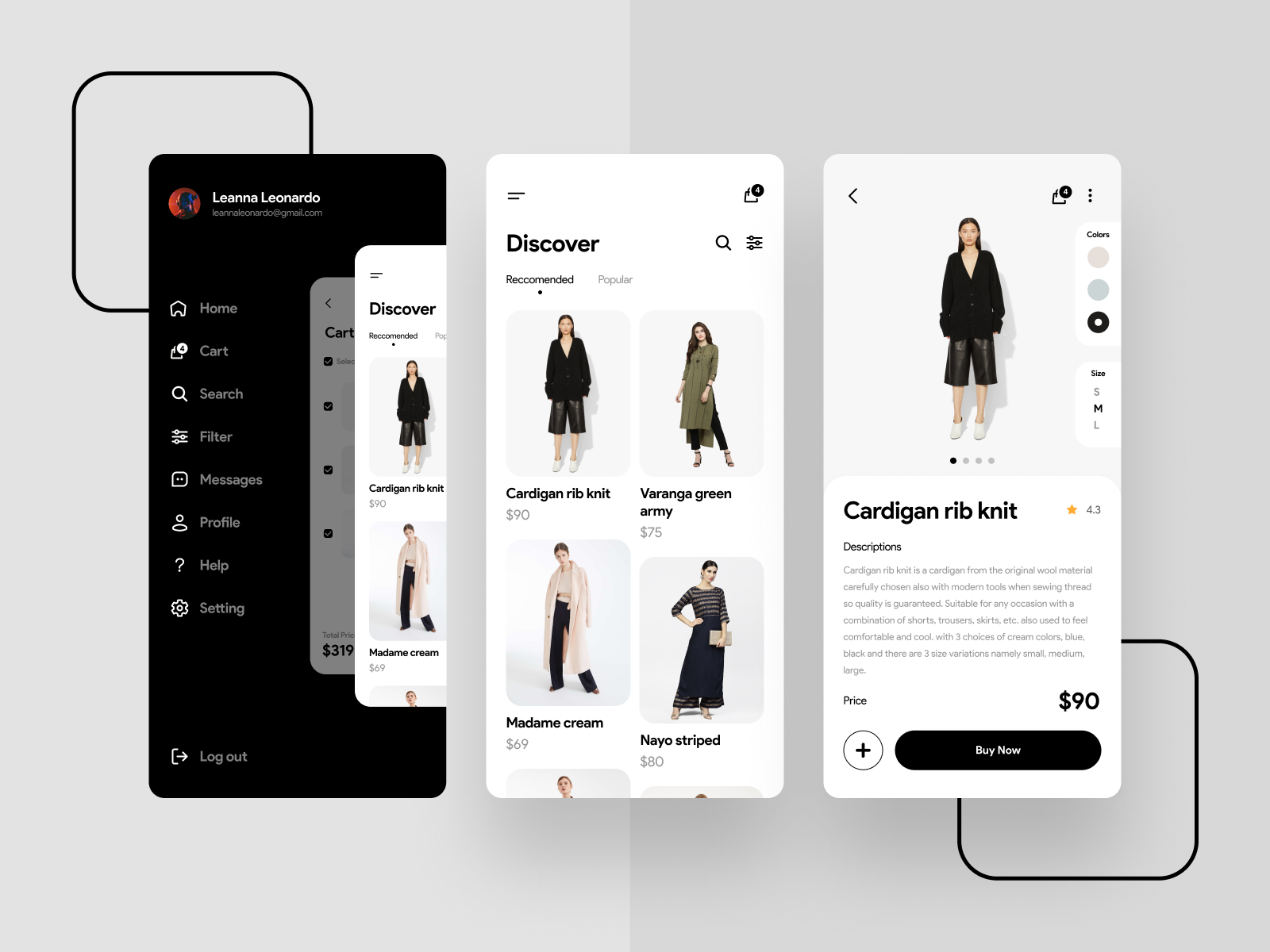
    Image of Fashion App designed by Didi Kurniawan
    Image Source: dribbble.com

    It all starts with harnessing the power of knowing your target audience and employing the latest UX trends to engage your customers. Here are some ingredients which can help you cook up a storm in the eCommerce world:

    • User-centric Design
    • Virtual Reality and Augmented Reality 
    • Mobile-first Designs
    • Voice-over Interfaces 

    User-centric Design

    User-centered design (UCD) is a design process that concentrates on users and their requirements. In UCD, a variety of research and design techniques are used to build highly compatible and accessible products for users. User-centric design is a great tool for you to develop a more inclusive online platform.

    More and more businesses are starting to grasp the significance of being inclusive and there is a shift in attitudes toward gender and cultural inclusion. Non-English naming conventions are displayed in forms with non-binary options and “preferred name” fields. All such features provide users with a more customized and wide-ranging customer experience. Inclusivity is also reflected in the diversity of participants selected for user research.

    Overall, by adopting this trend, companies can benefit from close user involvement in the design process and ensure an online shopping experience that meets users’ expectations and requirements. This results in increased sales and reduced costs incurred by customer services.

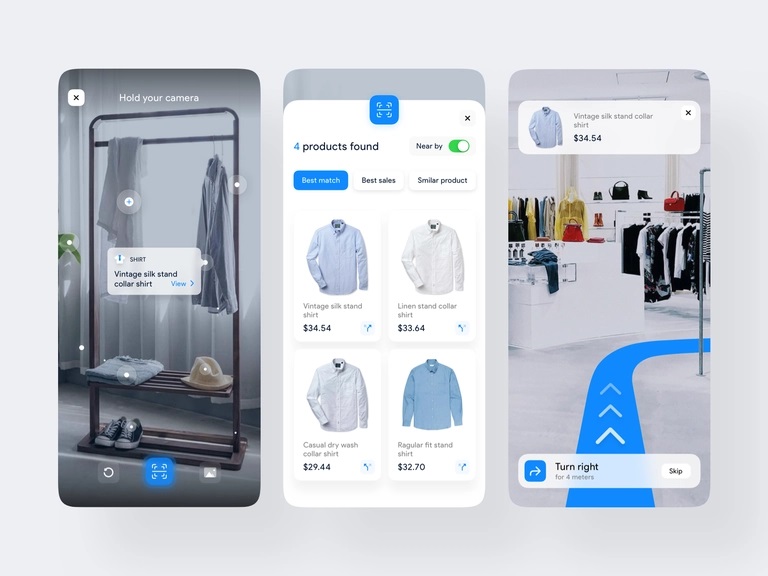
    Image of AR Navigation based Online Shop App design
    Image Source: dribbble.com

    Virtual Reality and Augmented Reality 

    The barriers between the digital and real worlds are blurring due to advances in AR/VR technology. Designing with VR/AR has changed how companies are optimizing user experience on digital platforms. In UX design, extended reality particularly rose to fame during the COVID-19 pandemic when companies wanted to reach end-users who were stuck at home.

    Employing this technology would mean that users are no longer required to issue any commands to applications in order to use them. Instead, user actions are interpreted in real time by the gadget which reacts to the user’s surroundings.

    The fashion and retail sectors can employ this technology to connect with their customers in completely innovative ways. With the help of 3D designs, VR/AR technology will allow apparel brands to offer a first-person perspective to customers. Users will be able to engage with design components face-to-face and will get an immersive shopping experience.

    Mobile-first Designs

    Mobile devices have become an essential part of the current digital landscape and will continue to remain so in the future as well. If an apparel brand wants to increase its online sales, then they need to focus on mobile E-commerce. When making a purchase decision, 59% of shoppers consider being able to buy products on mobile as an important factor. 

    In the Mobile-first design approach, designers will first work on creating a product design for mobile devices. This is done by prototyping the app’s design for the smallest screen first and then moving on to larger screen sizes. it makes sense to adopt this approach as devices with smaller screen sizes have space limitations and UX designers have to ensure that the key components of the website are prominently displayed for users.

    If your business incorporates this UX trend in its fashion eCommerce, designers would be compelled to remove unnecessary elements to deliver seamless website rendering and navigation.

    Voice-over Interfaces

    User interface design is much more than just the visual screen. It takes into consideration other senses as well. Voice search is another design trend that is gaining hype. The speech and voice interface market is estimated to grow to approximately 25 billion dollars by 2025.

    Users’ attention spans have declined over the years, and they demand more speed and ease. Businesses are moving towards voice-activated user interfaces to bring a whole new level of convenience to their customers. This offers users the ability to carry out a task hands-free and without looking at a device.

    Fashion and retail companies can utilize sophisticated voiceover interfaces to provide users with a more personalized and highly efficient user experience as they would have someone to assist them. In fact, customers will have a personal store clerk with them to guide them along their digital shopping experience.

    Conclusion

    In conclusion, fashion eCommerce is a highly competitive arena to survive in, and apparel brands need to be open to experimenting with modern UI design trends. Retail businesses should be able to anticipate their users’ needs and ensure that they have the necessary tools to keep up with trends to provide the best user experience possible and achieve customer satisfaction. Adopting approaches like User-centric design and Mobile-first design can help you meet the current need of your customers. Similarly, incorporating voice-activated user interfaces and VR/AR technology in your eCommerce strategy can help you create more immersive, customized, and distinctive digital experiences. The need for this shift towards virtual and augmented reality will likely intensify in the future with the rise of Metaverse.