Author: admin

  • Why Core Web Vitals are the New SEO Frontier for Ecommerce Website Development 

    Why Core Web Vitals are the New SEO Frontier for Ecommerce Website Development 

    Why Core Web Vitals are the New SEO Frontier for Ecommerce Website Development

    Why do some ecommerce websites convert better while others struggle? Website performance is influenced by multiple factors, from server response times and page load speed to layout shifts and content delivery efficiency. Investing in professional ecommerce website development ensures that your shop is built with performance, reliability, and user experience in mind. Well-executed design, ongoing support, and maintenance deliver real value small-scale optimization projects can start from a few hundred dollars, scaling up for advanced features. This blog explores why core web vitals are critical for SEO, how improving metrics like LCP and interactivity impacts ranking, and how smart Shopify store optimization drives higher conversions. 

    Core Web Vitals are crucial SEO metrics that impact ecommerce website development, improving user experience, page speed, and search rankings. 

    Core Web Vitals Why They Really Matter for SEO 
    Core Web Vitals Why They Really Matter for SEO 

    In ecommerce website development, understanding why core web vitals matter for SEO is essential. These metrics directly affect your site’s performance, user experience, and ultimately, search rankings. Google’s algorithm increasingly prioritizes websites that meet performance and usability standards, making core web vitals still matter in SEO in 2025. Let’s explore why and how you can evaluate and improve these crucial metrics. 

    What Are Core Web Vitals? 

    Core web vitals are specific key metrics defined by Google that measure the real-world experience of users on your website. They include: 

    • Largest Contentful Paint (LCP): Measures load speed for the main content. 
    • First Input Delay (FID): Assesses interactivity. 
    • Cumulative Layout Shift (CLS): Evaluates visual stability during page load. 

    How Core Web Vitals Impact SEO 

    1. Improving Search Rankings: Sites that perform well on core web vitals are favored by Google’s algorithm, enhancing your technical SEO and overall visibility. 
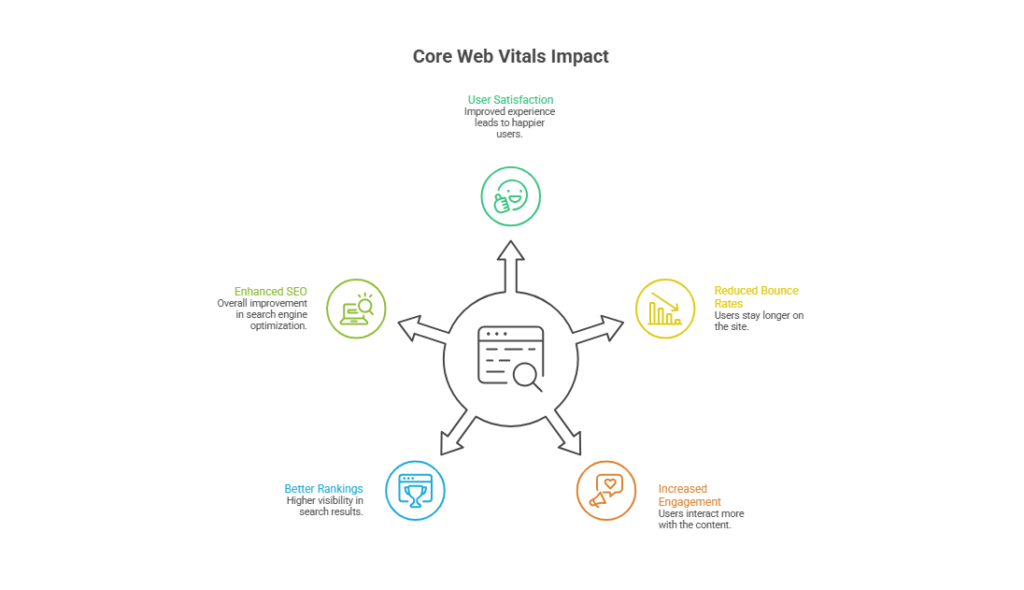
    1. Enhancing User Experience: Faster load times and stable layouts reduce frustration, increase user engagement, and lower bounce rates. 
    1. Supporting Long-Term Growth: Optimizing site’s performance through web design improvements ensures your website remains competitive and aligned with evolving search standards. 

    Steps to Evaluate and Improve Core Web Vitals 

    Step 1: Evaluate a Site’s Performance 

    Use tools like Google PageSpeed Insights or Google Search Console to assess site’s core web vitals. Identify LCP, FID, and CLS scores to understand current performance. 

    Step 2: Identify Technical SEO Gaps 

    Analyze your site’s web design and backend structure. Check server response times, uncompressed images, or excessive scripts that affect load speed. 

    Step 3: Meet Core Web Vitals Standards 

    Implement optimizations to improve metrics: 

    • Compress images and use modern formats like WebP. 
    • Minimize render-blocking scripts to improve interaction to next paint. 
    • Reduce unexpected layout shifts to maintain visual stability. 

    Step 4: Monitor and Adjust Regularly 

    Core web vitals are dynamic. Continuous monitoring ensures your ecommerce store adapts to algorithm changes and maintains optimal site’s performance. 

    Why It Matters for Ecommerce 

    For ecommerce websites, slow load times or layout shifts can directly reduce conversions and core web vitals impact SEO. A technically optimized, visually stable site builds trust, improves user experience, and strengthens your SEO in 2025 strategy. By prioritizing core web vital metrics, you position your store for better visibility, higher engagement, and long-term business growth. 

    Smart Development Choices Boost Core Web Vitals And Conversions 

    Making smart development choices can directly improve rankings and user experience, increase web traffic, and drive higher conversions. Sites with poor core web vitals scores often lose visitors and search visibility, making optimization essential. Focusing on the three core web vitals LCP, FID, and CLS ensures fast loading, smooth interactivity, and stable layouts. 

    Why Core Web Vitals Are Critical 

    Maintaining critical core web metrics ensures your ecommerce site delivers a seamless experience and meets user expectations, which influences SEO and conversions. 

    Optimizing Load Speed and Interactivity 

    Compress images, minimize scripts, and streamline code to improve LCP and FID, giving users faster interaction and engagement. 

    Reducing Layout Shifts 

    Define dimensions for media and content to reduce CLS, keeping pages visually stable and ensuring core web vitals will remain strong. 

    Business Benefits of Smart Development 

    Improved core web vitals boost user satisfaction, increase repeat visits, and positively impact search visibility, ultimately enhancing ROI for your ecommerce store. 

    Conclusion 

    Core Web Vitals are no longer optional they are a critical part of ecommerce website development, directly influencing SEO in 2026, user experience, and conversion rates. By understanding and optimizing the three core web vitals LCP, FID, and CLS you ensure your site loads quickly, interacts smoothly, and remains visually stable for users. Smart development choices, ongoing monitoring, and professional support help maintain critical core web metrics, improve rankings and user experience, and deliver measurable business results. 

    Ready to turn your store into a high-performing, conversion-driven machine? Why waitcould Integriti Studio optimize your core web vitals today? 

    Frequently Asked Questions (Why Core Web Vitals are the New SEO Frontier for Ecommerce Website Development)

    Why are Core Web Vitals important in SEO?

    Core Web Vitals matter in SEO because they measure loading speed, interactivity, and visual stability, directly impacting rankings and user experience.

    Why did Core Web Vitals fail?

    Core Web Vitals fail when pages have slow loading times, heavy scripts, layout shifts, poor hosting, unoptimized images, and excessive third-party apps.

    What are the 3 C’s of SEO?

    The three C’s of SEO are content, code, and credibility, focusing on quality information, technical optimization, and strong authoritative backlinks.

    What’s your strategy for improving Core Web Vitals and technical SEO?

    Improve Core Web Vitals and SEO by optimizing images, minifying code, enabling caching, reducing scripts, using a CDN, and structured data.

  • Guide To Shopify Page Speed Optimization How To Hit Sub-1-Second Loads

    Guide To Shopify Page Speed Optimization How To Hit Sub-1-Second Loads

    Guide To Shopify Page Speed Optimization How To Hit Sub-1-Second Loads 

    Why does website performance vary so drastically across Shopify stores? Many factors influence site speed and page speed, from poorly coded Shopify themes to unoptimized images or excessive Shopify apps. As a custom web design company, we know that professional development, mobile optimization, and ongoing maintenance directly impact user experience web design and overall SEO. Small improvements, like lazy loading or image compression, can dramatically improve load time, often for budgets starting around $1,000–$2,000 for basic setups. This blog explores Shopify speed optimization strategies, from technical fixes to high converting websites, helping you achieve a Shopify store speed under one second while enhancing conversions. 

    To achieve sub-1-second loads for your Shopify store, focus on Shopify speed optimization through image optimization, lazy loading, and streamlined Shopify themes. Regularly monitor site speed with Google PageSpeed Insights, reduce unnecessary Shopify apps, and implement mobile optimization to enhance user experience web design and boost SEO. 

    Improve Shopify SEO with Fast Store and Core Web Vitals 

    Improve Shopify SEO with Fast Store and Core Web Vitals 

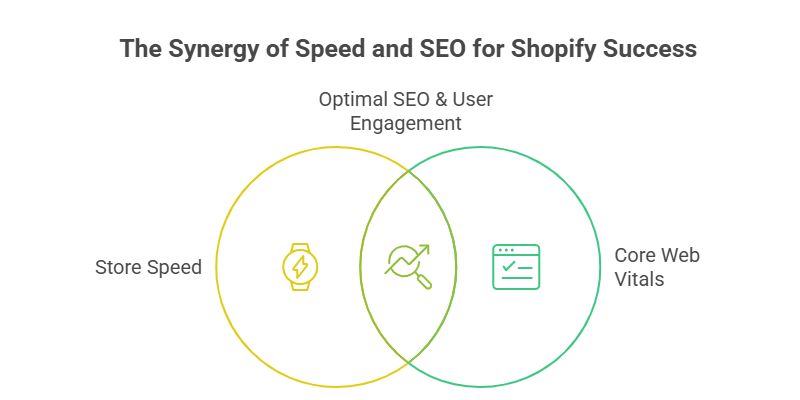
    A fast-loading Shopify store is no longer optional it directly impacts SEO, user experience web design, and conversions. Core Web Vitals measure page performance, including loading speed, interactivity, and visual stability. Optimizing these factors ensures your Shopify store ranks higher on search engines while delivering seamless experiences that keep customers engaged. 

    Why Speed Matters for Shopify SEO 

    Search engines like Google prioritize fast-loading websites. Poor Shopify store speed can hurt rankings, reduce visibility, and negatively affect your ecommerce website design efforts. A slow store frustrates users, increasing bounce rates and reducing chances of turning visitors into customers. 

    Steps to Optimize Your Shopify Store for SEO 

    1. Audit Core Web Vitals 

    Use Google PageSpeed Insights to check metrics like Largest Contentful Paint (LCP), First Input Delay (FID), and Cumulative Layout Shift (CLS). These highlight areas where your user experience web design can be improved for both desktop and mobile visitors. 

    2. Streamline Shopify Themes and Apps 

    Choose lightweight, optimized Shopify themes. Limit unnecessary Shopify apps, as too many plugins can slow down high converting websites. Each addition should have a clear ROI, maintaining a balance between functionality and speed. 

    3. Optimize Images and Product Pages 

    Compress images, implement lazy loading, and optimize product page layouts to reduce page load times. Optimized images not only boost shopify store speed but also improve results-driven web design, ensuring a visually appealing store without performance trade-offs. 

    4. Mobile Optimization 

    With increasing mobile traffic, a fast, responsive Shopify store is crucial. Mobile optimization improves user experience web design, supports SEO, and contributes to high converting websites by making browsing and checkout seamless. 

    5. Monitor and Maintain Performance 

    Regularly review core web vitals and shopify store performance. A custom web design company can help implement ongoing performance optimization, ensuring your ecommerce website design remains fast, efficient, and aligned with results-driven web design strategies. 

    Benefits of a Fast Shopify Store 

    Optimizing for speed and Core Web Vitals leads to: 

    • Better SEO rankings and visibility 
    • Enhanced user experience web design 
    • Higher conversion rates and high converting websites 
    • Long-term performance sustainability for your Shopify store 

    Shopify Store Speed Optimization: Why Site Speed Matters 

    In today’s competitive ecommerce landscape, a slow Shopify store can directly impact sales, customer satisfaction, and overall store performance. Website speed isn’t just a technical factor it’s a key part of user experience web design. A store that loads quickly keeps visitors engaged, encourages repeat purchases, and contributes to high converting websites. 

    Why Site Speed Matters for Shopify Stores 

    When your shopify website takes too long to load, customers may abandon their carts, leading to lost revenue. A delay in page load time can frustrate users, reduce engagement, and harm your brand reputation. Fast loading stores are essential for results driven web design, helping your ecommerce website design meet both customer expectations and business goals. 

    Google also considers page speed in ranking websites, so shopify website speed optimization improves your visibility and supports shopify seo success. A well-optimized store ensures better performance without compromising design or functionality. 

    Common Performance Issues 

    Many slow Shopify stores experience issues like: 

    • Heavy or unoptimized themes 
    • Large images and videos 
    • Excessive third-party apps 
    • Unused Shopify sections 

    Identifying these performance issues is the first step to improve your Shopify store’s performance and optimize your Shopify store for speed. 

    How to Optimize Your Shopify Store 

    To speed up your store and make your store faster, consider these steps: 

    1. Use Shopify automatically uses a CDN for faster content delivery 
    1. Compress images and videos without losing quality 
    1. Limit unnecessary apps and scripts 
    1. Optimize your theme and Shopify sections 
    1. Test your store with tools like Google PageSpeed Insights for performance data 

    Conclusion 

    Optimizing your Shopify store’s speed is no longer optional it’s a critical factor for user experience web design, high converting websites, and overall store performance. From Shopify speed optimization strategies like image compression, lazy loading, and streamlined themes, to monitoring Core Web Vitals and reducing unnecessary apps, every small improvement contributes to faster shopify website loads, better SEO rankings, and higher conversions. 

    A fast, responsive store not only delights your customers but also strengthens your ecommerce website design and ensures long-term sustainability. By regularly auditing your shopify store performance and applying targeted performance optimization techniques, you can create a store that performs seamlessly across devices, delivering results driven web design and exceptional shopping experiences. 

    So, if you want to improve your Shopify store’s performance and achieve a store that loads under a second, do you think contacting Integriti Studio could be the smartest next step for your business? 

    Frequently Asked Questions (Guide To Shopify Page Speed Optimization How To Hit Sub-1-Second Loads)

    How do I optimize my Shopify page speed?

    Optimize images, remove unused apps, use lightweight themes, enable lazy loading, minify code, reduce redirects, and leverage Shopify’s built-in performance tools.

    How to optimize page loading speed?

    Compress images, enable caching, minify CSS and JavaScript, reduce redirects, use a CDN, optimize server response time, and remove unnecessary scripts.

    How to make subpages in Shopify?

    Create a page, then assign it as a child under Navigation by nesting it beneath a parent menu item main.

    What is a good Shopify speed score?

    A good Shopify speed score is above 70, while 80 or higher is excellent for performance, SEO rankings, and user experience.

  • Custom Shopify Design Vs Templates Why Bespoke Branding Wins In 2026 

    Custom Shopify Design Vs Templates Why Bespoke Branding Wins In 2026 

    Custom Shopify Design Vs Templates Why Bespoke Branding Wins In 2026

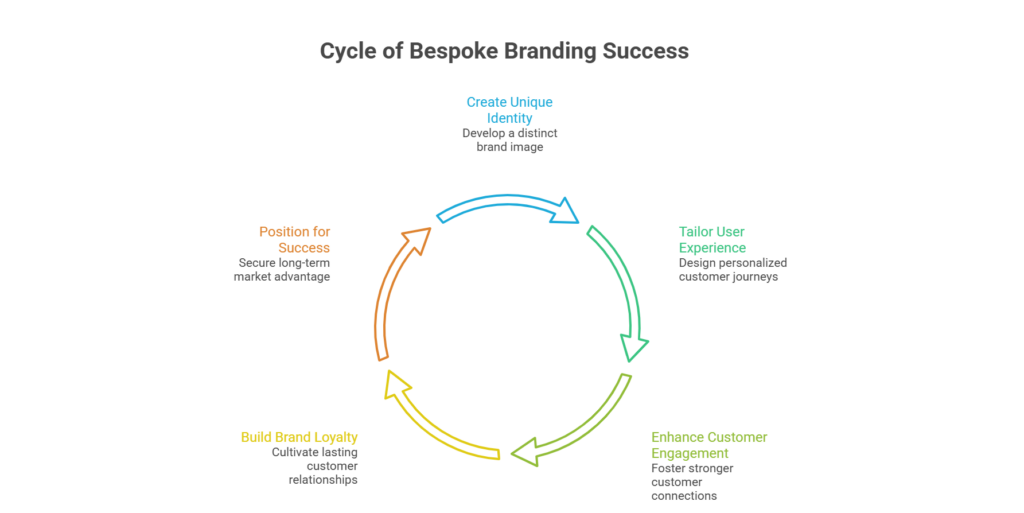
    Why do some Shopify stores convert better while others lag? The difference often lies in design, functionality, and development strategy. Factors influencing website performance like layout, checkout flows, SEO, and integration cannot be overlooked. Investing in professional Shopify website design ensures your brand identity is communicated clearly, with custom features and workflows tailored to your audience. While pre-built templates may cost a few hundred dollars, a fully custom Shopify store can range higher, reflecting real value in bespoke branding, support, and maintenance. This blog explores why custom Shopify design outperforms templates, highlighting best designed Shopify sites, custom Shopify stores, and expert Shopify development strategies in 2026. 

    Custom Shopify design outperforms templates because it tailors your online store to your brand identity, optimizes user experience, and supports advanced features, integrations, and scalability. While templates offer cost-effective shortcuts, a bespoke custom Shopify store delivers better performance, conversions, and long-term value through professional Shopify development in 2026. 

    Advanced Shopify Features and Custom Development Benefits 

    Advanced Shopify Features and Custom Development Benefits

    When you invest in custom Shopify design, you unlock capabilities that go far beyond pre-built templates. A tailored Shopify website design ensures your custom Shopify store aligns with your brand identity while delivering superior performance and user experience. 

    Why Advanced Shopify Features Matter 

    1. Enhanced Functionality: Custom Shopify themes allow you to implement advanced features such as dynamic checkout flows, personalized product recommendations, and multi-currency support, which pre-built themes often lack. 
    1. Seamless Integrations: With custom development, your store can integrate smoothly with third-party apps, ERP systems, and CRM platforms, enabling automated workflows for growing businesses. 
    1. Optimized Performance: High-performing custom Shopify stores benefit from faster load times, SEO-friendly structure, and a responsive layout that improves conversions. 

    Benefits of Custom Development 

    Design Freedom and Branding 

    Investing in a fully custom theme gives complete design freedom, allowing unique layouts, modern Shopify aesthetics, and consistent brand identity across your shopify website. Unlike standard themes, custom sites are built for your specific audience and business goals. 

    Scalability and Future-Proofing 

    A custom Shopify store ensures scalability. As your business grows, you can easily add new features, advanced Shopify apps, or custom workflows without redesigning your entire site. This makes custom work more cost-effective in the long term. 

    Overcoming Template Limitations 

    Pre-built themes often come with limitations of the Shopify platform, restricted customization options, and shared layouts that reduce your store’s uniqueness. Choosing custom development avoids these trade-offs and positions your store among the best designed Shopify sites in 2026. 

    How to Maximize Value with a Custom Shopify Design 

    1. Collaborate with an Expert Shopify Developer: Ensure your custom Shopify theme follows best practices in website design and shopify development. 
    1. Focus on User Experience: Use advanced Shopify features to streamline navigation, improve checkout flows, and enhance engagement. 
    1. Plan for Growth: Build a custom Shopify store with scalable architecture to handle traffic spikes and future customization options. 

    Overcoming Shopify Limitations With Custom Themes 

    While standard themes and website templates provide a quick way to launch a Shopify store, they often expose the limitations of the Shopify platform. Pre-built Shopify themes offer basic functionality, but for growing businesses or brands seeking a unique design, these constraints can restrict creativity, scalability, and advanced Shopify features. Investing in a custom approach allows you to unlock the full potential of advanced Shopify capabilities and tailor every aspect of your store design to your audience. 

    Common Limitations of Standard Themes 

    1. Restricted Customization Options: Many standard themes limit your ability to modify layouts, colors, or checkout flows. This can make your store look similar to others, reducing differentiation. 
    1. Performance Constraints: Templates are often loaded with unused code or features, impacting speed and user experience. 
    1. Limited Advanced Shopify Features: Features such as dynamic product recommendations, multi-language support, or custom integrations may require custom development to implement effectively. 

    How Custom Themes Solve These Challenges 

    Tailored Branding and Unique Design 

    A full custom Shopify theme allows for tailored branding, ensuring your storefront is unique to your brand. Every design element can be optimized to reflect your identity, making your modern Shopify store stand out. 

    Expanded Customization Options 

    With customization options, a Shopify developer can implement advanced features, integrations, and workflows that templates cannot. This flexibility ensures your bespoke storefront evolves alongside your business needs. 

    Optimized Performance and Scalability 

    Custom work allows you to streamline code, optimize loading times, and prepare your store for growing businesses. High-performing advanced Shopify stores convert better, scale efficiently, and support enhanced SEO. 

    Why Investing in a Custom Theme Pays Off 

    Choosing custom vs standard themes gives the best of both worlds: professional design work, flexible Shopify features, and tailored branding that grows with your company. While the upfront effort may exceed using a template, it pays off in the long term by boosting engagement, conversions, and customer loyalty. 

    By considering custom development for your Shopify store, you overcome the limitations of pre-built solutions and create a platform for your brand that remains competitive in 2026 and beyond. 

    Conclusion 

    Choosing custom Shopify design over templates is no longer just a matter of aesthetics it directly impacts performance, scalability, and conversions. While pre-built themes offer a faster, cost-effective route, they come with limitations that restrict advanced Shopify features, customization options, and unique branding. Investing in a custom Shopify store or fully custom theme ensures a high-performing Shopify site with tailored workflows, seamless integrations, and a distinctive look that sets your brand apart. From design freedom to future-proof scalability, custom development pays off by delivering long-term value for growing businesses in 2026. 

    So, if you’re ready to elevate your online store and explore bespoke branding, why not contact Integriti Studio today and see what a custom solution can do for your brand? 

    Frequently Asked Questions (Custom Shopify Design Vs Templates Why Bespoke Branding Wins In 2026 )

    Who is Shopify’s biggest competitor?

    Shopify’s biggest competitor is Wix, offering e-commerce tools, customizable websites, and integrated payment solutions for small to medium businesses worldwide.

    Who is Shopify’s biggest competitor?

    Shopify’s biggest competitor in 2025 is WooCommerce — especially for small to medium online stores with BigCommerce and Wix eCommerce also major rivals in the ecommerce platform space.

    Why are Shopify templates so expensive?

    Shopify templates are expensive because they include professional design, built-in features, mobile optimization, regular updates, and developer support, ensuring high performance, security, and better conversion rates.

    What is the future of Shopify?

    Shopify’s future lies in AI-driven commerce, advanced customization, and seamless omnichannel experiences, empowering merchants to scale, optimize sales, and stay competitive globally.

  • Beyond Aesthetics Why User Experience Web Design Is The Secret To 3x Conversions 

    Beyond Aesthetics Why User Experience Web Design Is The Secret To 3x Conversions 

    Beyond Aesthetics Why User Experience Web Design Is The Secret To 3x Conversions 

    Why do some websites convert visitors into loyal customers effortlessly while others struggle? The answer lies in user experience web design a strategy that goes beyond aesthetics to influence every interaction. Factors like intuitive navigation, responsive layouts, accessibility, and seamless digital experiences directly impact conversion rates. Investing in professional development, continuous optimization, and dedicated support ensures your site performs like a high-converting machine, often at typical agency pricing ranging from $3,000–$10,000 depending on complexity. In this blog, we’ll explore how results-driven web design, ecommerce website design, and partnering with a custom web design company can truly elevate UX and drive conversions. 

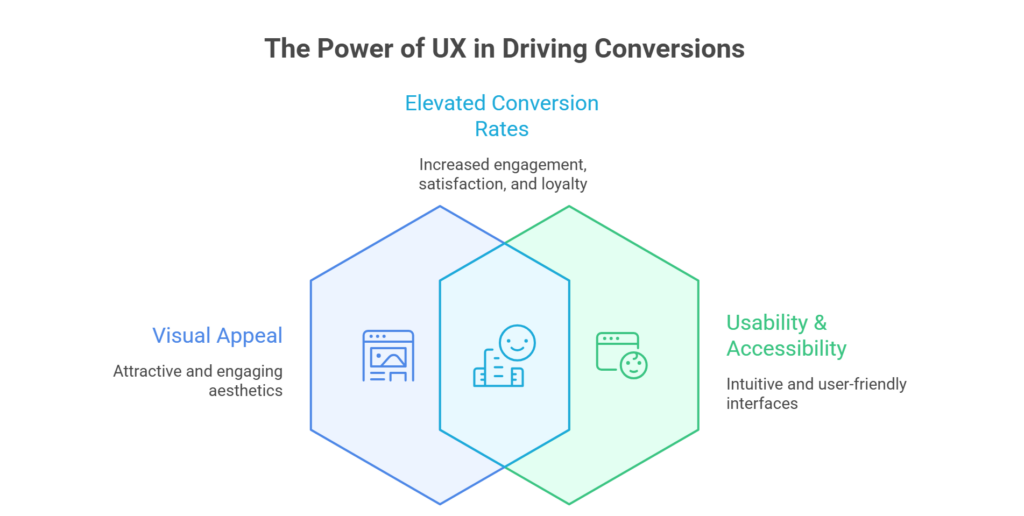
    Websites that prioritize user experience web design go beyond aesthetics, focusing on intuitive navigation, responsive layouts, and accessibility. This results-driven web design reduces friction, enhances usability, and boosts conversion rates, making high converting websites possible. Partnering with a custom web design company can elevate UX and triple your conversions. 

    Beyond aesthetics How UX design elevates conversion rates

    Beyond aesthetics How UX design elevates conversion rates

    When it comes to web design, aesthetics alone cannot guarantee success. User experience design plays a pivotal role in shaping how visitors interact with your website, landing pages, and overall digital presence. By focusing on great UX, businesses can elevate your business, reduce bounce rates, and significantly improve conversion rates. 

    Understanding the Role of UX Design 

    The role of UX design is to align every digital touchpoint with user needs, ensuring visitors find what they’re looking for quickly and effortlessly. Poor navigation, cluttered layouts, or confusing interactive elements can lead to bad UX, lowering user satisfaction and affecting your brand’s reputation. Conversely, well-executed user experience design fosters user engagement, user satisfaction and brand affinity, and ultimately drives business growth. 

    How UX Impacts Conversion Rates 

    Seamless and Intuitive Interactions

    A website with seamless user experiences and seamless and intuitive interfaces encourages visitors to explore more pages and take desired actions. Features like clear landing pages, responsive layouts, and logical flows reduce friction and make users feel confident navigating your site. 

    Visual Appeal Meets Functionality

    While visual appeal draws attention, every design decision should enhance usability. Interactive elements, digital interfaces, and product design tailored to your audience make your digital products and services more engaging. Results-driven web design balances aesthetics with performance, turning casual visitors into loyal customers. 

    Metrics That Matter

    Measuring the impact of UX design through metrics like click-through rates, session duration, and conversion rates ensures your strategies are aligned with business goals. Optimizing digital touchpoints allows you to continuously improve user experience design and create high converting websites. 

    Integrating UX Into Your Digital Strategy 

    A custom web design company or an agency specializing in ecommerce website design can help you embed design principles and design trends into your digital strategy. From wireframing to testing, a thoughtful design process ensures that your digital products meet user expectations while supporting effective digital marketing initiatives. 

    Business Benefits of Great UX 

    Investing in UX goes beyond aesthetics it directly influences growth and success. With seamless user journeys, your visitors feel confident interacting with your brand, increasing user satisfaction, fostering loyalty, and creating measurable business growth. Ultimately, user experience design is the bridge between high converting websites and results-driven web design that truly elevates your business. 

    Optimization and accessibility Role of UX design metrics 

    Optimizing your website for both accessibility and performance is a critical aspect of user experience web design. Metrics and analytics provide actionable insights that help agencies and businesses make informed UX improvements, ultimately boosting conversion rates and creating high converting websites. 

    Measuring the Impact of UX Design 

    Time on Site and User Engagement

    Tracking time on site allows you to see if visitors are finding value in your content and finding the information they need efficiently. A well-designed UX encourages users to explore multiple pages, interact with your ecommerce website design, and increases users coming back for repeat visits. 

    Analyzing User Behavior

     By analyzing user behavior, you can identify patterns that indicate friction, such as slow-loading pages or confusing navigation. Resolving issues caused by poor UX improves digital engagement, reduces cart abandonment rates, and ensures visitors can easily land on your website and complete desired actions. 

    Accessibility as a Conversion Driver 

    Ensuring your site is accessible to all users is not only ethical but also a strategic results-driven web design decision. Accessible websites make it easy for all visitors to find the information they need, engage with interactive elements, and complete conversions, helping your brand reach wider audiences. 

    Leveraging Metrics for Continuous UX Improvement 

    Key Performance Indicators

    Monitoring metrics like click-through rates, conversion funnels, and exit points provides insights for ongoing UX improvements. Partnering with a custom web design company ensures your website is continually optimized to meet user expectations and maintain high converting websites. 

    Business Growth Through Optimization

    By combining user experience web design, accessibility, and data-driven enhancements, businesses can reduce cart abandonment rates, increase digital engagement, and strengthen customer loyalty. This strategic approach ensures your digital presence supports long-term business growth and measurable ROI. 

    Conclusion 

    User experience web design is no longer just about how your website looks it’s about how it works, how it engages, and how it converts. By going beyond aesthetics, focusing on seamless user experiences, intuitive navigation, responsive layouts, and accessibility, businesses can boost conversion rates, reduce friction, and create high converting websites that drive measurable business growth. Leveraging UX metrics, continuous optimization, and partnering with a custom web design company or experts in ecommerce website design ensures your digital presence consistently meets user expectations while maximizing ROI. 

    So, are you ready to elevate your UX and triple your conversions or will you let competitors take the lead? Why not contact Integriti Studio and see how we can transform your digital strategy? 

    Frequently Asked Questions (Beyond Aesthetics Why User Experience Web Design Is The Secret To 3x Conversions )

    Does 75% of website credibility come from design?

    Yes, studies suggest around 75% of users judge a website’s credibility based on its design. Visual appeal, layout, and usability strongly influence first impressions and trust.

    Why is user experience design important?

    User experience design is important because it enhances usability, builds trust, and creates seamless interactions. A strong UX reduces friction, improves satisfaction, increases engagement, and ultimately drives higher conversions and long-term business growth.

    What are the 5 golden rules of web design?

    The five golden rules of web design are simplicity, consistency, clear navigation, mobile responsiveness, and fast loading speed. These principles improve usability, enhance user experience, and increase engagement and conversions.

    What are the 7 pillars of UX design?

    The seven pillars of UX design are useful, usable, desirable, findable, accessible, credible, and valuable ensuring products meet user needs while delivering meaningful, trustworthy, and engaging experiences.

  • How to Build Audit Ready Systems for Fintech and Marketplace Applications 

    How to Build Audit Ready Systems for Fintech and Marketplace Applications 

    Fintech and marketplace platforms deal with something extremely sensitive which is money, identity and trust. When users deposit funds, make payments or share personal data. They expect the system to be very secure, transparent and reliable. Regulators expect exactly the same. 

    This is why building audit ready systems is not just optional for fintech and marketplace applications. Whether you are preparing for an external audit, onboarding enterprise partners or planning to scale. Your system must be able to prove how data flows, how decisions are made and how risks are controlled. 

    Why Audit Readiness Matters in Fintech and Marketplaces 

    In fintech and YMYL products, audits are not just about passing a checklist. They are about proving trust. 

    Audit readiness helps you: 

    • Meet regulatory requirements 
    • Build credibility with banks and payment providers 
    • Reduce legal and financial risk 
    • Respond quickly to security incidents 
    • Scale into new markets with confidence 

    Platforms that are not audit ready often struggle when regulators, partner or investors ask basic questions about data access, payment flows or user verification. 

    This is why Audit Ready Systems for Fintech must be designed early, not added later as a patch. 

    Start with a Compliance First Architecture 

    One of the biggest mistakes teams make is treating compliance as documentation work instead of a system design problem. 

    A strong Fintech Compliance Architecture starts with clear answers to these questions: 

    • Where is sensitive data stored? 
    • Who can access it? 
    • How are changes tracked? 
    • How are failures handled? 
    • How can actions be reviewed later? 

    If your architecture cannot clearly answer these questions, audits become painful and risky. 

    Designing Clear and Reliable Audit Trails 

    At the core of audit readiness is traceability. Every important action in the system should be traceable back to a user, service or process. 

    This is where Audit Trail Database Design becomes critical. 

    An effective audit trail should: 

    • Record who performed an action 
    • Record what changed 
    • Record when it happened 
    • Record the source (user, API, system job) 
    • Prevent silent modification or deletion 

    Audit logs should not live in application logs alone. They need structured storage, clear schemas and long term retention policies. 

    Using Immutable Ledgers for Financial Events 

    For fintech and marketplace payments, traditional logging is often not enough. Financial transactions must be tamper resistant. 

    This is where immutable ledger design for marketplace payments plays a key role. 

    An immutable ledger: 

    • Stores financial events as append only records 
    • Prevents editing or deleting past transactions 
    • Maintains a complete historical record 
    • Makes reconciliation and audits much easier 

    You don’t need blockchain to achieve immutability. Proper database design, write once tables and strict permissions can deliver similar benefits while keeping systems simpler and faster. 

    Identity Verification and Compliance Controls 

    User identity is one of the most regulated parts of fintech systems. Regulators expect strong controls around who is allowed to transact. 

    KYC/AML integration for fintech marketplaces should be deeply embedded into your system, not treated as an external checkbox. 

    Key principles include: 

    • Verifying identity before enabling sensitive actions 
    • Linking verification status to permissions 
    • Logging all verification attempts and results 
    • Handling edge cases like failed or expired verification 

    Audit ready systems can show exactly when a user was verified, by which provider and what level of access they were granted at that time. 

    Preparing for SOC 2 Early 

    SOC 2 is one of the most common compliance requirements for fintech and SaaS platforms working with enterprise customers. 

    Fintech SOC 2 Readiness is not about buying tools. It’s about building the right habits and systems. 

    SOC 2 expects evidence of: 

    • Access control 
    • Change management 
    • Incident response 
    • Monitoring and alerting 
    • Data protection policies 

    If your system already tracks access changes, deployment history and incident logs in a structured way, SOC 2 becomes far less stressful. 

    Payment Security and PCI DSS Considerations 

    If your platform touches card data in any way, payment security becomes a major concern. 

    Building PCI DSS compliant system architecture usually means: 

    • Never storing raw card data if possible 
    • Using tokenization and third party payment processors 
    • Restricting access to payment related systems 
    • Logging all payment related events securely 

    Even if most of the heavy lifting is done by payment providers, your internal systems must still follow strict security and audit rules. 

    Access Control and Least Privilege 

    Audit ready systems limit access by default. Not every developer, admin or service needs access to sensitive data. 

    Best practices include: 

    • Rolebased access control (RBAC) 
    • Environment separation (dev, staging, production) 
    • Time bound access for admins 
    • Full logging of permission changes 

    Auditors often focus heavily on who can access production systems and how that access is reviewed. 

    Monitoring, Alerts and Incident Evidence 

    Audits don’t just look at how systems are designed. They look at how issues are handled. 

    You should be able to show: 

    • How incidents are detected 
    • When alerts were triggered 
    • Who responded 
    • What actions were taken 

    Centralized monitoring and alerting systems make this much easier and reduce stress during audits. 

    Documentation That Matches Reality 

    One common audit failure happens when documentation doesn’t match how the system actually works. 

    Good audit ready teams: 

    • Keep architecture diagrams updated 
    • Document data flows clearly 
    • Align policies with real system behavior 
    • Review documentation regularly 

    Documentation should explain the system, not hide its weaknesses. 

    Final Thoughts 

    Building audit ready systems for fintech and marketplace platforms is about designing for trust from day one. It’s not about slowing down development. It’s about building systems that can scale safely. 

    By focusing on Audit Ready Systems for Fintech, implementing strong Fintech Compliance Architecture, designing proper Audit Trail Database Design, using immutable ledger design for marketplace payments and preparing early for Fintech SOC 2 Readiness, teams can reduce risk, gain credibility and move faster with confidence. 

    In regulated and YMYL environments, audit readiness is not just a compliance requirement. It’s a competitive advantage. 

  • Reducing Cloud Costs: Optimization Strategies for AWS and Vercel Deployments 

    Reducing Cloud Costs: Optimization Strategies for AWS and Vercel Deployments 

    Cloud platforms like AWS and Vercel have made it much easier than ever to build, deploy and scale modern applications. You can launch fast, handle traffic spikes and ship features pretty quickly. But there’s a catch. Cloud costs can grow quietly and suddenly if they’re not managed properly. 

    Many teams only start worrying about cloud costs when the bill becomes too uncomfortable. By that time, the infrastructure is already quite complex and fixing inefficiencies becomes harder. The good news is that with the right approach. You can reduce cloud costs without hurting performance or slowing down your product. 

    This blog focuses on practical and easy to understand strategies to reduce cloud costs across AWS and Vercel, with a strong focus on efficiency, visibility and long term savings. 

    Why Cloud Costs Get Out of Control 

    Cloud overspending rarely happens because of one big mistake. Instead, it’s usually caused by many small issues over time. 

    Some common reasons include: 

    • Services running continuously when they don’t need to 
    • Over provisioned compute resources 
    • Inefficient serverless functions 
    • No clear tracking of which features or teams are driving costs 
    • Scaling for peak traffic that only happens occasionally 

    Because cloud pricing is usage based, even small inefficiencies can turn into large monthly bills when traffic grows. 

    Understanding the Role of FinOps 

    Before diving into technical optimizations. It’s more important to talk about mindset. 

    Cloud Infrastructure FinOps Strategies focus on bringing engineering, finance and product teams together to manage cloud spending in more responsible manner. FinOps is not about cutting costs blindly. It’s about spending smarter. 

    Good FinOps practices include: 

    • Clear ownership of cloud resources 
    • Cost dashboards visible to technical teams 
    • Budgets and alerts for unexpected spikes 
    • Regular cost reviews alongside performance reviews 

    Once teams understand where money is going, optimization becomes much easier. 

    AWS Cost Optimization Strategies 

    AWS offers powerful services, but flexibility also means complexity. Without careful configuration, costs can rise faster than expected. 

    1. Optimize Serverless with AWS Lambda 

    Serverless functions are widely used because they scale automatically. However, poor implementation can make them expensive. 

    AWS Lambda Cost Optimization starts with a few basic improvements: 

    • Reduce function execution time by removing unnecessary logic 
    • Optimize cold starts by keeping dependencies small 
    • Choose the right memory size (more memory can reduce execution time and total cost) 
    • Avoid synchronous calls where asynchronous processing is enough 

    Even reducing execution time by a few milliseconds can make a much noticeable difference when functions are called thousands or millions of times. 

    2. Choose the Right Pricing Commitments 

    Many teams rely entirely on on demand pricing, even for workloads that run constantly. This leads to higher costs over time. 

    Understanding AWS Reserved Instances vs Savings Plans 2026 helps teams decide: 

    • Reserved Instances are best for predictable, long running workloads 
    • Savings Plans offer more flexibility across services 
    • Mixing both options often provides the best balance between cost and flexibility 

    Committing to the right plan can reduce compute costs significantly without changing your architecture. 

    3. Improve Cost Allocation Across Services 

    As applications grow, it becomes harder to understand which services are driving costs. This is especially true in microservice based systems. 

    Implementing Cloud cost allocation for microservices allows teams to: 

    • Track costs by service or feature 
    • Identify inefficient components early 
    • Assign accountability to the right teams 

    Tagging resources correctly in AWS is a simple but powerful step toward better visibility. 

    Reducing Vercel Costs Without Sacrificing Performance 

    Vercel is more popular for frontend and full stack applications because of its speed and developer experience. However, its usage based pricing means costs can scale much quicker with traffic. 

    4. Control Serverless Function Usage on Vercel 

    Many Vercel applications rely heavily on serverless functions for APIs and backend logic. While convenient, excessive execution can drive up costs. 

    Understanding Vercel serverless function execution limits and costs helps teams: 

    • Avoid unnecessary function calls on every page load 
    • Cache responses wherever possible 
    • Move heavy computations to background jobs or external services 

    Optimizing how and when functions run can significantly reduce monthly bills. 

    5. Reduce Bandwidth and Build Costs 

    Vercel charges for bandwidth, builds and function execution. Some simple optimizations include: 

    • Optimizing images and media assets 
    • Using static generation where possible 
    • Limiting rebuilds triggered by minor content changes 
    • Using caching headers effectively 

    These small changes collectively help in Reducing Vercel Usage Bills while keeping websites fast and responsive. 

    Monitoring and Alerts: Don’t Fly Blind 

    One of the biggest mistakes teams make is not monitoring cloud spending regularly. 

    Good practices include: 

    • Setting up billing alerts for sudden spikes 
    • Reviewing monthly cost reports 
    • Monitoring cost per user or cost per request 
    • Tracking trends instead of only totals 

    Cost monitoring should be part of your regular engineering workflow, not a once a quarter exercise. 

    Balancing Cost and Performance 

    Reducing cloud costs should never mean hurting user experience. The goal is efficiency, not restriction. 

    Smart optimization focuses on: 

    • Paying only for what you actually use 
    • Scaling intelligently instead of aggressively 
    • Designing systems that handle growth smoothly 

    When done right, cost optimization often improves performance as well, because inefficient systems are usually slower systems. 

    Final Thoughts 

    Cloud platforms are quite powerful, but they require discipline to manage much effectively. AWS and Vercel give teams the tools to scale, but it’s up to you to use them in a wiser manner. 

    By applying AWS Lambda Cost Optimization, understanding AWS Reserved Instances vs Savings Plans 2026, improving Cloud cost allocation for microservices, managing Vercel serverless function execution limits and costs and focusing on Reducing Vercel Usage Bills, teams can significantly lower cloud expenses without slowing down innovation. 

    Cloud cost optimization is not a one time task. It is an ongoing process. The earlier you build cost awareness into your infrastructure and culture. The easier it becomes to scale sustainably. 

  • Headless Commerce Explained: When Shopify and Next.js Makes Sense 

    Headless Commerce Explained: When Shopify and Next.js Makes Sense 

    Headless commerce has become a popular topic in ecommerce. However, it is also widely misunderstood. Many teams hear that headless is faster and better for SEO and much more scalable. What often gets missed is when it actually makes sense and also simply adds cost and complexity. 

    This blog explains headless commerce in simple terms. Also helps you decide whether combining Shopify with Next.js is the right move for your business. 

    What Headless Commerce Really Means 

    In a traditional Shopify setup, the frontend and backend are quite tightly connected. Shopify Liquid controls how pages look and how the data is displayed. 

    Headless commerce separates these two layers completely. Shopify continues to handle products, orders and checkout. While a custom frontend built with Next.js handles how the store looks and behaves.  

    This setup gives teams more control, but it also introduces more responsibility. 

    Why Businesses Consider Going Headless 

    Most brands do not move to headless just because it is trendy. They do it because they hit real limits. 

    Common reasons include: 

    • Slow page loads on large catalogs 
    • Limited flexibility in Shopify themes 
    • Difficulty implementing custom SEO logic 
    • Complex personalization requirements 
    • Performance issues during high traffic campaigns 

    These challenges are where Shopify Headless Commerce Benefits become noticeable, especially for growing or enterprise level stores. 

    Speed and User Experience Benefits 

    Speed directly impacts conversion. Even small delays can cause users to leave before completing a purchase. 

    Next.js helps by: 

    • Serving pages faster through server side rendering 
    • Reducing unnecessary JavaScript 
    • Allowing better control over loading behavior 
    • Improving performance on mobile devices 

    This is one reason many teams compare Next.js Commerce vs Shopify Liquid while evaluating performance improvements. Liquid works well for many stores. However, it can struggle alot with advanced layouts and heavy customization. 

    SEO Improvements with Next.js 

    SEO is not just about keywords. It is also about page speed, crawlability and clean structure. 

    One of the biggest advantages of headless is the SEO advantages of Next.js for eCommerce. Next.js allows: 

    • Faster page rendering for search engines 
    • Better control over metadata 
    • Clean URL structures 
    • Improved Core Web Vitals scores 

    For content heavy stores or brands investing in organic traffic, these gains can be significant. 

    How Shopify Still Powers the Backend 

    Going headless does not mean replacing Shopify. It means using Shopify differently. 

    Through Shopify Storefront API Integration, the frontend fetches product data, collections and pricing directly from Shopify. Checkout remains secure and handled by Shopify itself. 

    This allows businesses to keep Shopify’s reliability while gaining frontend flexibility. 

    Cost Considerations Before Going Headless 

    Headless is not free. While it can reduce limitations, it often increases development and maintenance costs. 

    The Total Cost of Ownership (TCO) Headless Shopify includes: 

    • Custom frontend development 
    • Ongoing engineering support 
    • Hosting and infrastructure 
    • Monitoring and performance optimization 

    For small stores, this may not be worth it. For fast growing or complex stores, the investment often pays off. 

    When Headless Makes the Most Sense 

    Headless Shopify with Next.js is usually a good fit when: 

    • The store has large or complex catalogs 
    • Performance is directly tied to revenue 
    • SEO is a major growth channel 
    • The brand needs custom user experiences 
    • The team can support ongoing development 

    If none of these apply yet, a traditional Shopify setup may still be the smarter choice. 

    Common Mistakes Teams Make 

    Some teams move to headless too early. Others do it without clear goals. 

    Typical mistakes include: 

    • Rebuilding features Shopify already handles well 
    • Underestimating long term maintenance 
    • Ignoring SEO migration planning 
    • Choosing headless without performance benchmarks 

    Headless should solve specific problems, not create new ones. 

    How Integriti Studio Approaches Headless Commerce 

    At Integriti Studio, we help brands decide whether headless is right before writing any code. 

    Our process focuses on: 

    • Performance and SEO audits 
    • Cost and scalability analysis 
    • Clear frontend and backend separation 
    • Clean Shopify API integration 
    • Long term maintainability 

    We believe headless works best when driven by business needs, not trends. 

    Final Thoughts 

    Headless commerce is powerful, but it is not a default upgrade. Shopify and Next.js together can deliver speed, flexibility and much better SEO when used for the right reasons. 

    The key is knowing when your store has pretty much outgrown traditional themes. Also when a custom frontend will actually improve conversions and growth. 

  • How to Architect a Multi Tenant SaaS Platform for Scale and Security 

    How to Architect a Multi Tenant SaaS Platform for Scale and Security 

    Building a multi tenant SaaS platform is one of the most important technical decisions a founder will make. It affects how fast you can grow, how secure your product is and how much it will cost to operate over time. 

    At a high level, multi tenancy means one platform serving many customers. This is done while keeping their data and operations properly separated. Doing this well requires careful thinking about databases, access control and also shared infrastructure. 

    This guide breaks the problem down in simple terms, focusing on what matters most as your SaaS grows. 

    What Multi Tenancy Really Means in Practice 

    In a multi tenant SaaS platform, multiple customers use the same application. Often the same codebase and sometimes the same infrastructure. 

    The challenge is making sure: 

    • One customer cannot see another customer’s data 
    • Heavy usage by one tenant does not slow others down 
    • Security rules are enforced consistently 
    • The system can scale without constant rewrites 

    This is the foundation of Architecting Multi-Tenant SaaS correctly. 

    Choosing the Right Database Design Early 

    Your database strategy sets the tone for everything else. 

    The most common Multi-tenant Database Design Patterns include: 

    • A shared database with tenant specific rows 
    • Separate schemas per tenant 
    • Separate databases per tenant 

    Each option trades simplicity for isolation. Shared databases are easier to manage early on. Separate databases offer much stronger isolation but add operational overhead. 

    There is no single correct choice. The right one depends on your growth plans and specefic customer requirements. 

    Understanding Tenant Isolation Without Overengineering 

    Tenant isolation is about keeping customer data and actions separated, even when they share infrastructure. 

    Strong SaaS Tenant Isolation Strategies usually combine: 

    • Application level checks 
    • Database level enforcement 
    • Infrastructure level boundaries 

    One practical technique is PostgreSQL Row-Level Security for SaaS multi-tenancy. This ensures users can only access rows that belong to their tenant. This adds an extra layer of protection even if application logic totally fail. 

    Isolation should be layered, not dependent on a single safeguard. 

    Pooling vs Silo Models Explained Simply 

    A common architectural decision is choosing between pooled and silo models. 

    The Silo vs Pool isolation in SaaS architecture question comes down to control versus efficiency. 

    Pooled models share resources across tenants. They are cheaper and easier to scale early. Silo models isolate tenants more strictly, often with dedicated databases or services. 

    Many successful SaaS platforms start pooled and introduce silos later for large or regulated customers. This staged approach avoids locking yourself into a costly setup too early. 

    Scaling Without Losing Control 

    As more tenants join your platform, scaling becomes about more than traffic. It becomes about fairness and predictability. 

    Scalable Multi-tenancy Architecture ensures that: 

    • No single tenant can overwhelm shared systems 
    • Resource usage is monitored per tenant 
    • Limits and quotas can be enforced cleanly 
    • Large customers can be handled differently if needed 

    This level of control allows growth without constant firefighting. 

    Security Is Not Just About Data 

    Security in multi tenant systems goes beyond databases. 

    You also need to think about: 

    • Authentication and role based access 
    • API rate limiting per tenant 
    • Audit logs tied to tenant activity 
    • Secure background jobs and queues 

    These controls ensure that tenants stay isolated even as features expand. 

    Infrastructure and Shared Resources 

    Most SaaS platforms run in shared cloud environments. This makes Managing shared resources in multi-tenant AWS environments an important operational skill. 

    Good practices include: 

    • Separate queues or namespaces per tenant 
    • Careful IAM role scoping 
    • Resource usage monitoring per tenant 
    • Clear boundaries between environments 

    Shared infrastructure is safe when visibility and limits are built in. 

    Planning for Enterprise Customers Early 

    Even if you are not serving enterprises yet, your architecture should allow for them later. 

    Enterprise customers often expect: 

    • Stronger isolation guarantees 
    • Dedicated resources 
    • Clear security documentation 
    • Predictable performance 

    Designing with these expectations in mind avoids painful rework down the line. 

    How Integriti Studio Designs Multi Tenant SaaS Platforms 

    At Integriti Studio, we help founders design multi tenant systems that scale smoothly and stay secure. 

    Our focus includes: 

    • Clean tenant isolation models 
    • Practical database strategies 
    • Secure access control 
    • Scalable cloud infrastructure 
    • Future ready enterprise support 

    We aim to keep systems simple early, without blocking long term growth. 

    Final Thoughts 

    Multi tenant architecture is not about choosing the most complex solution. It is about making smart and flexible decisions that grow with your product. 

    When database design, isolation and infrastructure are planned together, scaling becomes predictable instead of very painful. 

    A well designed multi tenant SaaS platform gives founders confidence to grow without any fear of breaking what already works. 

  • Designing High Performance APIs for Real Time Applications in Node.js 

    Designing High Performance APIs for Real Time Applications in Node.js 

    Real-time applications expose the true limits of backend systems. Unlike traditional request response APIs, real time systems operate under constant load, persistent connections and strict latency expectations. In such environments performance is not an optimization step. It is a design constraint. 

    Node.js is often chosen for real time workloads because of its event driven architecture. However, building truly high-performance APIs requires an understanding of how Node behaves under stress. Also how architectural decisions amplify or mitigate bottlenecks. 

    This is where High-Performance APIs in Node.js move from theory in to disciplined engineering. 

    Understanding Where Latency Actually Comes From 

    Most teams focus on database queries when investigating slow APIs. In real time systems, latency often accumulates elsewhere. 

    Common contributors include: 

    • Event loop saturation 
    • JSON serialization overhead 
    • Synchronous utility functions blocking execution 
    • Excessive middleware chaining 
    • Inefficient connection handling 

    Without visibility into these layers, teams risk optimizing the wrong components while core issues remain unresolved. 

    Event Loop Behavior Under Continuous Load 

    The Node.js event loop is designed to handle large numbers of concurrent operations efficiently. Problems arise when tasks within the loop take too long to execute. 

    Heavy computation, synchronous parsing, or deeply nested callbacks can block the loop and delay all other operations. This is why Event Loop Optimization Node.js is foundational for real time APIs. 

    Effective strategies include: 

    • Offloading CPU intensive work to worker threads 
    • Breaking long tasks into smaller asynchronous chunks 
    • Avoiding synchronous file system and crypto operations 
    • Monitoring event loop lag as a first class metric 

    When the event loop remains responsive, the entire system benefits. 

    API Design Choices That Influence Throughput 

    API structure directly impacts performance. Even small design decisions can multiply latency under high traffic. 

    Thoughtful Node.js API Performance Tuning often focuses on: 

    • Minimizing payload size 
    • Avoiding unnecessary abstraction layers 
    • Reusing connections instead of creating new ones 
    • Applying backpressure where appropriate 
    • Returning partial responses when possible 

    In real time contexts, predictability matters as much as raw speed. 

    Real Time Communication Beyond Simple Requests 

    HTTP based APIs are only part of the equation. Many real time applications rely on persistent connections for live updates. 

    Scaling WebSockets introduces its own challenges, including connection lifecycle management, memory pressure, and message fan out. 

    Addressing Real-time WebSocket Scalability requires: 

    • Efficient connection registries 
    • Horizontal scaling with shared state or message brokers 
    • Careful handling of reconnect storms 
    • Load aware broadcasting logic 

    Without these controls, WebSocket servers degrade quickly under load. 

    Caching as a First Class Performance Primitive 

    Caching is often treated as an afterthought, added once performance issues appear. In real time systems, caching must be designed from the start. 

    Smart Caching strategies for real-time Node.js microservices balance freshness and speed. This includes: 

    • In memory caches for hot data 
    • Distributed caches for shared state 
    • Time based invalidation instead of manual purges 
    • Cache warming for predictable access patterns 

    The goal is not to cache everything, but to cache what matters most to latency. 

    Scaling Across CPU Cores 

    Node.js runs on a single thread by default, which limits CPU utilization. Scaling requires explicit decisions. 

    Teams must choose between clustering and worker threads. The Node.js cluster module vs worker threads for APIs debate hinges on workload characteristics. 

    Cluster mode excels at handling large numbers of independent requests across cores. Worker threads are better suited for offloading CPU intensive tasks without duplicating memory. 

    Understanding this distinction prevents overengineering and resource waste. 

    Reducing Latency at the System Level 

    Performance tuning is ineffective if limited to individual endpoints. True gains come from system wide optimization. 

    Efforts to Reducing Node.js API latency for high-traffic apps often involve: 

    • Eliminating synchronous dependencies 
    • Co locating services to reduce network hops 
    • Using binary protocols where appropriate 
    • Monitoring tail latency rather than averages 
    • Designing for graceful degradation under load 

    These measures ensure APIs remain responsive even during peak usage. 

    Observability as a Performance Requirement 

    High performance APIs require high visibility. Without observability, tuning becomes guesswork. 

    Teams should monitor: 

    • Event loop delay 
    • Memory usage patterns 
    • Connection counts 
    • Request queue depth 
    • Error rates under load 

    Performance issues rarely announce themselves clearly. They surface through patterns. 

    How Integriti Studio Engineers Real Time APIs 

    At Integriti Studio, we design Node.js APIs with performance as a baseline requirement, not an enhancement. 

    Our approach includes: 

    • Event loop aware architecture 
    • Purpose built caching layers 
    • WebSocket scaling strategies 
    • Load testing under realistic conditions 
    • Continuous performance monitoring 

    This allows real time systems to scale predictably as demand grows. 

    Final Perspective 

    Real time applications magnify every architectural decision. Node.js provides the tools to build fast, scalable APIs, but only when used with intention. 

    High performance is not achieved by tweaking one setting or adding more servers. It emerges from understanding how the runtime behaves and designing systems that respect its strengths and limitations. 

    For teams building real time platforms, performance is not optional. It is the product. 

  • When to Move from No Code to Custom Development: A Founder’s Technical Roadmap 

    When to Move from No Code to Custom Development: A Founder’s Technical Roadmap 

    Most founders don’t start with a technical roadmap. They start with urgency. 

    An idea needs validation. A demo needs to exist. A product needs to ship before the window closes. No code platforms make this possible and for early momentum they are often the right choice. 

    But at some point, growth introduces friction. Features become harder to implement. Performance starts to degrade. Costs rise unpredictably. What once felt empowering begins to feel constraining. This is the moment many founders quietly fear, because the path forward is no longer obvious. 

    This is where a No-Code to Custom Development Roadmap becomes pretty essential. 

    The Early Stage Sweet Spot of No Code 

    In the earliest phase, no code platforms offer undeniable advantages. They reduce time to market, eliminate the need for a full engineering team. Also allows founders to test assumptions with minimal upfront investment. 

    At this stage, constraints are not bugs. They are guardrails. Limited flexibility forces focus. Visual workflows encourage rapid iteration. For MVPs and early pilots, this tradeoff is often ideal. 

    Problems begin when the product outgrows the assumptions baked into the platform. 

    Recognizing the Scalability Ceiling 

    Founders rarely wake up one day and decide to leave no code. The decision emerges gradually through friction. 

    Common warning signs include: 

    • Increasing latency as data volume grows 
    • Complex workflows becoming fragile and hard to debug 
    • Limited control over background jobs and processing 
    • Difficulty enforcing granular permissions 
    • Rising platform costs that scale faster than revenue 

    These are not operational annoyances. They are indicators of the Scalability Limits of No-Code

    Ignoring them leads to compounding technical debt. 

    When Product Velocity Starts Slowing Down 

    One of the most overlooked signals is velocity. Features that once took hours begin taking days. Simple changes require workarounds. Logic becomes duplicated across visual flows. 

    At this point, founders often ask whether they are simply using the platform incorrectly. In reality, they are experiencing structural limits. 

    This is usually when conversations about When to leave Bubble for React begin. Not because React is better, but because the product now demands control over state, performance and architecture that visual builders cannot provide. 

    Understanding Technical Debt in No Code Products 

    Technical debt exists in no code systems just as it does in traditional codebases. It simply looks different. 

    Instead of messy code, debt appears as: 

    • Overloaded workflows 
    • Hidden dependencies 
    • Hard coded assumptions 
    • Inflexible data models 
    • Brittle integrations 

    This is where a Founder’s guide to technical debt in no-code becomes critical. The longer a product operates at scale without addressing these issues, the harder migration becomes. 

    Debt does not disappear when you rewrite. It follows you unless addressed intentionally. 

    The Reality of Migration Costs 

    Migration is rarely cheap, but delaying it often costs more. 

    The Cost of migrating from no-code to custom development includes more than engineering hours. It involves opportunity cost, slowed feature delivery, parallel system maintenance and risk during transition. 

    However, founders who delay migration too long often find themselves rebuilding under pressure rather than planning strategically. This leads to rushed decisions and fragile architectures. 

    A planned transition is almost always less expensive than an emergency rewrite. 

    Choosing What to Rebuild and What to Keep 

    One of the biggest mistakes founders make is attempting a full rewrite all at once. This approach maximizes risk and downtime. 

    A more effective strategy is selective extraction. Identify core bottlenecks and move them first. 

    Many teams start by introducing a Custom backend for Bubble.io apps, allowing critical logic, performance sensitive workflows and integrations to live outside the no code platform. The frontend remains intact while the backend evolves. 

    This hybrid phase reduces risk and creates a bridge toward full custom development. 

    The Transition Phase Most Founders Underestimate 

    Moving from no code to custom is not just a technical shift. It is an organizational one. 

    During this phase: 

    • Product decisions become more technical 
    • Engineering discipline matters more 
    • Documentation becomes essential 
    • Deployment and monitoring enter the picture 
    • Security and scalability move to the forefront 

    This is the heart of the No-Code to Custom Code Transition and it requires founders to think differently about their product and team. 

    Those who succeed treat this phase as an investment, not a setback. 

    Designing for the Next Stage of Growth 

    Custom development is not the goal. Sustainable growth is. 

    The purpose of transitioning away from no code is to unlock: 

    • Predictable performance at scale 
    • Full control over data and logic 
    • Better security and compliance 
    • Faster iteration for complex features 
    • Lower long term operating costs 

    A well designed custom architecture supports growth without reintroducing chaos. 

    How Integriti Studio Helps Founders Navigate This Shift 

    At Integriti Studio, we work with founders at the exact moment when no code stops being enough. 

    Our approach focuses on: 

    • Auditing existing no code systems 
    • Identifying true scalability bottlenecks 
    • Designing phased migration strategies 
    • Building custom backends alongside existing platforms 
    • Transitioning products without disrupting users 

    We believe the move from no code to custom should feel deliberate, not reactive. 

    Final Perspective 

    No code is not a mistake. It is a phase. 

    The mistake is staying too long without a plan. Founders who recognize the signs early and follow a clear technical roadmap gain a significant advantage. They transition on their own terms rather than being forced by growth, customers, or failures. 

    The right time to move is not when the system breaks. It is when the ceiling becomes visible.