Category: Webflow

  • Why Webflow Sites Started Competing With Custom Code in 2025

    Why Webflow Sites Started Competing With Custom Code in 2025

    Why Webflow Sites Started Competing With Custom Code in 2025

    Why do some websites outperform others despite using similar platforms? The difference often comes down to factors influencing website performance, from coding quality and clean CSS to optimized content management and seamless third-party integrations. As a startup or growing business, you might assume that a custom website built for a few hundred dollars is enough but without professional development, ongoing support, and thoughtful maintenance, hidden costs often accumulate, affecting speed, SEO, and user experience.

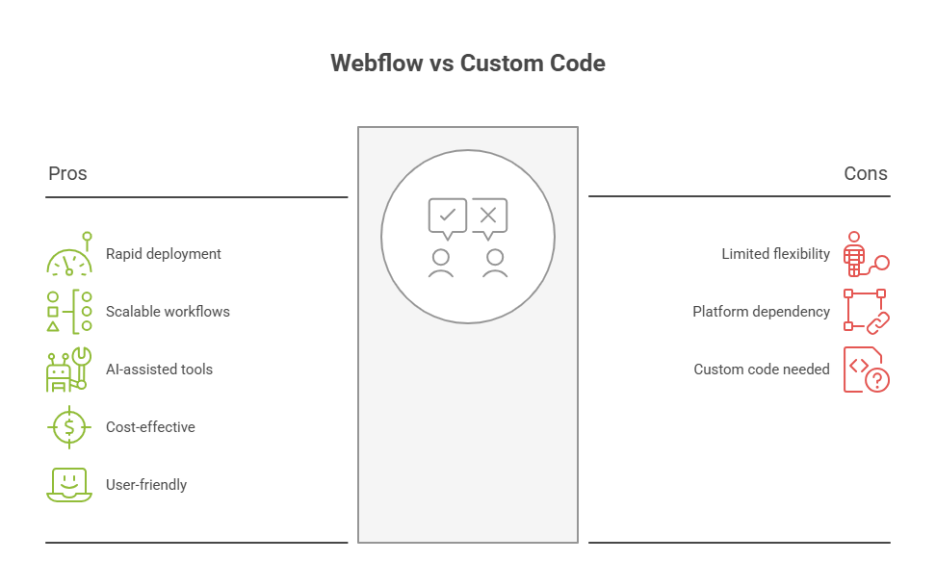
    Webflow sites started competing with custom code in 2025 because they combine no-code efficiency with advanced customization, AI-assisted tools, and scalable workflows. Businesses and developers realized that Webflow offered faster deployment, easier maintenance, and strong SEO performance, making it a cost-effective, professional alternative to fully coded custom websites.

    Webflow sites in 2025 have emerged as a compelling alternative to custom code, offering a no-code, user-friendly builder that balances customization with efficiency. Developers now recognize that leveraging Webflow’s platform, coupled with AI-assisted tools and scalable workflows, can deliver sophisticated animations, integrations, and content management capabilities previously reserved for traditional coding. Good design, robust support, and adherence to best practices are no longer optional—they’re critical to long-term success.

    This blog will explore why Webflow started competing with custom code in 2025, examining performance factors, the real value of professional development, and strategic use cases for startups. You’ll also see how making the right choice between Webflow and custom coding can impact scalability, SEO, and overall web development workflows.

    Why Startups Choose Webflow in 2025 Strategically
    Why Startups Choose Webflow in 2025 Strategically

    Startups in 2025 are increasingly turning to Webflow as a strategic alternative to fully custom development. The platform offers a unique combination of speed, scalability, and flexibility, allowing emerging businesses to launch professional websites without compromising on design, functionality, or long-term growth potential. Understanding why startups are making this shift requires a closer look at the benefits Webflow brings compared to traditional custom coding approaches.

    Speed and Efficiency in Web Development

    One of the primary reasons startups choose Webflow in 2025 is the speed at which websites can be launched. Unlike fully custom development, which may require extensive coding and debugging, Webflow’s visual interface allows teams to build functional, responsive sites quickly. Webflow generates clean code and semantic code automatically, reducing errors while ensuring compatibility with SEO best practices. For startups, this means faster time-to-market and the ability to iterate quickly based on user feedback.

    Scalability Without Compromising Quality

    Scalability is another critical factor. Webflow remains a strong choice for startups that anticipate rapid growth. Webflow’s platform allows for advanced features, complex functionalities, and integration with third-party tools without the need to rebuild the site from scratch. Startups can add custom code or implement custom business logic where necessary, ensuring the site grows alongside the business. Compared to platforms like Webflow vs custom code, Webflow often reduces long-term maintenance costs while maintaining flexibility.

    Balance Between Design and Development

    Webflow is great for bridging the gap between design and development. Startups can leverage Webflow University resources to train in webflow development or collaborate with webflow experts to create custom layouts. The platform gives startups the ability to maintain clean code while implementing advanced features, animations, and AI site builder tools without writing a line of code.

    Strategic Decision: Webflow vs Custom

    Choosing the right choice between Webflow and custom development comes down to balancing budget, timeline, and functionality. While fully custom sites offer ultimate flexibility, they are often resource-intensive. Webflow in 2025 gives startups the ability to build custom websites, add custom code selectively, and maintain semantic code all while avoiding platform limitations.

    Long-Term Value and Maintenance

    Startups also benefit from Webflow’s sustainable approach to web development. The platform provides ongoing updates, reliable hosting, and analytics tools to monitor site performance. Webflow gives teams insights to optimize workflows, maintain scalability, and future-proof their digital presence critical considerations for businesses planning long-term growth.

    Webflow vs Custom Code: 2025 Developer Comparison Insights

    As the web development landscape evolves in 2025, businesses and developers are increasingly evaluating whether to invest in fully custom code or switch to Webflow. Understanding the practical differences, benefits, and limitations of each approach is essential for making informed decisions that align with business needs, scalability, and long-term performance.

    Speed and Efficiency for Designers and Developers

    • Rapid Development: Webflow is a visual web development platform that allows designers and developers to build responsive sites faster than traditional coding.
    • Clean Code Generation: Webflow generates clean, semantic code automatically, reducing errors and ensuring compatibility with SEO and performance optimization best practices.
    • Visual Control: Webflow allows teams to manage layouts, animations, and styling visually while still providing the option to add custom code where necessary.

    Integration and Third-Party Tools

    • Seamless Connections: Webflow provides integration with third-party tools like CRMs, analytics, and marketing platforms, simplifying workflows for startups and enterprises.
    • Custom Content Types: While fully custom development allows complete control over data structures, Webflow users can create custom content types and easily add dynamic content through its CMS features.

    Cost, Maintenance, and Scalability

    • Total Cost of Ownership: Deciding between Webflow and custom solutions often comes down to long-term costs. Custom development may require more technical resources, dedicated maintenance, and custom SLAs, which can lead to unexpected costs.
    • Sustainable Scalability: Webflow pages are optimized to handle millions of users, with scalable hosting and reliable performance, making the platform helpful for startups building growth-focused digital products.

    Flexibility vs Platform Limitations

    • Custom Code Advantage: Fully custom sites offer complete flexibility for complex functionalities and unique business logic.
    • Webflow Advantage: Webflow is a visual web development builder that simplifies most tasks, from the basics to advanced features, and allows designers and developers to focus on user experience and workflow optimization.

    Best Fit for Your Business

    • Startups and SMEs: For businesses seeking speed, reduced maintenance, and integrated tools like analytics, Webflow provides a practical solution without sacrificing scalability.
    • Enterprises with Unique Needs: Companies requiring highly customized solutions may benefit from custom code, provided they have the technical resources to manage development and ongoing updates.

    Conclusion

    In 2025, Webflow sites proved they could compete with fully custom code by combining speed, scalability, and flexibility with professional-grade design and development capabilities. Startups and growing businesses found that leveraging Webflow’s visual platform, AI-assisted tools, and clean code generation enabled faster launches, easier maintenance, and optimized performance. Compared to traditional custom development, Webflow reduces long-term costs, simplifies integrations with third-party tools, and allows selective addition of custom code, making it a practical, scalable choice for businesses aiming for sustainable growth.

    Deciding between Webflow and custom code ultimately depends on your business needs, technical resources, and long-term goals. For startups, Webflow provides a strategic, cost-effective solution that balances efficiency, design, and advanced functionality. Meanwhile, enterprises with highly specific requirements may still benefit from fully custom development, provided they can manage the associated complexity and costs. Curious which approach Webflow or custom code would maximize your growth? Why not ask Integriti Studio?

    Frequently Asked Questions (Why Webflow Sites Started Competing With Custom Code in 2025)

    Is Webflow still relevant in 2025?

    Yes Webflow remains highly relevant in 2025. Its no‑code visual development, responsive design, CMS capabilities, and AI-assisted features make it essential for designers, freelancers, and businesses. With growing adoption and continued updates, Webflow stays a strong tool for modern web design and development.

    Does Webflow allow custom code?

    Yes Webflow allows custom code. Designers can embed HTML, CSS, and JavaScript directly into pages or the site’s header/footer, enabling advanced functionality beyond the visual builder. This flexibility makes Webflow suitable for both no‑code users and developers needing custom, dynamic web solutions.

    Who does Webflow compete with?

    Webflow competes with platforms like Wix, Squarespace, WordPress, Shopify, and Bubble. It stands out for visual no‑code development and CMS flexibility, but these competitors offer alternative solutions for website building, e‑commerce, and app development, targeting both beginners and professional designers.

    What is the difference between Webflow and custom website?

    The difference between Webflow and a custom website is that Webflow uses a visual, no‑code platform with templates and built-in CMS, enabling faster development, while a custom website is coded from scratch, offering full control, unique features, and optimization, but requires more time, skill, and maintenance.
  • What Webflow Designers Had to Unlearn in 2025

    What Webflow Designers Had to Unlearn in 2025

    What Webflow Designers Had to Unlearn in 2025

    Why do some websites scale smoothly while others stall even when built on the same tools? The answer often lies not in the platform, but in the assumptions behind how it’s used. In 2025, many webflow professionals realized that success required unlearning habits that once felt efficient but no longer supported performance, scalability, or long-term growth.

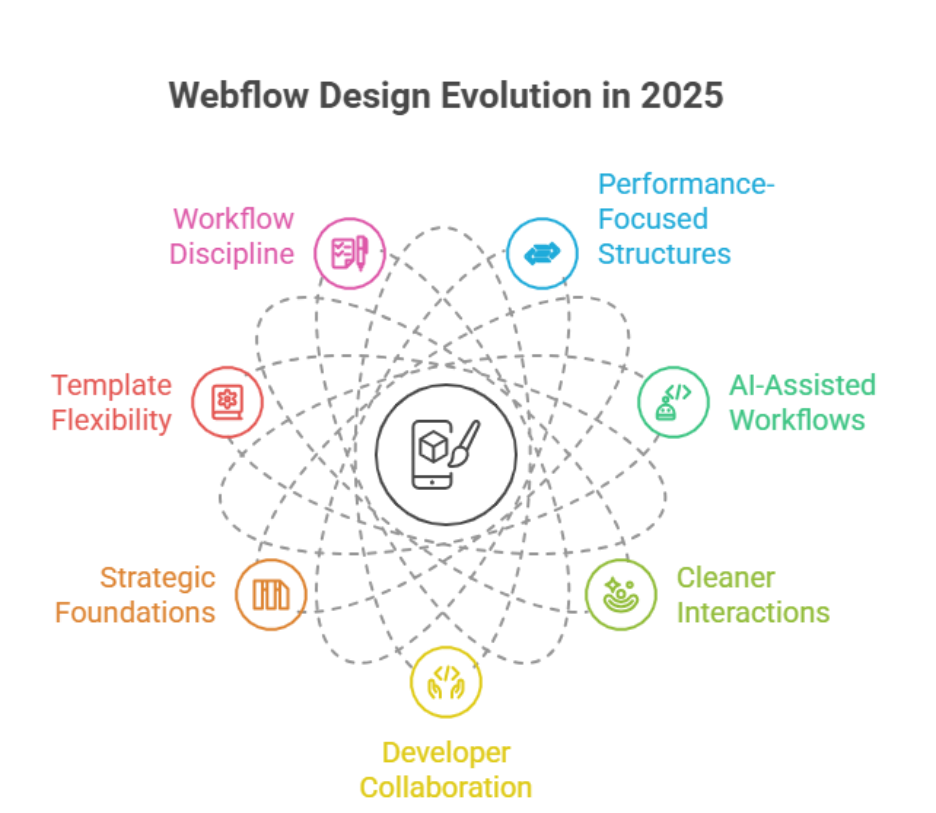
    In 2025, Webflow designers had to unlearn over-reliance on templates, visual-only decisions, and quick builds without scalability. They shifted toward performance-focused structures, AI-assisted workflows, cleaner interactions, and closer collaboration with developers to deliver websites that support long-term business growth.

    Website performance is influenced by multiple factors: clean structure, optimized interactions, thoughtful animations, and how well ai-driven workflows are integrated. When these elements are handled without professional oversight, even visually impressive work can result in slow load times, poor conversions, and difficult maintenance. A skilled designer working alongside a developer understands that strong web design is not just about aesthetics it’s about systems, consistency, and measurable outcomes.

    Businesses also began to recognize the real cost of shortcuts. A website priced at $500–$800 may look acceptable initially, but without proper support, updates, and optimization, it often demands costly fixes later. Strategic development, ongoing maintenance, and informed decision-making deliver far greater value over time.

    This blog explores what webflow designers had to unlearn in 2025, how expectations changed, and which smarter design and development choices are shaping more sustainable digital results moving forward.

    Webflow in 2025 Taught Startups Smarter Web Design Choices Toward 2026

    Webflow in 2025 Taught Startups Smarter Web Design Choices Toward 2026

    Startups Moved From Speed-First Builds to Strategic Foundations

    For many early-stage companies, speed was once the main decision driver. Launch fast, adjust later. Webflow in 2025 challenged that mindset. Startups learned that rushed execution often created long-term inefficiencies especially when structure, scalability, and performance were ignored. Modern web design decisions began focusing on systems rather than screens, ensuring that early choices would not block future expansion.

    Templates Became a Starting Point, Not a Strategy

    A common lesson was understanding the role of a template. While templates helped accelerate launches, startups realized they should never dictate architecture. Over-customized templates frequently led to bloated layouts and inconsistent logic. Instead, teams adopted cleaner frameworks that supported flexibility, maintainability, and measurable outcomes as the business evolved.

    Workflow Discipline Defined Sustainable Growth

    Another major shift was the importance of a documented workflow. Startups stopped treating design and deployment as isolated tasks. Clear workflows improved collaboration, reduced rework, and created repeatable processes that could scale. This operational clarity directly influenced performance, stability, and long-term cost control especially when web design decisions aligned with business goals.

    Designing With 2026 in Mind

    By the end of 2025, a forward-looking startup no longer asked what worked now, but what would still work in 2026. The lesson was clear: smarter web design choices are those that anticipate growth, not just launch dates.

    Conclusion

    The lessons from Webflow in 2025 highlight that effective web design goes beyond aesthetics or speed it requires strategic thinking, disciplined workflows, and collaboration between designers and developers. Startups and businesses learned to move away from over-reliance on templates, rushed builds, and purely visual decisions, instead prioritizing scalable structures, AI-assisted workflows, and performance-driven design.

    Investing in professional development, ongoing maintenance, and thoughtful design choices ensures websites not only launch successfully but continue to support growth into 2026 and beyond. Ultimately, the key takeaway for anyone learning Webflow in 2025 is that unlearning outdated habits is as important as adopting new tools and strategies delivering websites that are faster, cleaner, and more resilient for the long term.

    Struggling to implement these smarter design strategies on your website? Why not contact Integriti Studio and get expert guidance today?

    Frequently Asked Questions (What Webflow Designers Had to Unlearn in 2025)

    Is Webflow still relevant in 2025?

    Yes Webflow is still relevant in 2025. It’s widely used for professional, responsive, no‑code website design, with growing market adoption, advanced features, and strong performance and SEO tools. Its role in no‑code/AI‑assisted web development keeps it valuable for designers and businesses.

    Do professional web designers use Webflow?

    Yes, professional web designers use Webflow for client projects, startups, and agency work. Its visual no‑code interface, responsive design capabilities, CMS integration, and fast prototyping make it ideal for delivering polished, scalable websites efficiently, while still allowing custom code for advanced functionality.

    Is Webflow still popular?

    Yes Webflow is still popular in 2025. It powers millions of websites globally, has a growing user base, and continues increasing its market share among CMS platforms. Designers, freelancers, and businesses still choose it for no‑code, responsive web design and visual development.

    Are Webflow designers in demand?

    Yes Webflow designers are in demand in 2025. Businesses, agencies, and startups increasingly hire Webflow pros for fast, responsive, and custom websites. Job openings and freelance gigs continue growing as Webflow adoption rises, especially in no‑code development and digital design roles.

  • Webflow in 2026: Which 2025 Trends Will Shape Client Expectations

    Webflow in 2026: Which 2025 Trends Will Shape Client Expectations

    Webflow in 2026: Which 2025 Trends Will Shape Client Expectations

    Why do some Webflow websites outperform others, even when built on the same platform? The answer lies in multiple factors influencing website performance clean code, intuitive interface, optimized UX, AI-driven personalization, and seamless workflow integration. Businesses that overlook professional development, ongoing support, or design maintenance often face slower load times, lower conversions, and missed opportunities for SEO optimization.

    Webflow in 2026 will be shaped by 2025 trends like AI-driven personalization, minimalism-focused layouts, improved UX/UI, and accessibility. Clients will expect faster performance, seamless interfaces, real-time analytics, and professional design support. Prioritizing SEO, animation, and data-driven workflows will be essential to meet these evolving expectations.

    Investing in professional design and development can transform how users interact with your website. A well-crafted layout, minimalism-focused UI, and subtle animation improve user experience, while AI tools and analytics help you optimize content in real-time. Even small investments often starting from a few hundred dollars per month for maintenance, updates, and support can deliver measurable ROI and scalable results.

    This blog explores how Webflow in 2026 will evolve, highlighting which 2025 trends continue to shape client expectations. You’ll learn how AI-driven tools, modern design trends, accessibility, and minimalism transform web design, how interface and UX choices influence engagement, and why prioritizing professional support is crucial for long-term success. By the end, you’ll have actionable insights to plan, optimize, and scale your Webflow projects with confidence.

    How AI-Driven Minimalism Transforms Webflow UX in 2026

    How AI-Driven Minimalism Transforms Webflow UX in 2026

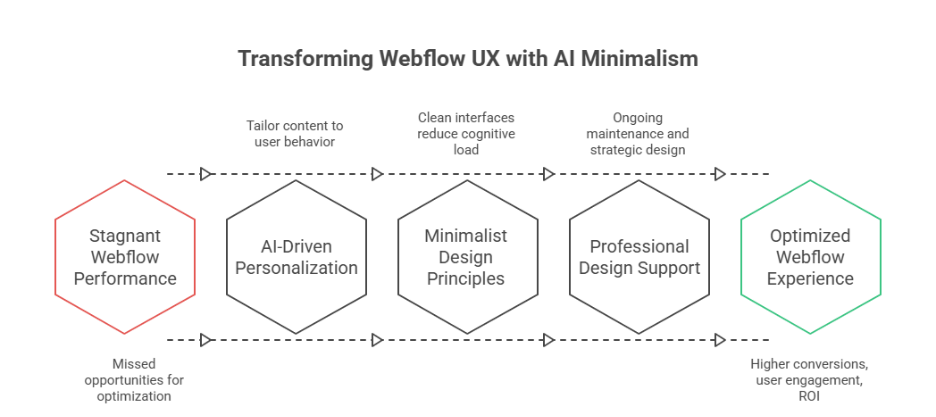
    As Webflow continues to evolve, 2026 marks a pivotal shift where AI-driven layouts and minimalism converge to redefine user experience. Businesses heading into 2026 must understand how these innovations impact website design, usability, and customer expectations while streamlining workflows through no-code solutions.

    The Role of AI in Modern Web Design

    AI is changing how designers approach modern web interfaces. From homepage structures to adaptive content, ai-powered tools enable personalization that caters to individual users, helping users navigate sites seamlessly. By analyzing behavior and interaction patterns, AI can optimize visualization and interactive elements, creating intuitive digital experiences that align with brand identity.

    Personalized Layouts for Better Usability

    AI-driven layouts allow adaptive content placement, guiding users to key sections and improving usability. Elements like dynamic menus, voice and chat interfaces, and context-aware calls-to-action ensure the site loads faster and responds to user intent. This approach also guides users toward meaningful actions, enhancing engagement.

    Minimalism Meets AI for Seamless Experiences

    Minimalism paired with AI ensures that design is not only aesthetic but functional. Clean interfaces reduce cognitive load while ai-powered personalization delivers content seamlessly. This trend addresses customer expectations for speed, clarity, and efficiency, making website design more intuitive.

    Integrating Interactive Elements Without Clutter

    Using subtle interactive elements like hover effects, micro-animations, or adaptive content sections enhances engagement without overwhelming users. AI assists in predicting which elements improve conversion, aligning web design trends with trends for 2026.

    Real-Time Personalization and Analytics

    AI tools provide insights through API integrations and dashboards, offering real-time visualization of user behavior. By continuously adapting layouts, 2026 highlight is the ability to deliver personalization that evolves with user interactions, ensuring digital experiences remain relevant and efficient.

    Preparing for What’s Next

    As designers explore trends of 2026, AI-driven minimalism will dominate modern web projects. Focusing on usability, brand identity, and seamless experiences ensures your website design aligns with customer expectations, while ai-powered layouts and no-code tools make scaling and adaptation more efficient.

    AI-Driven Personalization Shapes Minimalism in Web Design 

    AI-driven personalization is revolutionizing modern web design, particularly in platforms like Webflow. By combining minimalism with intelligent automation, businesses can deliver higher conversion rates, streamlined interfaces, and digital experiences that resonate with users. Below is a detailed breakdown of how this approach works:

    Personalization Based on User Behavior

    • Based on behavior: AI monitors user interactions and adapts content dynamically, instead of static layouts, ensuring every visit feels tailored.
    • Scroll-based engagement: Features like scrollytelling guide users through content naturally, improving retention and usability.
    • AI-assisted recommendations: Personalized suggestions for products, articles, or services enhance engagement while respecting user intent.

    Minimalism Meets Strategic Design

    • Fewer resources: Minimalist layouts reduce clutter and optimize performance, allowing pages to load faster without sacrificing impact.
    • Bold type and bold colors: Selective use of bold type or bold colors emphasizes key messages while maintaining a clean interface.
    • Maximalist elements only when needed: Interactive or decorative elements are used sparingly, preserving focus and efficiency.

    Leveraging AI-Powered Tools for Optimization

    • AI-powered tools analyze user behavior and provide actionable insights for UX, interface, and content optimization.
    • Real-time adjustments improve higher conversion rates by presenting content tailored to individual preferences.
    • Integrations support ownership and privacy concerns, ensuring compliance with data privacy standards.

    Benefits for Businesses and Users

    • Personalized, minimalist design creates a seamless experience that reduces cognitive load.
    • Businesses achieve higher conversion rates and measurable ROI with optimized, AI-assisted layouts.
    • Users enjoy interactive, scroll-based experiences that feel intuitive, engaging, and relevant.

    Conclusion

    Webflow in 2026 is set to redefine client expectations by blending AI-driven personalization with minimalist design principles. Businesses that prioritize usability, clean interfaces, and seamless workflows will see measurable improvements in conversion rates, user engagement, and long-term ROI. By leveraging AI-powered tools, scroll-based interactions, and adaptive layouts, you can create digital experiences that feel intuitive, responsive, and tailored to each visitor.

    Investing in professional development, ongoing maintenance, and strategic design ensures your Webflow projects not only meet customer expectations but also stay ahead of web design trends heading into 2026. Minimalism combined with intelligent personalization simplifies navigation, guides users naturally, and delivers content based on behavior, while respecting data privacy and ownership concerns. The result is a modern, scalable, and efficient website design that resonates with users and supports your brand identity.

    As you plan your next Webflow project, consider how AI-driven minimalism and personalization can transform your homepage, layout, and overall UX.

    Do you know if your current Webflow setup is fully optimized for AI-driven personalization or should you contact Integriti Studio to find out?

    Frequently Asked Questions (Webflow in 2026: Which 2025 Trends Will Shape Client Expectations)

    What are the web development trends for 2026?

    AI‑driven development and personalization will dominate, while Progressive Web Apps (PWAs), Web3/blockchain, low‑code/no‑code platforms, serverless and edge computing, WebAssembly high‑performance apps, and strong cybersecurity/zero‑trust design will shape fast, scalable, and secure web experiences.

    Should I learn Webflow in 2025?

    Yes, learning Webflow in 2025 is a smart move. Its visual development approach, combined with AI-powered design tools, allows faster, responsive, and professional website creation without heavy coding. Webflow skills are in high demand for modern web design, startups, and freelance opportunities.

    What is the future of Webflow?

    The future of Webflow looks strong and evolving: it will grow with AI‑powered design and automation, expand enterprise and no‑code adoption, boost market share, and offer powerful visual tools for both creators and businesses—bridging design ease with professional web capabilities.

    What are the latest trends in web design?

    AI‑powered personalization, 3D and immersive visuals, motion micro‑interactions, minimalist clarity with bold typography, adaptive dark/light themes, voice UI integration, and spatial layering depth are shaping modern sites for 2026. These trends focus on engagement, accessibility, and clear, dynamic user experiences.

  • What webflow  2025 growth signals for the future

    What webflow  2025 growth signals for the future

    What webflow  2025 growth signals for the future

    Why do some websites built on popular platforms struggle to convert, while others thrive effortlessly? The difference often comes down to more than just the choice between Webflow or WordPress it lies in factors influencing website performance, from professional development quality to thoughtful design and ongoing maintenance. In 2025, businesses increasingly recognize that the real value of good web design extends beyond aesthetics. A carefully optimized user experience, accessible layouts, and seamless AI-driven personalization can dramatically improve engagement and SEO, while data-driven decisions and smart integrations help marketing teams maximize ROI.

    Webflow in 2025 signals a future driven by AI, no-code efficiency, and seamless integrations. Marketing leaders leverage its SEO, analytics, and personalization capabilities to optimize user experience, improve conversions, and enable data-driven decisions. Businesses using Webflow can scale faster while maintaining modern, high-performing web design.

    Professional development ensures that your website not only looks modern but functions reliably, with features that support growth. Maintenance and support often overlooked keep your site secure, fast, and optimized for conversions. Small investments, such as allocating $2,000–$5,000 for focused improvements or enhancements, can yield measurable results without breaking budgets.

    This blog will explore the growth signals for Webflow in 2025, highlighting how AI, SEO, integration, and no-code capabilities are shaping the future. You’ll learn how marketing leaders use Webflow to optimize websites, improve user experience, and leverage data-driven insights for smarter decisions.

    AI, SEO, Analytics: Key Webflow 2025 Takeaways

    AI, SEO, Analytics: Key Webflow 2025 Takeaways

    Webflow in 2025 continues to redefine how marketing websites are designed, optimized, and scaled. For businesses looking to build smarter, leveraging AI, SEO, and analytics is no longer optional—it’s essential. Understanding these core areas helps marketers, designers, and developers create future-proof web experiences that maximize ROI and deliver measurable impact.

    AI-Driven Personalization Enhances User Experience

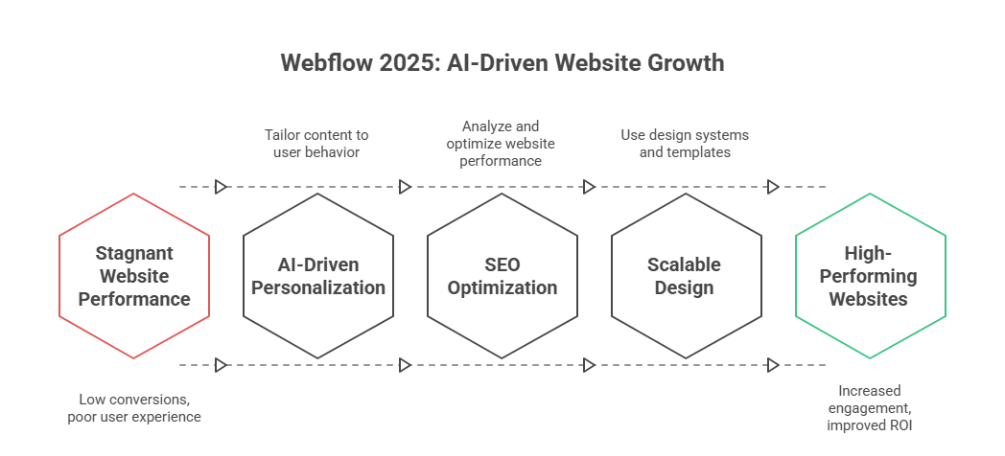
    One of the most significant growth signals for Webflow in 2025 is AI-driven personalization. Platforms like Webflow now allow marketers to dynamically tailor content based on user behavior and preferences. By integrating AI, teams can deliver relevant experiences without code, reducing the bottleneck of manual content updates. Designers and developers can combine AI with visual web development and motion design to create immersive digital experiences that resonate with audiences.

    Benefits for Marketing Leaders and Teams

    • Deliver content-rich, personalized experiences across entire websites.
    • Automate repetitive tasks, freeing teams to focus on strategy and design.
    • Improve ROI by increasing engagement and conversion through smarter, data-driven personalization.

    SEO Optimization and Analytics Integration

    In 2025, SEO rankings are increasingly tied to data and user engagement. Webflow’s new tools make it simple to analyze and optimize websites using integrated analytics, allowing marketers to track performance in real-time. Whether you use Webflow for scalable websites or smaller webflow sites, having built-in insights reduces reliance on third-party tools and empowers non-developers to make informed decisions.

    Key Takeaways for SEO in Webflow

    • Leverage analytics to understand user behavior and optimize layout and content placement.
    • Combine dynamic content with AI-driven strategies to improve search visibility.
    • Ensure future-proof websites by aligning design systems, templates, and reusable components with evolving website trends.

    Designing Scalable, Data-Driven Web Experiences

    Webflow’s 2025 state highlights the importance of design and development workflows that support scalable websites. From core areas like accessibility and inclusive design to backend logic and content management, Webflow provides tools to iterate efficiently. Freelancers, teams, and agencies can leverage reusable components and curated collections to streamline projects, ensuring future-proof websites that meet modern web standards.

    Practical Applications

    • Use design systems and templates to maintain consistency across large projects.
    • Integrate analytics to continuously refine digital experiences.
    • Adopt AI and automation for dynamic content, ai-driven personalization, and smarter team collaboration.

    Takeaways:

    By focusing on AI-driven personalization, integrated analytics, and SEO optimization, Webflow in 2025 enables marketers and designers to build content-rich, scalable websites without code. These innovations help teams analyze and optimize continuously, delivering relevant experiences that drive growth, improve ROI, and future-proof web projects.

    Conclusion

    Webflow in 2025 clearly demonstrates that the future of websites is no longer just about aesthetics—it’s about building smarter, scalable, and data-driven digital experiences. By leveraging AI-driven personalization, integrated analytics, and SEO optimization, businesses can create marketing websites that not only engage users but also deliver measurable ROI. Thoughtful webflow design, professional development, and ongoing maintenance ensure your site remains reliable, future-proof, and optimized for growth.

    Marketing leaders and teams who use Webflow effectively can streamline workflows, reduce dependency on developers, and implement dynamic content strategies that respond to real-time user behavior. Small, targeted investments in design systems, templates, and AI integrations can yield outsized results, making modern web development both efficient and impactful.

    Ultimately, the growth signals for Webflow in 2025 point toward a future where content-rich, scalable websites powered by AI and analytics become the standard. By embracing these capabilities, businesses can stay ahead of website trends, improve user experience, and make confident, data-driven decisions for long-term success. Are you ready to take your website to the next level why not contact Integriti Studio today and see how we can help?

    Frequently Asked Questions (What webflow  2025 growth signals for the future)

    What is the future of Webflow?

    The future of Webflow is promising, as it continues evolving into a full-fledged no-code platform for designers and developers. In 2025, its focus on AI-driven design, real-time collaboration, and scalable workflows enables businesses to build responsive, visually compelling websites efficiently, bridging creativity with production-ready functionality.

    Should I learn Webflow in 2025?

    Yes, learning Webflow in 2025 is valuable. Its no-code capabilities, AI-driven design tools, and real-time collaboration features empower designers and developers to build responsive, scalable websites efficiently. Mastering Webflow can enhance your skillset, improve workflow efficiency, and open opportunities in modern web design and digital agencies.

    Is web design still in demand in 2025?

    Yes, web design remains in high demand in 2025. Businesses increasingly prioritize user experience, responsive design, and AI-driven functionality. Skilled designers who can create visually appealing, optimized, and future-ready websites are essential for brand growth, digital engagement, and maintaining a competitive edge in the evolving online marketplace.

    What will marketing look like in 2025?

    Marketing in 2025 will be data-driven, AI-powered, and highly personalized. Brands will leverage advanced analytics, automation, and real-time collaboration tools to deliver targeted campaigns across multiple channels. Creative content, seamless user experiences, and predictive insights will define strategies, making marketing more efficient and measurable than ever.

  • Webflow in 2025 What Changed for Designers and Teams 

    Webflow in 2025 What Changed for Designers and Teams 

    Webflow in 2025 What Changed for Designers and Teams 

    Why do some websites built in 2025 outperform others, even when using the same tools like WordPress or Webflow? The difference often lies in how teams leverage modern platforms to optimize performance, ensure SEO readiness, and deliver a seamless user experience. For designers and teams, Webflow in 2025 is no longer just a visual builder it’s a full-fledged environment that combines no-code flexibility with production-ready capabilities. Real-time collaboration, built-in animations, clean code, and a responsive layout framework allow you to maintain creative control while scaling efficiently. 

    In 2025, Webflow transformed for designers and teams by combining no-code flexibility with production-ready features. Real-time collaboration, built-in animations, responsive layouts, and clean code streamline workflows, while AI assistants, Figma integration, and scalable Webflow CMS enable faster, SEO-optimized websites with full creative control. 

    Professional development and thoughtful maintenance have become crucial. A well-planned Webflow CMS structure or optimized landing pages can mean the difference between a slow, clunky site and a high-converting digital asset. Even basic support packages now often start around a few hundred dollars monthly, reflecting the true value of design, optimization, and ongoing updates. 

    This blog will explore what changed in Webflow for designers and teams in 2025, including workflow improvements, AI assistant integration, advanced SEO strategies, Figma-to-Webflow design translation, and tips to maximize creative control while keeping your projects production-ready. 

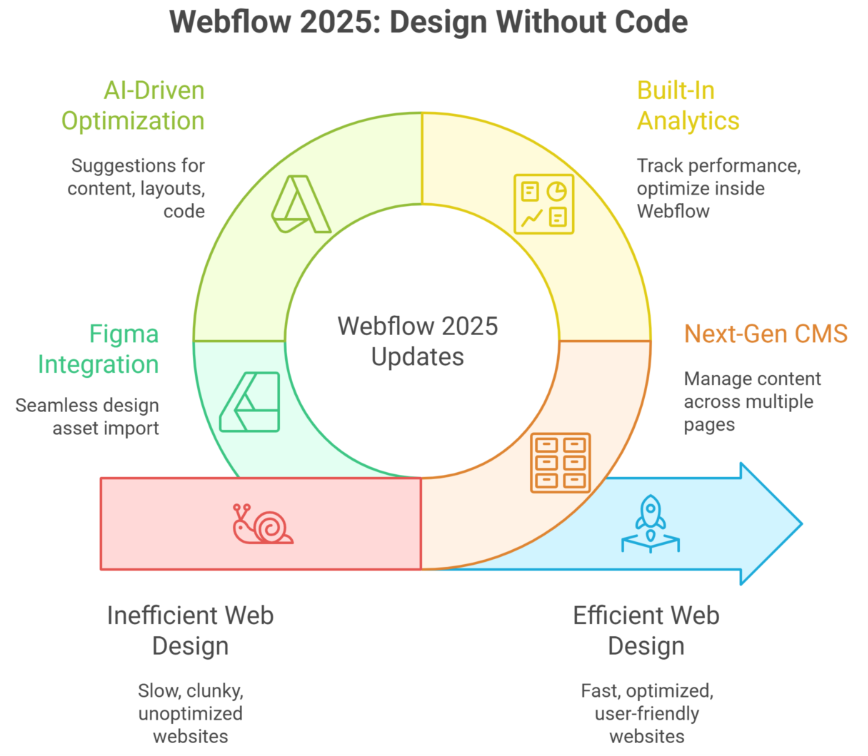
    Next-Gen CMS and Built-In Analytics Optimize Webflow 

    Next-Gen CMS and Built-In Analytics Optimize Webflow 

    Webflow’s 2025 updates have redefined how designers and developers manage dynamic content and analyze performance. By combining a next-gen CMS with built-in analytics, teams can now build, optimize, and personalize websites without coding, while maintaining full design freedom and efficiency. 

    Streamlined CMS for Scalable Webflow Sites 

    Webflow’s CMS now allows marketing teams and developers to manage multiple CMS items effortlessly. From blogs to product pages, each CMS content block can be structured with a consistent design system, ensuring responsive websites that maintain visual consistency. Integrations like Figma to Webflow translation make importing design assets seamless, enabling designers to move from prototype to live site without losing fidelity. 

    Managing Multiple CMS Items Efficiently 

    Managing multiple CMS items is simplified with Webflow Canvas, where designers can see real-time previews of each item in context. This approach reduces errors, improves content workflows, and ensures every piece of content aligns with the site’s overall layout and brand standards. 

    Built-In Analytics for Data-Driven Decisions 

    With Webflow Analyze, teams can track core metrics like Core Web Vitals, user behavior, and SEO performance directly within the site builder. This enables marketing teams to make informed decisions, personalize content, and continuously optimize Webflow sites for higher conversions. Unlike relying on external analytics tools, built-in reporting saves time and ensures data accuracy. 

    Leveraging AI Tools for Performance 

    Webflow’s AI tools can now suggest optimizations for CMS content, responsive layouts, and even custom code snippets. These enhancements help teams reduce manual work while maintaining design freedom and keeping sites production-ready. 

    What’s New in Webflow 2025 

    The Webflow Conf 2025 highlighted several new features, including: 

    1. Advanced features for personalization and user segmentation 
    1. Enhanced design freedom for designers and developers 
    1. Seamless integration of webflow university tutorials for rapid learning 
    1. New tools for optimizing multi-page responsive websites 

    Pros and Cons of Webflow CMS 

    Pros: 

    • Complete design freedom 
    • Scalable CMS with personalization options 
    • Real-time analytics through Webflow Analyze 
    • Efficient Figma to Webflow workflows 

    Cons of Webflow: 

    • Some advanced features may require familiarity with custom code 
    • Managing multiple webflow accounts can be complex for larger teams 
    • Slight learning curve for non-technical marketing teams 

    Webflow in 2025: Key Features for Designers’ Success 

    • Next-Gen CMS enables seamless management of content and design across multiple pages. 
    • Built-in CMS supports dynamic content like blogs, portfolios, and e-commerce items. 
    • Built-in analytics allows designers to track performance and optimize websites inside Webflow without third-party tools. 
    • Reduced back-and-forth between designers and developers for faster project delivery. 
    • Websites without writing code can be created using the visual website builder and visual web development platform. 
    • CSS Grid and enhanced layout options enable precise, responsive, and scalable designs. 
    • Custom Webflow components allow tailored solutions for enterprise and client-specific projects. 
    • Additional features like animations, interactive elements, and AI-driven suggestions improve engagement and workflow efficiency. 
    • Efficient handling of multiple projects simultaneously for agency and enterprise teams. 
    • Content and design remain fully integrated, ensuring design consistency across next-gen CMS structures. 
    • 2025 updates bring enhanced key features for creative freedom, scalability, and production-ready websites. 

    Conclusion 

    Webflow in 2025 has evolved from a simple visual website builder into a robust visual web development platform that empowers designers and teams to create responsive websites efficiently. With next-gen CMS, built-in analytics, AI-driven optimization, and seamless Figma to Webflow workflows, teams can manage multiple projects, maintain creative control, and ensure high-performing, SEO-optimized websites without writing code. Features like CSS Grid, interactive components, and real-time previews streamline collaboration, reduce the back-and-forth between designers and developers, and enable scalable, production-ready solutions. Whether for enterprise teams or marketing-driven projects, Webflow’s 2025 updates provide the tools needed to deliver exceptional web experiences. 

    Now, here’s a practical question for users to explore: 

    How would you structure a multi-page Webflow site using next-gen CMS and built-in analytics to optimize both user experience and SEO performance across multiple projects? 

    Frequently Asked Questions (Webflow in 2025 What Changed for Designers and Teams )

    Should I learn Webflow in 2025?

    Yes, learning Webflow in 2025 is a smart move for designers and agencies. It enables faster development, clean production-ready code, strong SEO control, and real-time collaboration. Webflow is especially valuable for building high-performance marketing websites without heavy reliance on developers.

    What is the web design trend in 2025?

    In 2025, web design trends include immersive 3D and AR elements, micro-interactions and motion UI, AI-assisted design and personalization, minimalist yet dynamic layouts, dark mode options, voice-activated interfaces, and accessibility-first, performance-focused sites that load fast and engage users deeply.

    What is the future of Webflow?

    The future of Webflow in 2025 is strong, as it evolves into a full no-code production platform. With AI-assisted design, enhanced CMS capabilities, faster performance, real-time collaboration, and seamless integration with marketing and eCommerce tools, Webflow empowers designers and teams to build scalable, high-quality websites efficiently.

    Is web design still in demand in 2025?

    Yes, web design is still in high demand in 2025. Businesses, eCommerce, and digital platforms need engaging, fast, and accessible websites. Demand is driven by AI-enhanced experiences, mobile-first design, SEO optimization, and interactive interfaces, making skilled web designers essential for modern digital growth.